


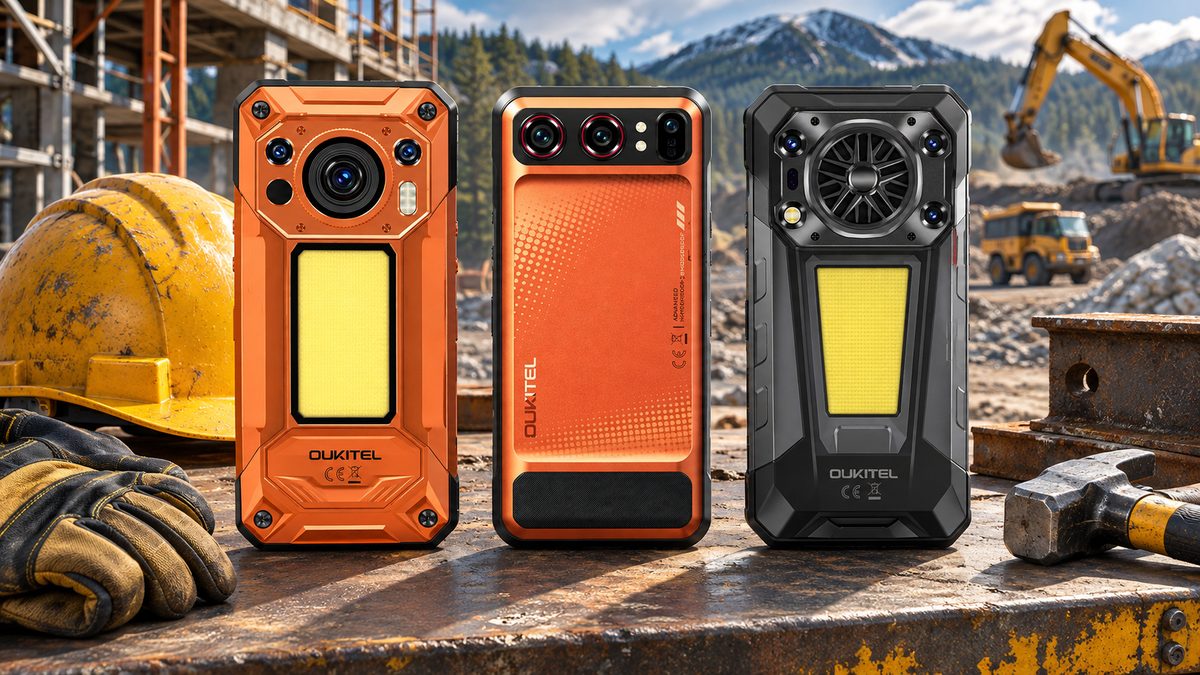
A rugged phone can replace a two-way radio for some routine worksite communication, particularly when it includes built-in DMR hardware and the team operates within a tested coverage area. It can combine voice communication, calls, work applications, navigation, photography and digital files in one device.
However, a rugged phone should not automatically replace dedicated radios used for emergency communication, dispatch, repeater networks, hazardous locations or other safety-critical operations. The right decision depends on radio compatibility, site coverage, local requirements, battery procedures and the consequences of losing communication.
For many teams, the most practical approach is a hybrid system: rugged phones handle routine coordination and digital work, while dedicated radios remain available for critical roles and emergency channels.
The Short Answer: It Depends on the Worksite
When a Rugged Phone Can Handle Daily Team Communication
A rugged phone may replace a separate handheld radio when workers primarily need short, routine conversations across a warehouse, construction site, farm, event venue or outdoor work area.
The phone must have actual radio hardware if it is expected to communicate without cellular or Wi-Fi coverage. A normal push-to-talk application is not the same as a built-in DMR walkie-talkie. Application-based communication depends on a working data connection, while integrated DMR can connect directly with compatible radio equipment.
A rugged phone is most likely to work as the main communication device when:
- The site is relatively compact.
- Coverage has been tested in all important areas.
- Team members use compatible devices and settings.
- Communication is operational rather than safety-critical.
- Workers already need phones for applications and documentation.
- Charging and spare-device procedures are established.
- The employer permits the selected radio configuration.
Using one device can reduce the equipment workers carry and make it easier to move from a voice conversation to a photograph, drawing, work order or location record.
When a Dedicated Two-Way Radio Is Still Necessary
Dedicated radios remain the safer choice when communication failure could immediately endanger workers or disrupt a critical operation.
This may include:
- Emergency response teams
- Crane, lifting or traffic-control operations
- Large industrial sites using repeaters
- Underground or heavily reinforced structures
- Central dispatch environments
- Sites with established radio networks
- Hazardous classified locations
- Roles requiring certified or approved equipment
- Operations with formal emergency channels and call procedures
A rugged phone may still support these workers by providing maps, forms, cameras and backup communication. It should not replace an approved radio system simply because it includes a push-to-talk button.
How Rugged Phone Communication Differs From a Two-Way Radio
Cellular Push-to-Talk Requires Network Coverage
Many Android phones can run push-to-talk applications that send voice messages through cellular data or Wi-Fi. These applications may support groups, user accounts and communication across long distances because they are not limited to direct radio range.
Their weakness is network dependence. A damaged cellular tower, congested network, weak indoor signal or unavailable Wi-Fi connection can interrupt communication. A phone may still show a location through satellite positioning while being unable to send a voice message or upload data.
Cellular push-to-talk can be useful for teams distributed across different cities or regions. It is less dependable as the only communication method in areas with inconsistent coverage.
Built-In DMR Can Work Without Cellular Service

A rugged phone with integrated DMR hardware operates differently. Compatible devices can communicate directly over supported radio channels without using a SIM card, cellular network or Wi-Fi connection.
This makes DMR relevant to construction crews, utility workers, forestry teams, warehouse operators and outdoor groups working within the same general area.
Direct radio communication still requires:
- Compatible DMR or supported analog equipment
- Correct frequencies and channel settings
- Appropriate talk groups or identification settings
- Properly installed antennas
- Compliance with applicable radio and worksite requirements
- A coverage test under real working conditions
The presence of DMR does not mean that two devices will communicate immediately. Radios may use different bands, modes, channel widths, privacy settings or digital configurations.
How the OUKITEL WP61 Plus Supports Worksite Communication
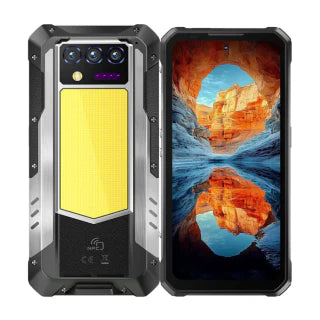
The OUKITEL WP61 Plus combines a 5G Android phone with a built-in 2W DMR walkie-talkie. It supports DMR and compatible analog communication, giving nearby team members another way to coordinate when cellular coverage is unavailable.
Its 20,000mAh battery is designed for long shifts involving radio communication, GPS, workplace applications, photography and mobile data. The phone also supports 45W charging, which helps reduce downtime when charging is available.
The WP61 Plus is still a substantial phone because of its battery and radio hardware. It should be carried in a secure pouch or appropriately rated mount instead of a loose pocket. Its removable antenna must also be installed correctly and protected from impact.
Teams considering the model can compare it with other OUKITEL rugged phones, but the WP61 Plus is the current option specifically designed around integrated walkie-talkie communication.
The table below shows where the WP61 Plus offers practical advantages over a standard rugged smartphone for worksite communication.
| Feature | OUKITEL WP61 Plus | Standard Rugged Phone |
|---|---|---|
| Off-grid team communication | Built-in 2W DMR supports compatible digital and analog radio communication without cellular service. | Usually depends on cellular data, Wi-Fi, or a separate radio. |
| Push-to-talk access | Dedicated physical PTT side button can be pressed directly, including while wearing suitable work gloves. | Usually requires unlocking the phone and opening an app or using an on-screen control. |
| Audio in noisy areas | Ultra-loud 5W speaker, listed up to 130dB, helps make calls and instructions easier to notice. | Standard phone speaker may be harder to hear around machinery, vehicles, or factory noise. |
| Battery for long shifts | 20,000mAh battery with 45W charging supports extended communication, navigation, and work apps. | Typically offers less reserve for continuous radio, GPS, hotspot, and app use. |
| Worksite and emergency lighting | Integrated 1,200-lumen camping light adds broad-area illumination and SOS support. | Usually limited to a smaller camera flash or requires a separate work light. |
| Visual documentation | 108MP main camera plus night vision supports detailed records in daylight and low light. | Camera capability varies and may lack dedicated night-vision hardware. |
| Best fit | Remote crews, outdoor teams, long shifts, and sites needing one device for phone and local radio functions. | Connected worksites where cellular push-to-talk and standard smartphone functions are sufficient. |
Use a Physical PTT Side Button Without Opening an App
The OUKITEL WP61 Plus includes a dedicated physical PTT side button for its built-in 2W DMR walkie-talkie. A worker can press and hold the side key to transmit instead of unlocking the phone, finding an application, and tapping an on-screen control. This direct hardware access is one of the most important reasons the phone can take over routine communication previously handled by a separate radio.
The physical control is particularly useful when workers wear compatible gloves or need to keep their eyes on the task. After the channel and radio configuration have been prepared, the user can locate the raised side control by touch and initiate a call without navigating the display. Teams should still test their specific gloves and carrying setup before deployment.
Hear Instructions in Noisy Work Areas
The WP61 Plus also uses an ultra-loud 5W speaker with a listed output of up to 130dB. The additional volume helps calls, alerts, and spoken instructions remain noticeable around construction activity, factory equipment, vehicles, and other noisy environments.
A loud speaker improves audibility but does not eliminate the need for hearing protection, approved headsets, or site communication procedures. Volume should be set appropriately for the environment, and critical instructions should still use the employer’s verified communication system.
Understand What the WP61 Plus Does Not Replace
The WP61 Plus can provide direct team communication, but it is not a universal replacement for:
- Emergency-service radio networks
- Site-wide repeater infrastructure
- Certified intrinsically safe radios
- Satellite messengers or personal locator beacons
- Marine VHF equipment
- Aviation radios
- Formal dispatch consoles
- Approved lifting or traffic-control communication systems
Its DMR function should be integrated into an appropriate communication plan. Teams should define which channels are used for routine work, who monitors them and what happens if a device cannot connect.
The phone’s rugged ratings also do not authorize it for explosive atmospheres. Facilities containing ignitable gas, vapor, dust or fibers may require specifically approved devices.
Where Dedicated Two-Way Radios Still Have the Advantage
Mission-Critical and Emergency Communication
Dedicated worksite radios are often selected for predictable controls, loud audio, rapid push-to-talk access and established emergency procedures. Workers may be able to operate them without unlocking a screen or navigating an application.
Some systems include priority calling, emergency alerts, dispatcher oversight, recording or worker-down features. A rugged phone should not be assumed to provide those capabilities unless they have been specifically verified.
A combined phone may be adequate for routine coordination but inappropriate as the only device used during evacuation, rescue or high-risk operations.
Large Sites and Repeater Networks
Direct device-to-device radio has a limited practical range. Large plants, tunnels, high-rise projects and remote infrastructure sites may rely on repeaters to carry signals between areas that cannot communicate directly.
An established radio network may also divide teams into structured groups for operations, security, maintenance and emergency response. Replacing that system with individual rugged phones could reduce coverage or create incompatible groups.
Before changing equipment, map the existing communication system:
| Requirement | Rugged Phone May Be Sufficient | Dedicated System Usually Preferred |
|---|---|---|
| Small team in one open area | Yes, after testing | Optional |
| Routine warehouse coordination | Often | For critical dispatch |
| Multi-building industrial site | Possibly as a supplement | Usually |
| Underground or reinforced areas | Only after thorough testing | Usually |
| Emergency response | Backup or supporting device | Yes |
| Hazardous classified location | Only with appropriate approval | Certified equipment required |
| Remote team beyond cellular coverage | DMR may help locally | Satellite or established radio may also be needed |
Hazardous Locations and Specialized Certification
IP68, IP69K and MIL-STD-810H relate to environmental durability. They do not mean that a phone is intrinsically safe or approved for use around ignitable materials.
A phone that resists water, dust and drops may still create electrical or thermal risks in a hazardous classified area. Always follow the site’s device policy and verify required certifications before deployment.
If approval cannot be confirmed, leave the phone outside the controlled area and use the equipment specified by the employer.
What to Check Before Replacing Worksite Radios
Test the Entire Working Area

A desk test is not enough. Conduct a structured pilot using the same devices, antennas, protective equipment and carrying methods workers will use.
A practical test should include:
- Pairing and configuring all compatible devices.
- Checking voice clarity in quiet and noisy areas.
- Walking every normal work route.
- Testing inside vehicles and enclosed spaces.
- Identifying dead zones.
- Measuring battery performance over a complete shift.
- Testing the procedure for a lost connection.
- Confirming how workers call for help.
- Repeating the test after the site layout changes.
Record the results instead of relying on informal reports that the radios “usually work.”
Confirm Rules and Site Requirements
Radio use may be subject to regional frequency, licensing and power requirements. The employer may also restrict devices, channels or recording functions.
Before deployment, confirm:
- Which frequencies may be used
- Whether authorization or licensing is required
- Which existing radios must remain compatible
- Whether personal programming is permitted
- Whether cameras and GPS are allowed
- Whether specialized certification is required
- Which communication device is used in an emergency
The product’s technical capability does not override applicable rules or employer policies.
Plan for Battery or Device Failure
A combined phone and radio reduces the number of devices but increases dependence on one battery. A communication plan should cover loss, breakage, water exposure, damaged antennas and depleted batteries.
Useful controls include spare devices, vehicle chargers, charging docks, power banks and scheduled battery checks. Critical teams should retain an independent backup method.
For a broader assessment of rugged-device strengths and limitations, see Are Rugged Phones Worth It?.
A Practical Hybrid Setup for Worksite Teams
A hybrid system often provides the best balance:
- Rugged phones handle routine DMR conversations, calls, applications and documentation.
- Dedicated radios remain with supervisors, emergency coordinators and critical operators.
- Existing emergency channels remain unchanged.
- Workers receive clear instructions about which device to use.
- Coverage and batteries are checked before each shift.
- Spare equipment is stored in known locations.
This arrangement gives workers the convenience of one multifunction device without removing the resilience of an established communication system.
FAQ
Can Workers Make Phone Calls While Using the DMR Function?
The phone supports both cellular calls and DMR communication, but teams should test how incoming calls, DMR activity and audio priority behave in their configuration. Do not assume both communication modes can be used simultaneously during a critical operation.
Do Rugged Phones Need Special Antennas for DMR Communication?
A DMR rugged phone uses an antenna designed for its radio hardware. Use the supplied or specifically approved compatible antenna, install it correctly and replace it if the connector or antenna becomes damaged.
Conclusion
A rugged phone can replace a two-way radio for routine communication on some worksites, but only after compatibility, coverage, battery life and site rules have been tested. For emergency, dispatch or safety-critical roles, dedicated radios should usually remain part of the communication plan.


Leave a comment
Your email address will not be published. Required fields are marked *