


Modern smartphones demand more power than ever, which is why battery “size” has become a key differentiator. In practice, “how big” has three dimensions: capacity (mAh), stored energy (Wh), and the physical volume and weight a battery adds inside the device.
Rugged phones push these limits further than slim mainstream models. While most smartphones cluster around 4,000–5,000mAh, endurance-focused rugged devices commonly start at 10,000mAh+, and the extreme tier reaches 33,000mAh—as seen in models like OUKITEL WP100Titan, one of the largest capacities in a smartphone-style form factor. With ultra-large batteries, a rugged phone can also act like a pocket power station—not only lasting for days, but also powering other devices via reverse charging when you’re off-grid.
This guide explains how to interpret mAh versus Wh, what physically enables ultra-large batteries, how rugged designs differ from regular phones, and the key safety considerations for charging, heat, and travel.
What Does “How Big Is a Phone Battery?” Really Mean?

When people ask “How big is a phone battery?”, it can refer to three things:
Capacity (mAh)
This is the most common measurement.
mAh = milliampere-hours → how much charge the battery can hold.
Energy (Wh)
This shows how much energy the battery can store.
Wh = watt-hours → a more directly comparable metric than mAh because it accounts for voltage.
Physical Size & Mass
Different phones use batteries of different thicknesses, shapes, and layouts. Larger capacities usually require more internal volume and stronger housing.
Modern smartphone batteries vary dramatically depending on device type. Regular slim phones often stay between 3,000mAh and 5,000mAh. Rugged phones—especially endurance-focused models—can go much higher.
OUKITEL Rugged Phone Battery Examples
- 10,000mAh – WP60, WP58 Pro
- 11,000mAh – WP55 series
- 16,000mAh – WP56
- 22,000mAh – WP33 Pro
- 33,000mAh – WP100Titan
These capacities go far beyond the average smartphone, which is why “battery size” has become a defining feature in rugged phones.
How Big Is a Phone Battery in mAh?
Typical Smartphone Battery Sizes
|
Phone Type |
Average Capacity |
|
Budget smartphone |
3000mAh–4000mAh |
|
Standard flagship |
4500mAh–5000mAh |
|
Gaming smartphone |
5000mAh–6000mAh |
|
Rugged phone |
8000mAh–33,000mAh |
So when we ask “How big is a phone battery?”, the answer varies:
- A normal phone: 4000–5000mAh
- A rugged phone: 10,000–33,000mAh
Rugged phones increase battery capacity because they’re designed for:
- Long field use
- Outdoor and off-grid trips
- Tough environments
- Job sites with limited access to charging
- Multi-day travel scenarios
How Big Is a Phone Battery Physically?
A typical smartphone battery is:
- A flat, rectangular lithium-ion (often Li-polymer) cell
- Commonly in the range of ~40–80 grams (varies by capacity and design)
- Usually a few millimeters thick in slim phones, with larger phones using thicker or multi-layer designs
Rugged phones with very large batteries often use:
- Larger internal footprint (more battery volume)
- Multi-cell layouts to reach higher capacities
- Stacked/segmented structures to fit rugged frames safely
This is why rugged phones often:
- Feel heavier
- Require stronger frames and internal supports
- Use more durable sealing/housing
- Deliver longer usage between charges
Many rugged models combine large internal cells with durability standards (e.g., IP ratings and drop-tested designs) to better protect the battery under real-world impacts.
Understanding Phone Battery Capacity: mAh vs Wh
mAh (Capacity)
Measures charge quantity.
Wh (Energy)
More accurate measurement of battery energy.
General formula:
Wh = (mAh ÷ 1000) × Battery Voltage (V)
For example, a rugged phone battery at 10,000mAh and 3.85V contains:
10Ah × 3.85V = 38.5Wh
For an ultra-large battery like 33,000mAh (using the same 3.85V assumption as an example):
33Ah × 3.85V ≈ 127Wh
Bigger Wh = more real energy stored.
This is why rugged phones often last dramatically longer than standard models.
Travel & Airline Considerations
Airline rules commonly use Wh rather than mAh. As a general reference, lithium-ion batteries:
-
≤100Wh: usually allowed in carry-on (and often allowed in equipment).
-
100–160Wh: may require airline approval and is typically carry-on only.
- >160Wh: usually not permitted on passenger aircraft.
If you travel often, check your phone’s rated Wh (or calculate it from mAh × voltage). For example, a 33,000mAh battery at ~3.85V is about 127Wh, which can fall into the “approval may be required” range depending on the airline.
From Big Battery to Pocket Power Station
When a battery moves into the 100Wh+ range, it stops being only about “phone runtime” and becomes a real energy reserve you can allocate—daily use, emergency lighting, and even charging other gear when you’re off-grid. That’s why Wh is the best way to describe a “power station-level” phone battery: it reflects actual stored energy, not just a capacity label.
With reverse charging, a rugged phone can function like a built-in emergency power bank for essentials such as earbuds, a smartwatch, a small GPS unit, or a backup phone—especially when outlets aren’t available.
Why Are Rugged Phone Batteries So Big?

Rugged phones focus on endurance because their users often rely on the device in conditions where charging isn’t convenient.
Designed for off-grid use
Outdoor work, travel, and emergency scenarios often involve long stretches without reliable power.
Long runtime for GPS, maps & tools
Navigation, field apps, and continuous data use can drain batteries quickly—large capacity adds stability.
High-power features require more energy
Modern phones can be demanding: bright displays, high refresh rates, 5G connectivity, continuous camera use, and intensive apps all increase power consumption.
Some rugged models may also integrate extra outdoor-oriented functions (like strong lights or additional modules), which further increases battery needs.
Reverse charging / power bank use
If a phone can charge other devices, the internal battery must be large enough to serve as an emergency power source.
Rugged users prioritize endurance
Workers, travelers, and emergency teams often choose durability + uptime over slimness.
Rugged standards (such as sealing for water/dust and reinforced frames) also make it physically easier to accommodate larger battery layouts.
What Affects How Big a Phone Battery Is?

Screen Size
Bigger displays generally require more energy (especially with high brightness outdoors).
Processor & 5G
5G and heavy workloads increase power draw, which pushes demand for larger batteries.
Device Durability
Rugged phones use thicker frames and larger internal volume—allowing bigger batteries.
Usage Scenarios
Rugged phone users often rely on:
- GPS navigation
- Outdoor photography/video
- Maps and offline files
- Bright flashlight/camping light use
- Long hours of connectivity on the move
Reverse Charging
If the phone supports charging other devices, battery size becomes a major selling point.
How to Compare Phone Battery Sizes Quickly
Use this simple method:
Look at mAh
Higher mAh = longer potential runtime.
Check Battery Health Features
Temperature control, rugged protection, smart charging.
Consider the Phone Type
Slim phones vs rugged phones differ greatly.
Check for Power Efficiency
5G chipsets, display refresh rates, and software optimization matter.
Evaluate Your Usage
Outdoor workers and travelers always need bigger batteries.
WP100Titan: The Biggest-Battery Rugged Phone

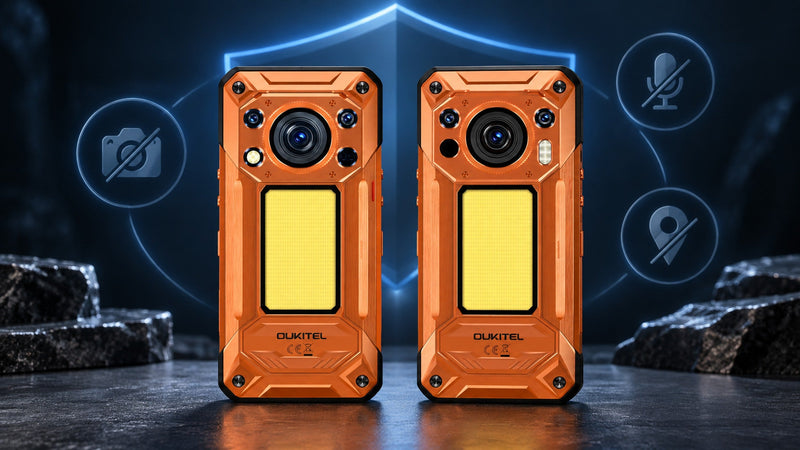
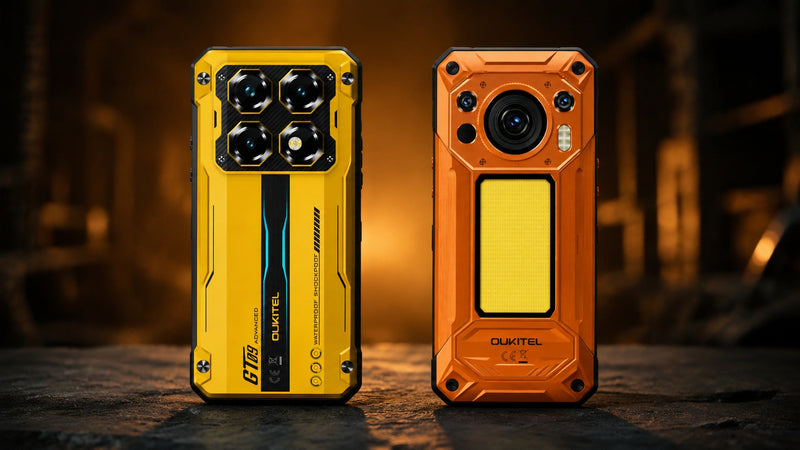
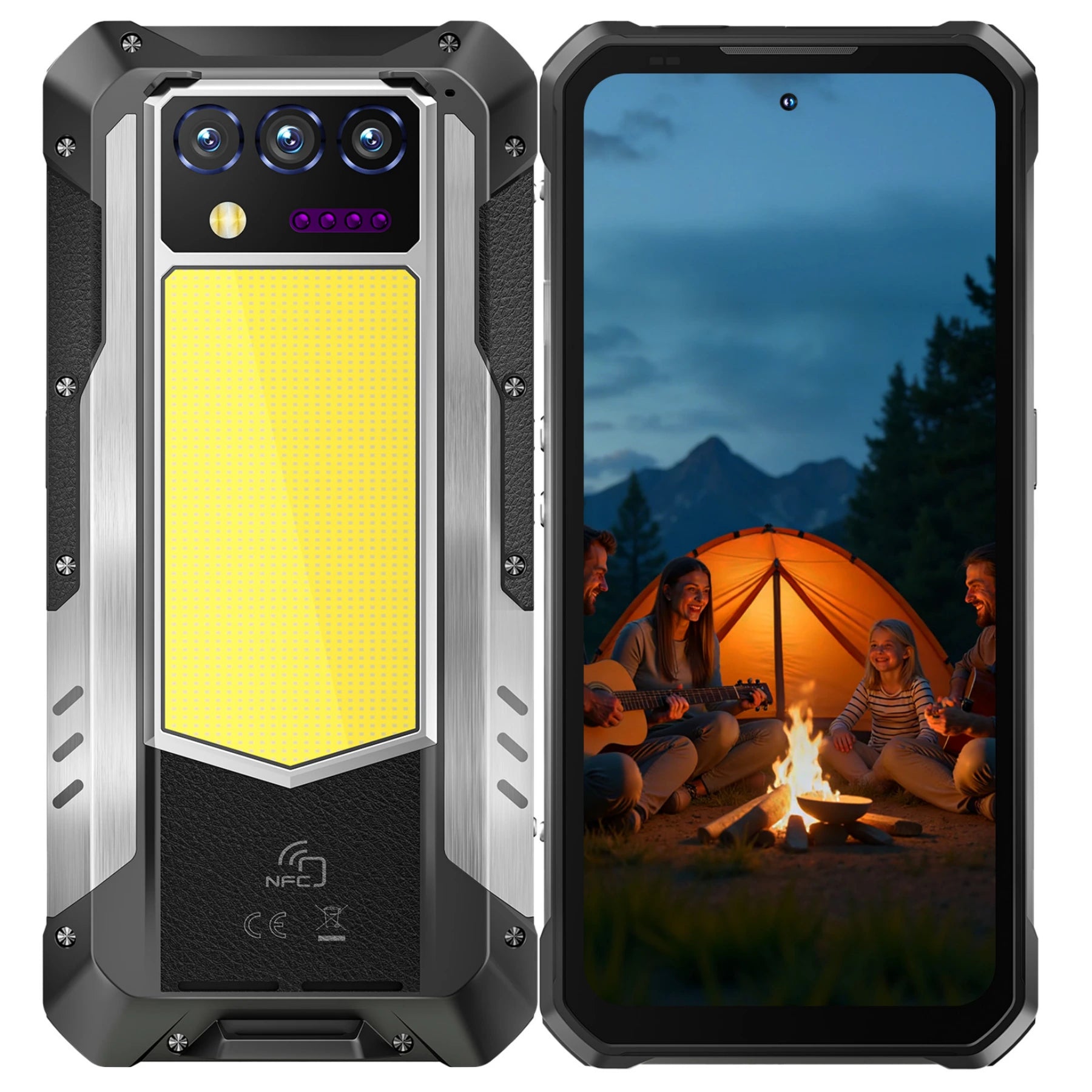
If you’re looking for the maximum battery capacity available, the WP100Titan stands at the top with an ultra-large 33,000mAh battery—built for extreme outdoor endurance and long off-grid use.
Beyond pure capacity, it’s designed as an all-in-one outdoor powerhouse:
- Built-in 100-lumen projector for on-the-go sharing.
- 1200-lumen camping light for night activities.
- 18W reverse charging to power other devices when needed.
For everyday performance and imaging, it features:
- 200MP camera for ultra-detailed photos and sharper zoom when you’re outdoors.
- Up to 48GB RAM + 512GB storage for smooth multitasking and plenty of room for videos, maps, and offline files.
- MediaTek Dimensity 7300 for strong performance in daily use, gaming, and power-efficient 5G tasks.
- Global 5G connectivity for faster streaming, navigation updates, and stable connections on the move.
- 66W fast charging for quicker top-ups, even with a massive 33,000mAh battery.
Frequently Asked Questions
How big is a phone battery today?
Most smartphones use 4000–5000mAh batteries. Rugged phones, especially OUKITEL models, use 10,000mAh–33,000mAh batteries.
Why do rugged phones have bigger batteries?
They are built for outdoor users who need long runtime, GPS, 5G connectivity, large displays, and durability.
How big is the WP100Titan battery?
The WP100Titan includes a 33,000mAh battery with 66W fast charging and rugged protection.
Does a bigger battery mean a heavier phone?
Yes. Large capacity requires a physically larger battery and reinforced housing.
Are big phone batteries safe?
Yes, when the phone uses proper battery management systems, temperature control, and rugged protection — all found in OUKITEL models.
How is battery size measured?
Battery size is measured in mAh (capacity) and Wh (energy). Larger numbers mean more power storage.



Leave a comment
Your email address will not be published. Required fields are marked *