


Smartphones aren’t just communication tools anymore — they can also act as portable power hubs. One feature that makes this possible is reverse charging, which lets your phone send power to other devices.
What makes reverse charging especially attractive is that, in many real-world situations, it can be a safer and more controlled alternative to carrying an extra power bank — particularly when the power bank is low-quality, unverified, or used with the wrong cable.
This guide explains what reverse charging is, how it works, when to use it, and why rugged phones with large batteries (like OUKITEL models) are a great match for it.
What Is Reverse Charging in a Phone?
Reverse charging is a feature that allows your smartphone to send power to other electronic devices.
Instead of your phone receiving power, it becomes the power source.
Depending on the phone model, reverse charging can be:
- Wired Reverse Charging (via USB-C)
- Wireless Reverse Charging (wireless power share)
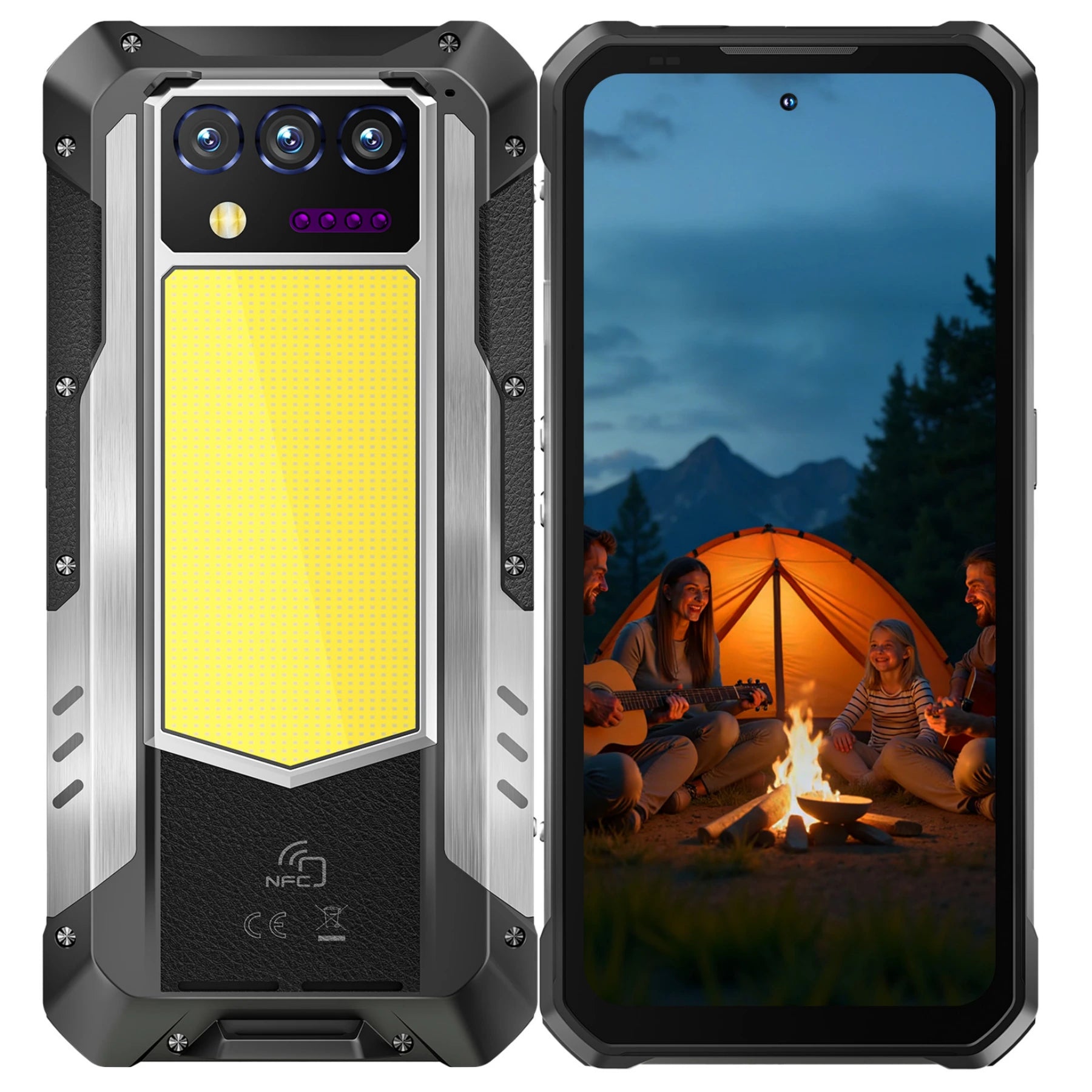
For rugged phones like OUKITEL’s WP300, the system uses wired reverse charging, which is reliable and efficient even outdoors.
Reverse charging turns your smartphone into a backup power solution — perfect for emergencies, camping, traveling, or job sites where electricity isn’t always available.
How Reverse Charging Works

Reverse charging relies on special power management circuitry inside the phone. The system controls:
- Power direction
- Voltage output
- Safety protection
- Thermal regulation
When reverse charging is active, the phone sends power out through its USB-C port (or wireless coil, depending on model).
How It Works (Simplified):
- Connect another device using a USB-C to USB-C or USB-C to USB-A cable.
- Your phone detects the connected device.
- The system switches to “power out” mode.
- The connected device begins to charge.
- Protective chips regulate current to avoid overheating.
Rugged phones with large batteries — like those on OUKITEL’s site — are perfect for reverse charging because they carry enough capacity to safely share power without compromising daily use.
Why Reverse Charging Can Be Safer Than Power Banks
Reverse charging isn’t “magic,” but it can be safer in practice for a few reasons:
Fewer extra batteries to carry
A power bank is an additional lithium battery you’re bringing into your daily kit. If it’s cheap, damaged, or counterfeit, the risk goes up. Reverse charging uses the battery you already carry — your phone — so you reduce dependence on extra gear.
Phone-level safety protection is usually stronger
Modern smartphones (especially rugged phones) are built with robust power control — including temperature monitoring, current limiting, and automatic shutdown behavior during abnormal conditions.
Output is typically conservative and controlled
Reverse charging output is usually lower than “fast-charging power bank” output, which makes it a good fit for:
- Earbuds
- Smartwatches
- GPS accessories
- Flashlights
- Another phone in an emergency
Important note: Certified, reputable power banks are also safe. The “safer option” point matters most when the alternative is an unverified or low-quality power bank — or when you want to carry less gear.
Reverse Charging vs. Power Banks (Quick Comparison)
|
Feature |
Reverse Charging (Phone) |
Power Bank |
|
What it is |
Uses your phone as the power source |
Separate battery pack |
|
Safety risk (real-world) |
Lower if you avoid bad cables |
Depends heavily on brand/quality |
|
Convenience |
No extra device to carry |
More total energy available |
|
Best use |
Emergency top-ups & small devices |
Multi-device charging & longer trips |
|
Output power |
Usually lower/moderate |
Often higher, model-dependent |
Why Rugged Phones Are Ideal for Reverse Charging
Rugged phones are built for situations where reverse charging matters most:
- Hiking and camping
- Search-and-rescue
- Construction and fieldwork
- Emergency situations
- Traveling
- Power outages
- Outdoor filming and photography
They also tend to have much larger batteries than regular phones, making power sharing more practical without sacrificing daily runtime.
Which Phones Support Reverse Charging?

Different brands support the feature depending on battery size and chipset integration.
For OUKITEL:
OUKITEL rugged phones that typically support reverse charging include models with:
- Oukitel WP100 Titan
- Oukitel WP300
- Oukitel WP200 Pro
- Oukitel WP210
- Oukitel WP60
Several rugged models on the OUKITEL store highlight reverse charging capabilities, especially those built for:
- Long outdoor runtime
- Professional field use
- Multi-day durability
- Large power reserves
Phones like the OUKITEL WP300 explicitly mention reverse charging (18W) in their features, demonstrating how rugged phones are uniquely suited for this function.
How to Use Reverse Charging Safely
To keep reverse charging safe and stable:
- Use a good-quality cable (damaged cables cause most issues)
- Stop if the phone gets unusually warm
- Avoid charging devices that draw high power for long periods
- Use reverse charging as emergency support, not your primary charging system
How to Use Reverse Charging on a Phone
Using reverse charging is simple:
Step 1:
Connect another device to your phone using a USB-C cable.
Step 2:
Your phone automatically detects the accessory.
Step 3:
It switches into “power sharing” mode.
Step 4:
The other device begins charging.
Step 5:
Power output stops automatically when:
- The receiving device is full
- The phone overheats
- Voltage becomes unstable
- The connection is removed
This automation ensures safe operation.
How Much Power Can a Phone Provide via Reverse Charging?
The output varies by phone model.
In rugged phones like the WP300, reverse charging is typically around 18W, which is enough to recharge:
- Earbuds
- Smartwatches
- Fitness trackers
- Basic phones
- Cameras
- Flashlights
Rugged phones can even recharge other smartphones in emergency situations.
Large-battery models with capacities:
- 10,000mAh
- 16,000mAh
- 22,000mAh
- 33,000mAh
can perform multiple reverse charges before needing a recharge themselves.
Benefits of Reverse Charging
Reverse charging offers many advantages:
Emergency Backup Power
Your phone becomes a lifesaver during emergencies.
Travel Convenience
Charge secondary devices while hiking, camping, or flying.
No Need for a Power Bank
Your rugged phone acts as its own power bank.
Supports More Accessories
Outdoor equipment, GPS trackers, and cameras can all be powered.
Saves Time and Effort
No need to carry separate chargers or adapters.
Practical for Professionals
Reverse charging is valuable for:
- Surveyors
- Engineers
- Expedition teams
- Delivery workers
- Remote field technicians
Perfect for Remote Locations
A single rugged phone becomes the central energy hub.
Does Reverse Charging Damage the Phone Battery?
No — when the phone is designed for it.
Rugged phones, especially from OUKITEL, include:
- Temperature control
- Power regulation
- Voltage protection
- Battery management systems
- Reinforced hardware
These ensure safe energy transfer.
Reverse charging does use some battery cycles, but rugged phones with 10,000mAh–33,000mAh capacities can handle this effortlessly.
When Should You Use Reverse Charging?
Here are the best situations:
When a smartwatch or earbuds die
When a secondary phone needs emergency power
When camping or hiking
When working in remote job sites
During natural disasters
During long travel
When no power source is available
When powering portable gadgets outdoors
Reverse charging is all about convenience + safety.
Phones That Benefit Most from Reverse Charging (OUKITEL Examples)
Reverse charging is especially beneficial in phones with very large batteries, such as:
• OUKITEL WP60 — 10,000mAh battery
• OUKITEL WP56 — 16,000mAh battery
• OUKITEL WP55 series — 11,000mAh
• OUKITEL WP33 Pro — 22,000mAh
• OUKITEL WP100Titan — 33,000mAh
These phones have enough capacity to act as portable power stations.
Frequently Asked Questions
What is reverse charging in phones?
Reverse charging allows your phone to act like a power bank by supplying power to other devices.
How does reverse charge work?
The phone’s battery management system redirects power through the USB-C port to charge accessories or other phones.
Which phones support reverse charging?
Rugged phones like OUKITEL models with large batteries often include wired reverse charging.
Is reverse charging safe?
Yes. Phones designed for it include temperature control, voltage protection, and automatic shutoff.
Does reverse charging drain the battery fast?
It uses battery power, but rugged models with big capacities can support reverse charging easily.
Can reverse charging work without a cable?
Wireless reverse charging exists on some phones, but rugged phones mainly use wired reverse charging for reliability.
Why is reverse charging important for rugged phones?
It provides emergency power for accessories in outdoor and remote environments.



Leave a comment
Your email address will not be published. Required fields are marked *