


The safest response to a tornado is to prepare before severe weather develops, move immediately to a protected interior location when a warning is issued, and remain alert to electrical, structural, and gas hazards afterward. Choose your shelter in advance, enable multiple warning methods, build an emergency kit, and make sure every family member knows how to communicate if separated.
Do not wait to see or hear a tornado before taking shelter. Tornadoes may be hidden by rain, darkness, hills, or buildings, and damaging winds can arrive before the visible funnel.
Prepare Before a Tornado Threatens
Preparation should answer three questions: Where will everyone shelter, what supplies will be available there, and how will family members receive information or reconnect if normal communication fails?
Choose a Safe Place and Practice Getting There
The best available shelter is a FEMA-rated safe room or purpose-built storm shelter. If one is not available, use a basement or an interior room on the lowest floor of a sturdy building. Put as many walls as possible between the shelter and the outside.
Suitable locations may include:
- A basement area away from windows
- A small interior bathroom or closet
- An interior hallway on the lowest floor
- A designated community storm shelter
- A reinforced safe room that meets recognized standards
Avoid rooms with windows, exterior walls, large roofs, or wide open spans. Gyms, auditoriums, cafeterias, warehouses, and similar spaces can be more vulnerable because their roofs may have limited structural support.
Measure how long it takes everyone to reach the shelter. Practice from bedrooms as well as common living areas because tornadoes can occur at night. Include children, older adults, pets, and anyone who may require mobility, hearing, vision, cognitive, or medical assistance.
Apartment residents should ask building management whether the property has a designated shelter. If not, identify an interior room or hallway on the lowest accessible floor. Do not rely on an elevator during severe weather or a power outage.
Build an Emergency Kit and Family Communication Plan
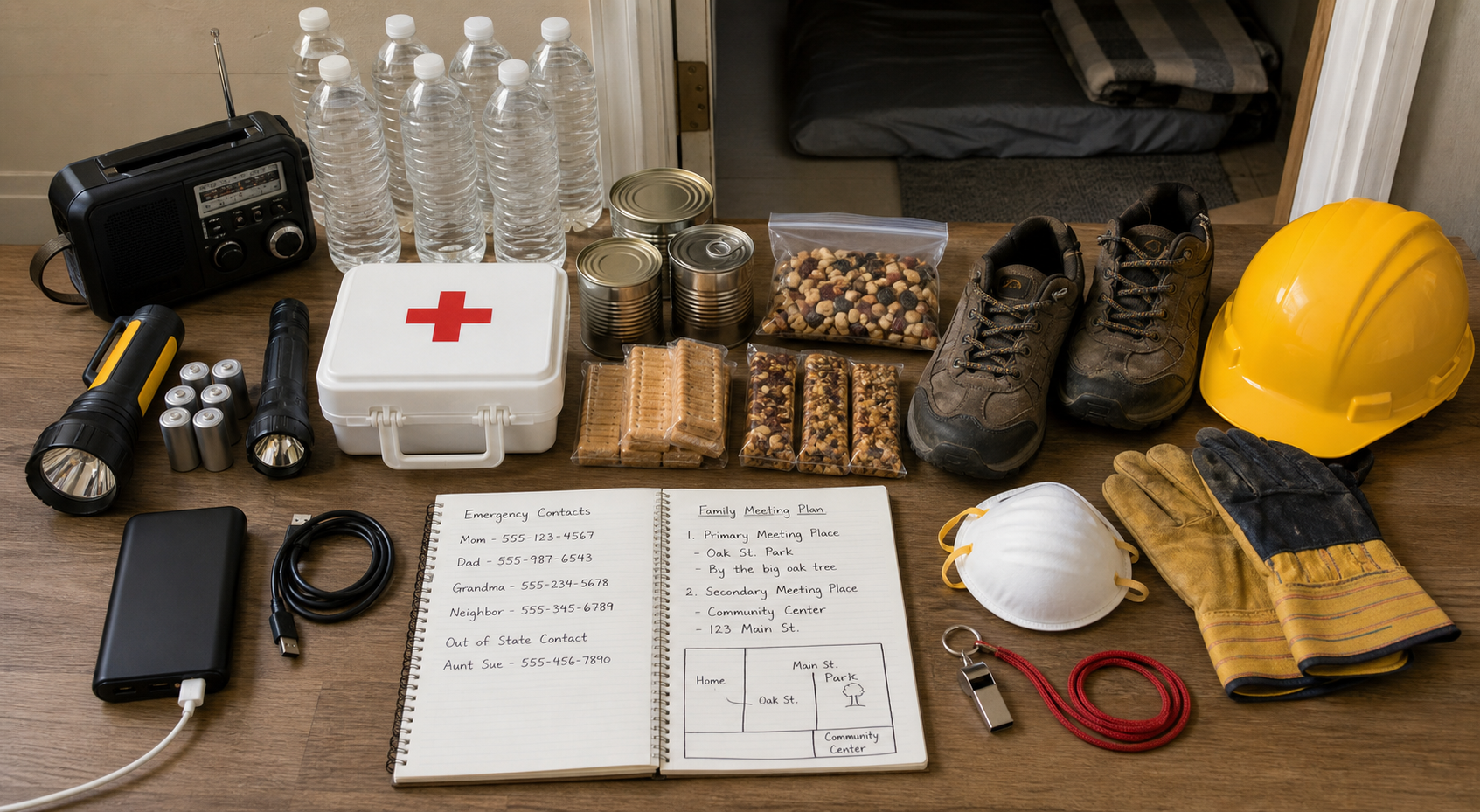
Keep essential supplies in or close to the shelter. The kit should support the household during the warning and through a possible power outage or delayed emergency response.
Recommended items include:
| Need | Suggested supplies |
|---|---|
| Alerts and information | Battery-powered NOAA Weather Radio and spare batteries |
| Communication | Charged phones, written contacts, and backup power |
| Immediate protection | Closed-toe shoes, helmets, blankets, and a mattress or cushions |
| Medical care | First-aid kit, medication, and medical information |
| Lighting | Flashlights or headlamps; avoid candles |
| Basic needs | Water, ready-to-eat food, and sanitation supplies |
| Recovery | Work gloves, masks, whistle, and basic tools |
Store sturdy shoes in the shelter because broken glass, nails, splintered wood, and sharp metal may cover the floor after a tornado. Helmets can provide additional head protection, but retrieving them should never delay movement to shelter.
Create a family communication plan that includes:
- A local contact and an out-of-area contact
- A primary and alternative meeting location
- Instructions for family members at home, work, and school
- Medical, mobility, and accessibility needs
- A method for confirming that each person is safe
- A plan for pets and service animals
Text messages may get through when voice networks are congested, but neither method is guaranteed. Keep important numbers and medical details on paper in case phones are unavailable.
Ready.gov preparedness resources recommend building an emergency kit, creating a family communication plan, enabling emergency alerts, and maintaining alternative phone-charging methods for power outages.
Set Up Reliable Alerts and Backup Power
Use more than one warning source. Outdoor sirens are mainly designed to alert people outside and may not be audible in bedrooms, heavily insulated buildings, or during strong wind and rain.
A more reliable alert system can include:
- Wireless Emergency Alerts on enabled mobile phones
- A battery-powered NOAA Weather Radio
- Local emergency-management notifications
- A trusted weather application
- Local radio or television
- Community alert systems
Make sure alerts can wake sleeping household members. People who are deaf or hard of hearing may need compatible bed shakers, flashing alert devices, wearable notifications, or assistance from another household member.
Keep phones charged when severe weather is forecast, but do not make them the only warning method. Test power banks and charging cables regularly, replace damaged batteries, and store equipment where it can be reached without leaving the shelter.
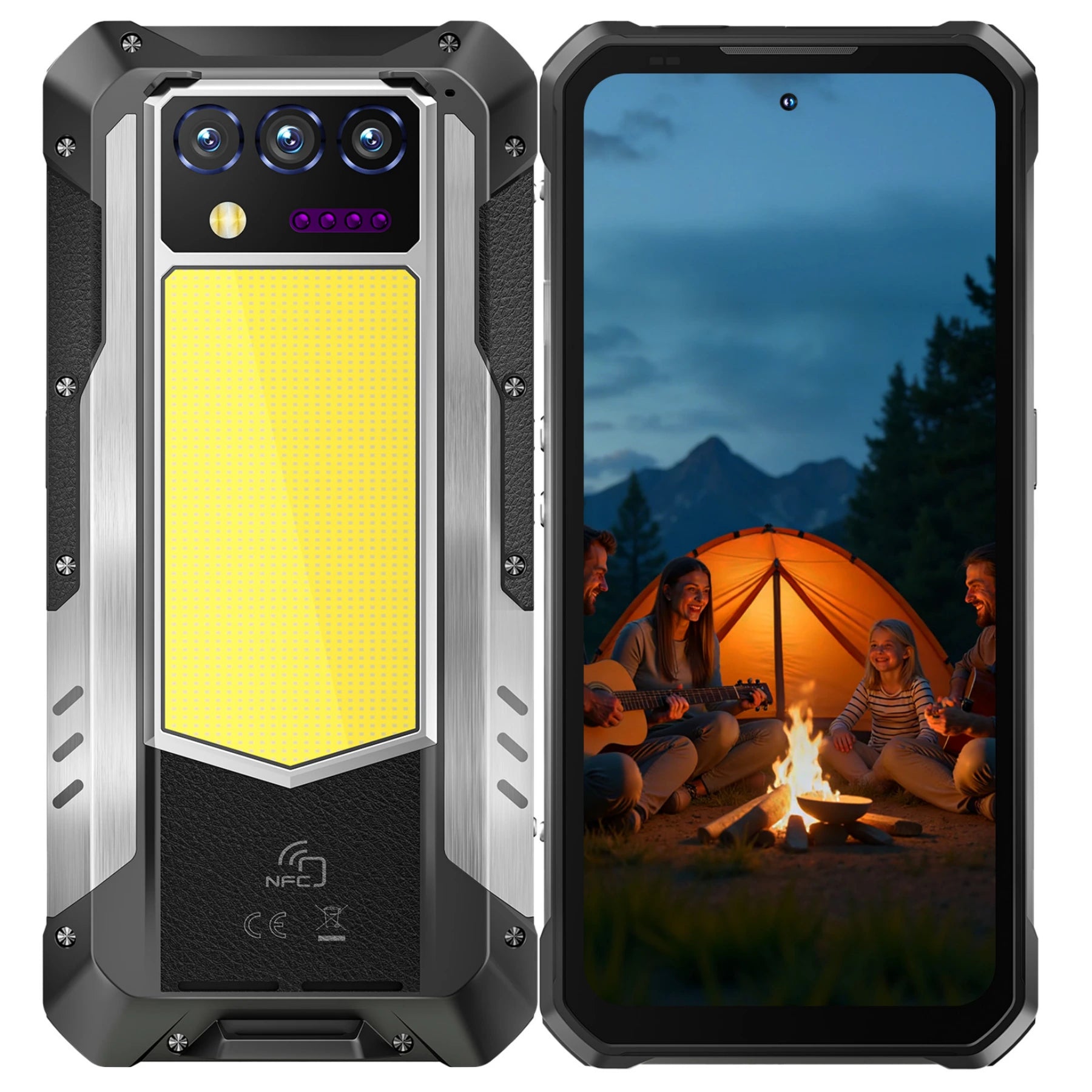
A tornado can damage power lines and overload cellular networks, leaving family members unable to communicate after moving to separate shelters. The OUKITEL WP61 Plus can support this situation with a 20,000mAh battery for continued access to downloaded contacts, emergency information, and weather updates. Its built-in 2W DMR walkie-talkie also gives nearby users with compatible equipment another way to coordinate without cellular service.
DMR communication requires compatible devices, correct channel settings, permitted frequencies, and suitable local conditions. Buildings, terrain, interference, and storm damage can affect range. It should supplement—not replace—official alerts, a battery-powered NOAA Weather Radio, or communication with emergency services. Readers assessing battery capacity and device weight can use OUKITEL's rugged-phone buying guide before choosing emergency equipment.
Act Immediately During a Tornado Warning
A tornado watch means conditions are favorable for tornadoes. A tornado warning means a tornado has been detected or indicated and immediate protective action is required. When a warning covers your location, go to the planned shelter without delaying to watch the storm or collect nonessential belongings.
Move to a Basement, Safe Room, or Interior Space
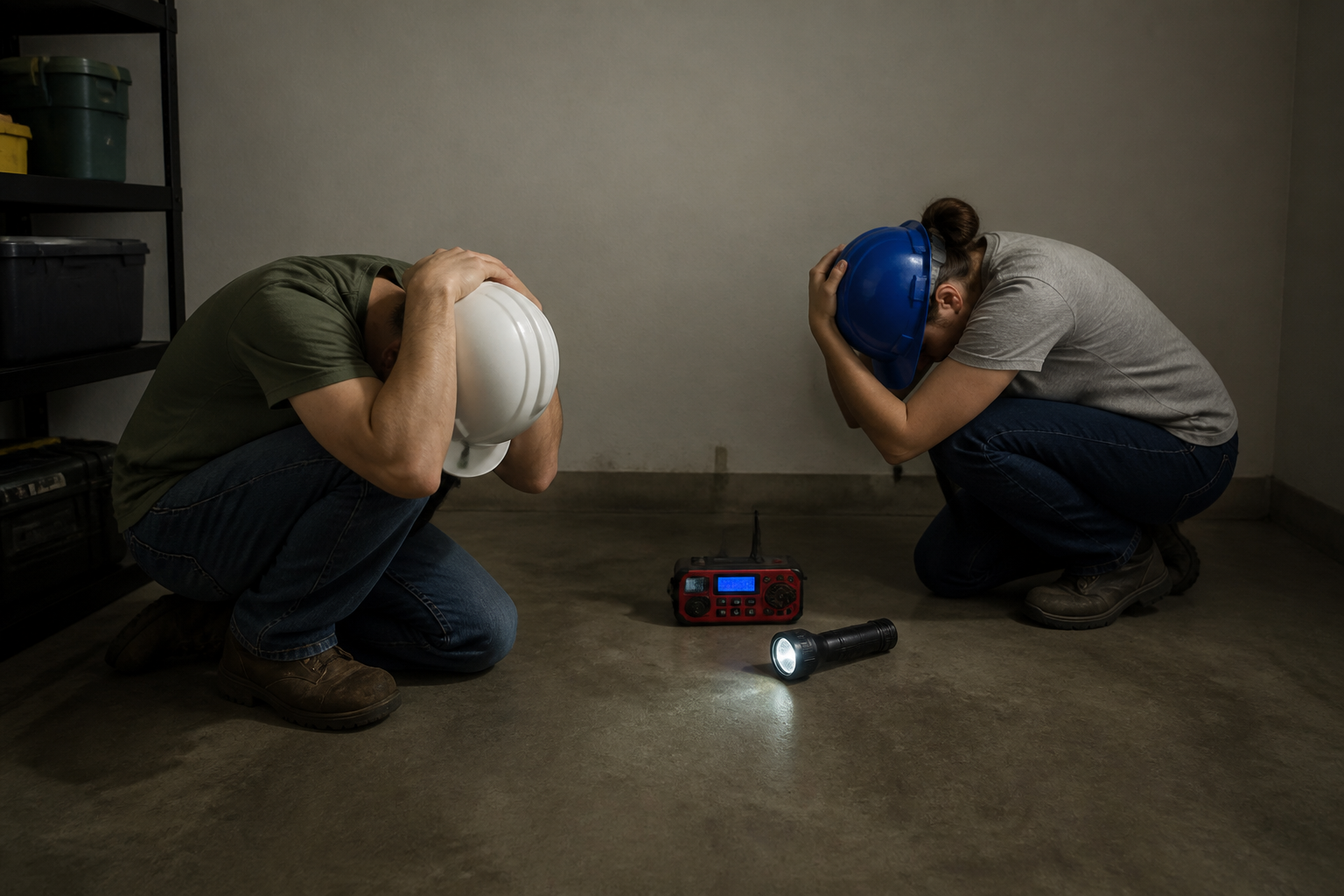
Go first to a safe room, storm shelter, or basement. If none is available, move to a small interior room or hallway on the lowest floor of a sturdy building.
In a basement, shelter under a stairwell or sturdy table when possible and stay away from windows, doors, and heavy objects on the floor above. In a house without a basement, use an interior bathroom, closet, or hallway and crouch low.
In a high-rise building, move to an interior room or hallway on the lowest floor you can reach safely before conditions become dangerous. Avoid large glass areas and do not use elevators.
Schools, workplaces, hospitals, and public buildings should follow their tornado emergency plans. Move away from exterior walls and large-span rooms. Follow instructions from trained staff or emergency officials.
Stay Away From Windows and Protect Your Head and Neck
Do not open windows. Opening them does not protect a building from tornado pressure and wastes time that should be used to reach shelter.
Move away from glass and cover your head and neck with your arms. If available in the shelter, use a helmet, blanket, mattress, or sturdy cushion for additional protection from falling and flying debris. Place children beneath or beside a protective adult without leaving the shelter area to search for equipment.
The National Weather Service advises using a basement, safe room, or small windowless interior room on the lowest floor and staying away from windows. Its tornado safety guidance also emphasizes that no outdoor location is safe during a tornado.
Continue monitoring official information from the shelter. A lull does not necessarily mean the danger has passed; another tornado or a second part of the storm may follow.
Avoid Mobile Homes, Vehicles, and Highway Overpasses
Mobile and manufactured homes are not safe tornado shelters, even when tied down. Residents should identify a sturdy building or community shelter they can reach before the storm arrives. Leave early when a watch or forecast provides enough time; do not wait until destructive winds begin.
If you are driving and can safely reach a nearby sturdy shelter before the tornado arrives, do so. Do not attempt to outrun a tornado through traffic, heavy rain, debris, or an unfamiliar road network.
Highway overpasses are not tornado shelters. Wind can accelerate through the opening, and people sheltering there remain exposed to flying debris and traffic hazards. Never park beneath an overpass in a way that blocks other drivers or emergency vehicles.
If no sturdy shelter is reachable, every option carries risk. Follow current instructions from local emergency officials rather than relying on a universal ditch-or-vehicle rule, because flooding, debris, traffic, and the tornado's path can change which last-resort option is less dangerous.
Stay Safe After the Tornado Passes
The end of the visible tornado does not end the emergency. Damaged structures, live electrical lines, leaking gas, sharp debris, unstable trees, fires, and additional storms can create serious hazards.
Check for Injuries and Account for Family Members
Check yourself before helping others. Provide basic first aid within your training and call emergency services for serious injuries when communication is available. Do not move a badly injured person unless they face immediate danger from fire, collapse, gas, or another hazard.
Account for household members through the communication plan. Use short text messages when possible and avoid repeated nonessential calls that may add to network congestion.
If someone is missing, tell emergency personnel:
- Their name and physical description
- Their last known location
- Any injuries or medical needs
- The shelter they planned to use
- Their phone number or communication equipment
Do not enter unstable debris or damaged buildings to search unless trained responders have determined the area is safe. Additional collapses can injure both victims and untrained rescuers.
Avoid Damaged Buildings, Power Lines, Gas Leaks, and Debris
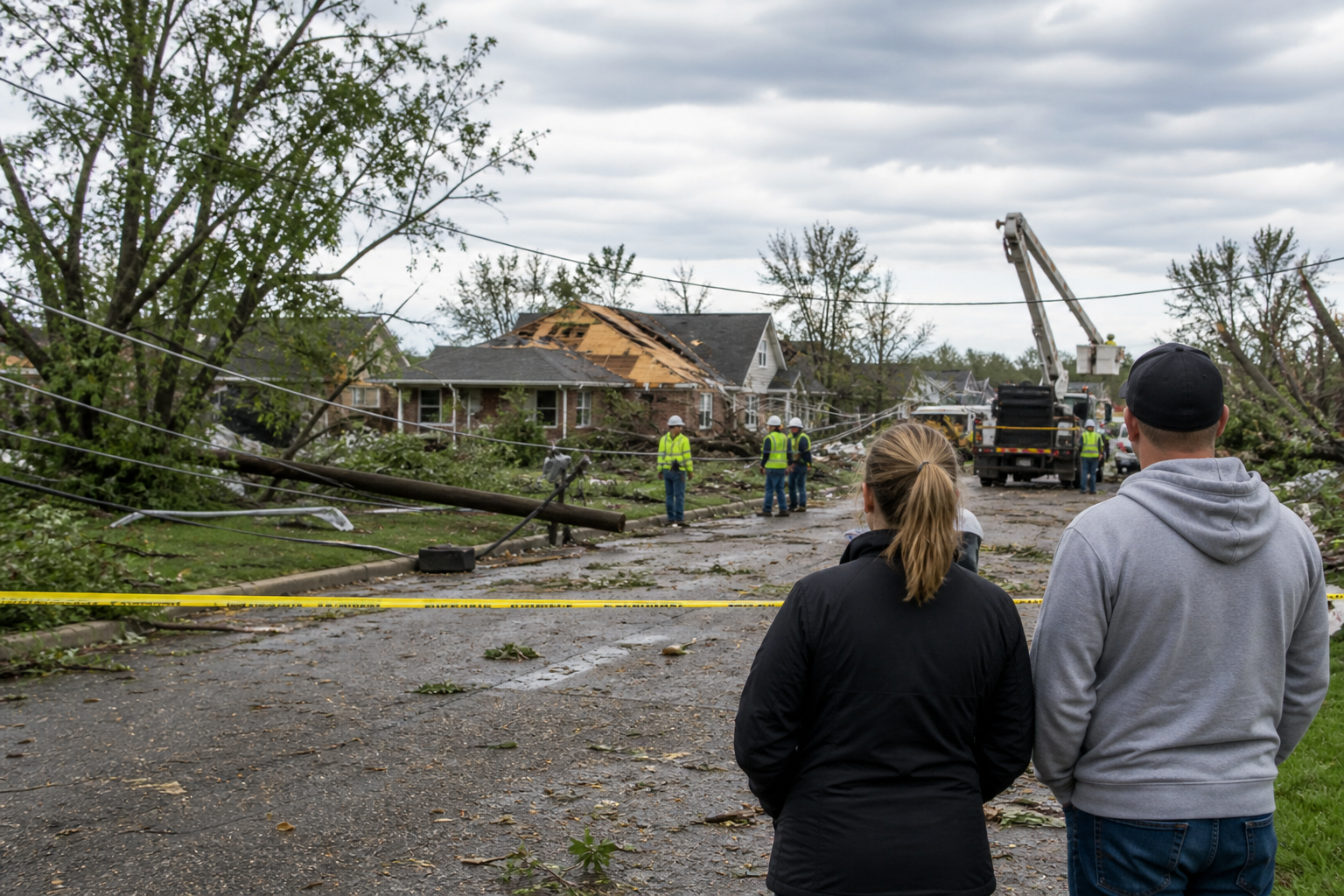
Treat every fallen power line as energized. Stay well away from the line and anything it touches, including fences, vehicles, trees, standing water, and metal debris. Report it to the utility company or emergency services.
Do not enter a visibly damaged building until authorities say it is safe. Walls, floors, roofs, stairs, and chimneys may collapse without warning.
If you smell gas, hear hissing, or see a damaged gas line:
- Leave the area immediately.
- Do not operate light switches or electrical devices.
- Do not light matches, candles, or cigarettes.
- Contact the gas provider or fire department from a safe location.
- Do not restore gas service yourself.
The CDC's post-tornado safety guidance warns about structural, electrical, and gas-leak hazards. It also advises staying away from power lines and avoiding switches, flames, and appliances when a gas leak may be present.
Use generators, grills, camp stoves, and other fuel-burning devices outdoors and away from doors, windows, and vents. Never use them inside a house, garage, basement, or enclosed shelter because carbon monoxide can accumulate without being seen or smelled.
Follow Official Updates and Document Damage Safely
Continue monitoring official alerts because more severe weather may be approaching. Do not assume the tornado threat has ended until the warning expires and authorities provide updated information.
Travel only when necessary. Roads may be blocked by debris, emergency vehicles, flooding, or downed lines. Keep clear of affected neighborhoods so responders can reach injured people.
Photograph damage only from a safe location. Do not climb onto unstable roofs, move structural debris, or enter restricted areas for insurance documentation. Capture wide views first, then details that can be recorded without approaching hazards.
When it is safe, preserve:
- Photos and video of damaged property
- A written inventory of losses
- Repair and temporary housing receipts
- Insurance claim numbers
- Dates and details of conversations with contractors or adjusters
Use licensed contractors and be cautious of unsolicited repair offers. Do not provide sensitive account information to someone whose identity and business cannot be verified.
FAQ
Can Tornadoes Happen at Night or Outside Tornado Season?
Yes. Tornadoes can occur at any hour and in any month when atmospheric conditions support them. Nighttime tornadoes are especially dangerous because they may be difficult to see and people may be asleep. Keep audible and accessible warning methods active overnight.
Should You Open Windows Before a Tornado Arrives?
No. Opening windows does not equalize pressure in a way that protects the building. It delays sheltering and exposes you to glass and debris. Move immediately to the safest available location.
How Should Apartment Residents Choose a Tornado Shelter?
Use the building's designated storm shelter if one exists. Otherwise, move to a small, windowless interior room or hallway on the lowest accessible floor of a sturdy building. Ask management about access before severe weather and avoid elevators during the warning.
What Should People With Disabilities Add to a Tornado Plan?
The plan should address mobility assistance, accessible transportation, medication, backup power for medical equipment, communication cards, service-animal supplies, and alerts suited to hearing or vision needs. Arrange assistance in advance and practice reaching the shelter with all required equipment.
Conclusion
Effective tornado safety begins before a warning is issued. Choose and practice reaching a protected shelter, build an emergency kit, create a family communication plan, and use several reliable alert methods.
During a warning, move immediately to a basement, safe room, or small interior space on the lowest floor. Stay away from windows, protect your head and neck, and never use a mobile home, vehicle, or highway overpass as the preferred shelter.
After the tornado, remain alert to injuries, unstable structures, power lines, gas leaks, sharp debris, and additional storms. Follow official instructions and document damage only when it can be done safely. Phones and backup communication tools can support the plan, but trusted alerts, suitable shelter, and prompt action provide the most important protection.








Leave a comment
Your email address will not be published. Required fields are marked *