


A 10,000mAh phone can provide substantially more runtime than a typical smartphone, but it will not deliver the same number of hours for every user. Screen size, cellular signal, processor efficiency, navigation, gaming, camera use and ambient temperature all affect how quickly the battery drains.
This capacity is most useful for long work shifts, outdoor navigation, road trips and situations where charging may be unavailable. The tradeoff is additional thickness and weight. Before buying, compare the phone’s complete dimensions, charging speed and hardware instead of choosing by the mAh figure alone.
What Does a 10,000mAh Phone Offer?
A 10,000mAh battery stores roughly twice the charge of a phone with a 5,000mAh battery. That does not automatically mean twice the runtime, but it gives the device more energy to support demanding applications and longer periods away from an outlet.
The additional capacity can help keep essential functions available during:
- Extended GPS navigation
- Long field-work shifts
- Mobile hotspot use
- Photography and video recording
- Camping and road trips
- Power outages
- Reverse charging for small devices
A larger battery can also reduce the pressure to conserve every percentage point. Users may be able to keep location services active, use a brighter display or record more photos without immediately searching for a charger.
More Stored Power Than a Typical Smartphone
Battery capacity is expressed in milliampere-hours, or mAh. The number describes electric charge rather than total stored energy.
A 10,000mAh battery therefore contains more charge than a 5,000mAh battery, assuming the measurements are based on comparable conditions. However, mAh alone does not account for voltage. Watt-hours provide a more complete measurement of stored energy:
Watt-hours = ampere-hours × nominal voltage
Do not use an assumed voltage when checking aviation limits or technical documentation. Refer to the watt-hour rating printed on the phone, packaging or official specification sheet.
For a broader explanation of battery capacity, see OUKITEL’s guide to what to compare beyond mAh.
Why 10,000mAh Does Not Guarantee a Fixed Runtime
Two phones with 10,000mAh batteries can have different battery life. A large, bright display may consume more power than a smaller panel, while an efficient processor can reduce energy use during ordinary tasks.
Battery tests also vary. Standby time, local video playback and continuous calling do not represent the same workload. Manufacturer figures should be treated as results from specific test conditions, not guaranteed everyday performance.
The most reliable way to estimate runtime is to consider how the phone will actually be used.
How Long Can a 10,000mAh Phone Last?

A 10,000mAh phone may last several days under light use, but heavy workloads can reduce that to a day or less. There is no responsible universal claim such as “five days of battery life” without defining the test conditions.
The following estimates should be read as usage patterns rather than guaranteed durations:
| Usage pattern | Typical activities | Expected effect on battery |
|---|---|---|
| Light use | Calls, messaging, occasional browsing | Capacity may support multiple days |
| Moderate use | Social media, photos, streaming and navigation | Often suitable for a long day or more |
| Heavy use | Gaming, hotspot, continuous GPS or video recording | May require daily charging |
| Field use | Bright display, poor signal, maps and work apps | Runtime depends heavily on conditions |
| Reverse charging | Powering another phone or accessory | Directly reduces the source phone’s runtime |
A large battery provides a bigger reserve, but users should still charge before an important trip or shift.
Light, Moderate, and Heavy-Use Scenarios
Light use places relatively little demand on the processor, display and cellular radio. A person who primarily checks messages and makes short calls may go much longer between charges than someone using navigation continuously.
Moderate use usually includes a mixture of web browsing, photography, video, communication and short navigation sessions. This is where 10,000mAh can feel especially useful: it creates additional headroom without necessarily reaching the extreme size of a 20,000mAh or 30,000mAh device.
Heavy use can consume even a large battery quickly. High-frame-rate gaming, video recording, hotspot operation and sustained GPS use keep several power-intensive components active at the same time.
How Display, Signal, Processor, and Temperature Affect Battery Life
The display is one of the largest sources of power consumption. High brightness, a large screen and a 120Hz refresh rate can increase energy use, especially when the screen remains active for hours.
Poor signal also matters. A phone in a weak-coverage area may use additional power while maintaining or searching for a connection. Downloading offline maps before entering a remote area can reduce dependence on continuous data, although GPS and the display still consume energy.
Other factors include:
- Background applications and synchronization
- Camera and night-vision use
- Bluetooth and Wi-Fi connections
- Processor-intensive games and applications
- Cold or hot environmental conditions
- Battery age and charging history
- Reverse charging
- Flashlights and camping lights
Cold conditions can temporarily reduce available battery performance. Excessive heat can accelerate battery aging and may cause charging or performance to be limited for protection.
How Much Size and Weight Does a 10,000mAh Battery Add?

A 10,000mAh phone is usually thicker and heavier than a mainstream 5,000mAh phone because the battery requires more physical space. Rugged models add reinforced corners, sealing and protective materials on top of that battery volume.
Battery capacity does not determine weight by itself. Screen size, frame materials, cameras, cooling and rugged construction also contribute.
Current OUKITEL examples show how differently the same capacity can be packaged:
| Model | Battery | Dimensions | Weight |
|---|---|---|---|
| OUKITEL WP60 | 10,000mAh | 184 × 87 × 14.9mm | 360g |
| OUKITEL WP500 | 10,000mAh | 177.2 × 82.6 × 18.8mm | 406.9g |
| OUKITEL WP500 Ultra | 10,000mAh | 177.2 × 82.6 × 22.9mm | 414.3g |
Specifications were checked on September 3, 2026. Dimensions and weight may vary slightly by manufacturing process, and product availability or configurations may change.
Why Capacity Cannot Be Compared Without Dimensions and Weight
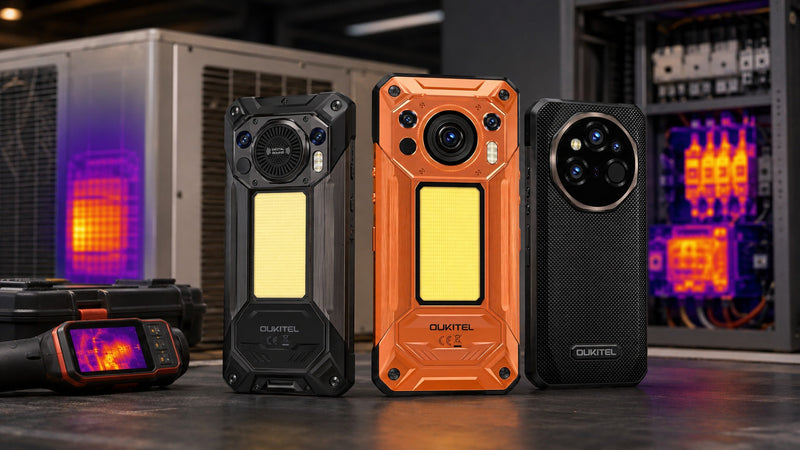
The WP60, WP500 and WP500 Ultra all have 10,000mAh batteries, yet their thicknesses and weights differ. The reason is that each phone is designed around a different combination of display, performance, cameras and specialist hardware.
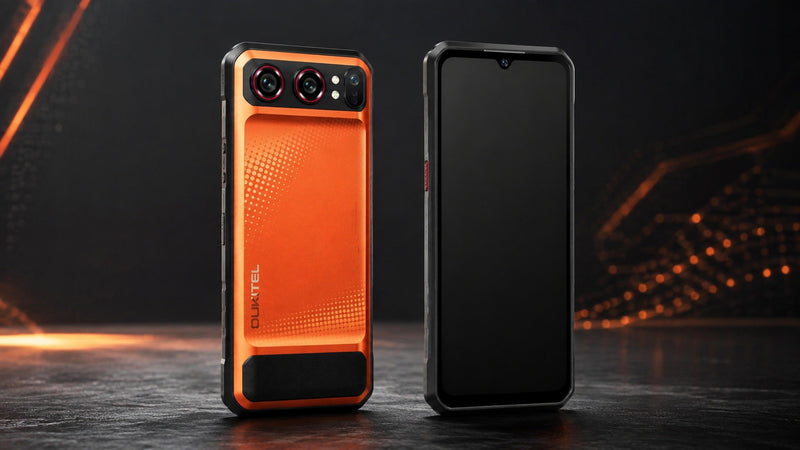
The WP60 has the largest display but is the lightest of the three. The WP500 adds a higher-performance processor, 1TB of storage and other hardware within a thicker enclosure. The WP500 Ultra adds thermal-imaging components and is thicker again.
This is why “10,000mAh phone” describes only one aspect of the product. It does not describe how the phone will feel in a pocket or hand.
Pocket Carry, Vehicle Mounting, and Extended Handheld Use
A phone weighing 360–414g is manageable for many users but noticeably heavier than a mainstream smartphone. The difference can become uncomfortable during extended one-handed reading, recording or navigation.
Before buying, consider:
- Whether the phone fits your usual pocket
- Whether a belt pouch would be more comfortable
- Whether your vehicle mount supports the phone’s weight and thickness
- Whether the charging cable can connect while the phone is mounted
- Whether you frequently operate the phone with one hand
- Whether the device must attach to a backpack or work vest
A larger battery is helpful only if the phone remains practical to carry in the intended environment.
What Else Should You Compare Beyond Battery Capacity?
A well-designed 10,000mAh phone should combine capacity with reasonable charging time, efficient hardware and the features required for the user’s work or travel.
Charging Power and Total Recharge Time
Charging wattage affects how easily a large battery fits into a daily routine. The WP500 and WP500 Ultra support 45W input charging, while the WP60 supports 33W.
The official WP500 specifications list approximately 105 minutes for a complete charge under the manufacturer’s test conditions. Real charging time can vary with the charger, cable, battery temperature, starting level and simultaneous phone use.
Peak wattage is not maintained for an entire charging session. Phones normally reduce power as the battery fills or when temperature rises.
For better charging reliability:
- Use a compatible charger and cable
- Keep the charging port clean and dry
- Avoid covering the phone while charging
- Do not charge a swollen or visibly damaged device
- Allow an excessively hot or cold phone to return to a suitable temperature
Reverse Charging, Efficiency, and Power Management
Reverse charging allows a compatible phone to provide power through its USB port. This can help top up earbuds, a flashlight or another phone when no power bank is available.
It does not create additional energy. Power is lost during conversion and transfer, and the source phone’s own runtime decreases. A dedicated power bank may remain the better choice when multiple devices require charging or the primary phone must retain a large emergency reserve.
The step-by-step guide to charging one phone with another explains cable requirements and troubleshooting.
Network Support, Performance, Storage, and Protection
Battery life has limited value if the phone cannot run the required applications or connect to the user’s network.
Check:
- Regional 4G and 5G bands
- Processor and sustained performance
- Physical RAM rather than virtual expansion alone
- Internal and expandable storage
- Display size, resolution and brightness
- Camera or thermal-imaging requirements
- IP and environmental test ratings
- Software version and update support
The OUKITEL rugged phone collection allows these features to be compared across different battery sizes.
Which OUKITEL 10,000mAh Phone Fits Each Use Case?

The most suitable model depends on what the phone needs to do after it is charged.
WP500 for Performance, Storage, and Everyday Field Work
The OUKITEL WP500 is the more performance-focused general-purpose option in this group. It combines a 10,000mAh battery with a Dimensity 8300 processor, 12GB of physical RAM, 1TB of storage, 45W charging and a 6.78-inch FHD+ 120Hz display.
At 406.9g and 18.8mm, it is heavier and thicker than the WP60. That tradeoff may be worthwhile for users running demanding applications, storing large project files or recording substantial amounts of media.
WP500 Ultra for Work That Requires Thermal Imaging
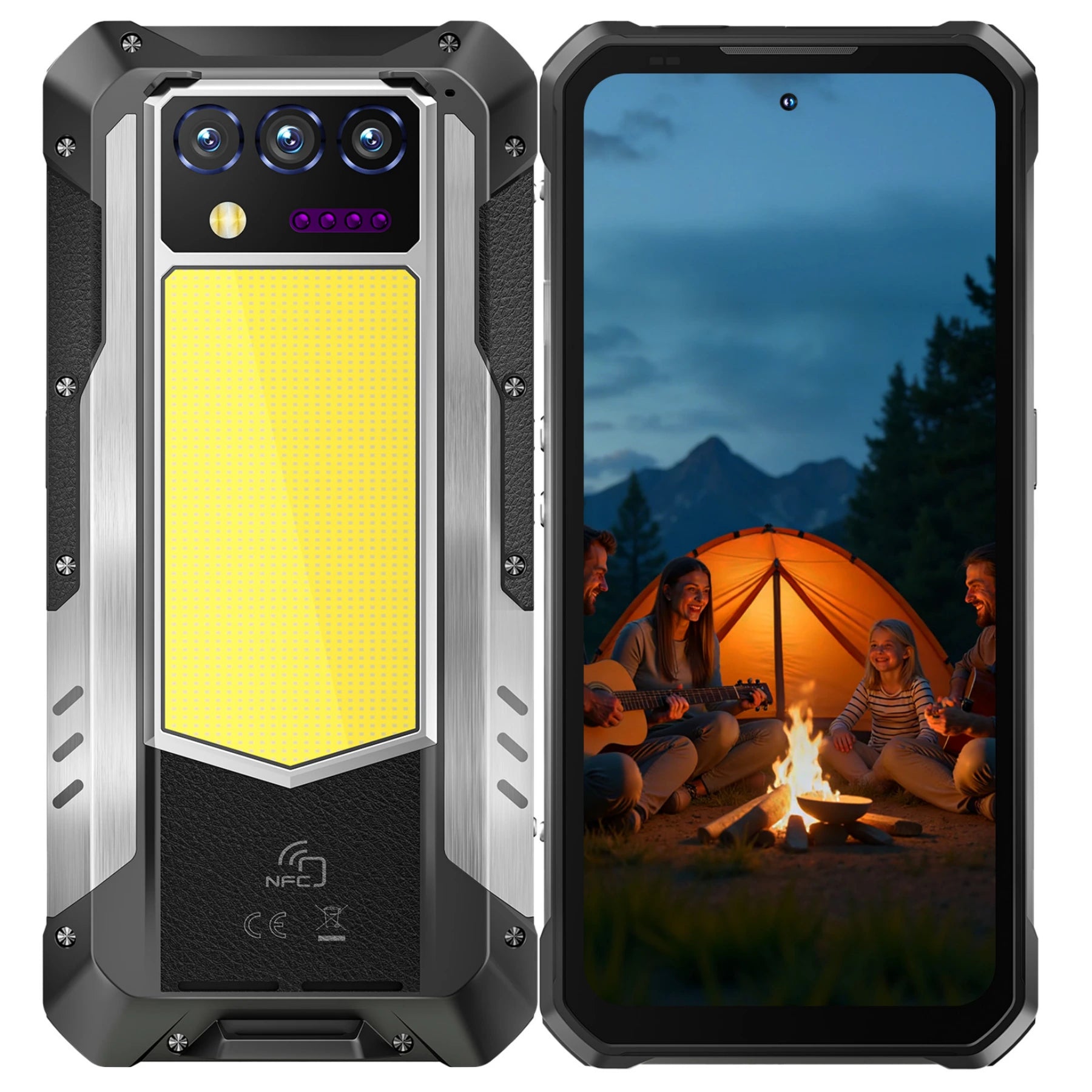
The OUKITEL WP500 Ultra adds thermal imaging to a similar performance platform. It retains the 10,000mAh battery, Dimensity 8300 processor, 1TB storage and 45W charging.
Its 22.9mm thickness and 414.3g weight reflect the additional hardware. The model is therefore most relevant when thermal imaging serves a genuine inspection need—not simply because it is the most feature-rich option. It also combines a Dimensity 8300 processor with 12GB of physical RAM, 1TB of storage, a 108MP main camera, Android 16, and 45W charging, giving professional users flagship-level hardware for demanding field applications.
Thermal imaging can help compare surface-temperature patterns, but it cannot see through walls, determine the cause of a fault or replace professional testing.Beyond thermal imaging, it retains flagship-level features like a 108MP main camera and a hardware privacy kill switch, making it the ultimate secure device for sensitive industrial inspections.
WP60 for Users Who Prioritize a Larger Display
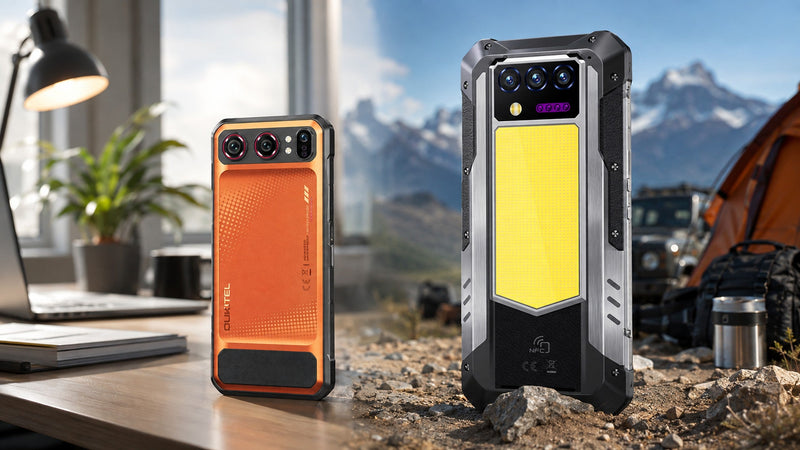
The OUKITEL WP60 uses a 7.2-inch 120Hz display, making it suitable for users who value a larger view of maps, forms, plans and media.
Powered by the Dimensity 7025 processor with 33W charging, the WP60 is optimized for everyday efficiency and immersive media consumption, making it the perfect large-screen alternative for users who prioritize display size over extreme flagship processing.
When Is a 10,000mAh Phone the Right Choice?
A 10,000mAh phone is a practical middle ground for users who need more endurance than a normal smartphone but do not want the extreme weight of the largest rugged batteries.
It is particularly suitable for:
- Long shifts with limited access to outlets
- Repeated GPS and field-application use
- Camping and weekend outdoor trips
- Vehicle-based work and road travel
- Emergency kits that are checked and charged regularly
- Users who occasionally reverse-charge small accessories
A smaller phone may be better for commuters who can charge daily and prioritize pocket comfort. A battery above 15,000mAh may be more appropriate for multi-day off-grid use, remote basecamps or frequent device charging.
OUKITEL’s big-battery phone guide compares those higher-capacity options and their portability costs.
FAQ
Can you take a 10,000mAh phone on an airplane?
Usually, but check the phone’s watt-hour rating and the airline’s rules. The FAA allows rechargeable lithium batteries from 0–100Wh on passenger aircraft without airline approval. Devices containing lithium-ion batteries should be kept in accessible carry-on baggage; if checked, they must be completely switched off and protected from damage and accidental activation. (FAA PackSafe)
Do not determine compliance from 10,000mAh alone. Use the watt-hour value marked on the phone, battery or documentation.
Does a 10,000mAh battery degrade more slowly than a smaller battery?
Not automatically. Battery aging depends on chemistry, temperature, charge cycles, charging behavior and power management. A larger battery may accumulate cycles more slowly if it requires less frequent charging, but capacity alone does not guarantee a longer service life.
Can a 10,000mAh phone replace a power bank?
It can replace a small power bank for occasional emergency charging if the phone supports reverse charging. A separate power bank is more appropriate when several devices need power or the primary phone must preserve its own battery.
Should you charge a 10,000mAh phone overnight?
A modern phone should manage charging automatically, but it should still be charged on a stable, uncovered surface with compatible equipment. Stop using or charging the phone if the battery swells, the enclosure separates, or the device becomes unusually hot, smells abnormal or shows visible damage.
Conclusion
A 10,000mAh phone offers a useful balance between extended battery life and manageable portability, especially for field work, navigation, road trips and outdoor use. It can reduce charging anxiety, but it cannot provide one guaranteed runtime for every user.
The battery number should always be compared alongside weight, thickness, charging power, display, processor, connectivity and specialist features. The WP60 packages 10,000mAh into a lighter, large-screen design; the WP500 emphasizes performance and storage; and the WP500 Ultra adds thermal imaging for relevant professional tasks.
Choose the phone that fits the workload and carrying method—not simply the model with the largest number on its specification sheet.


Leave a comment
Your email address will not be published. Required fields are marked *