


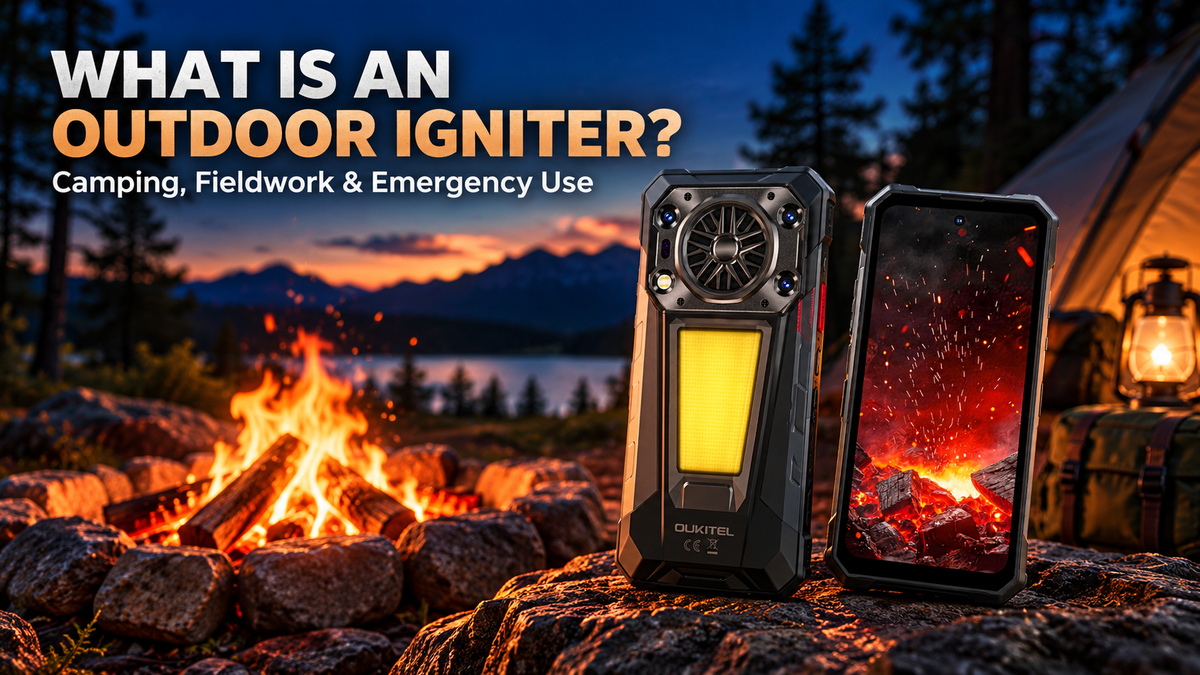
An outdoor igniter is a compact tool designed to ignite prepared tinder, a camp stove, or another controlled fire source when matches or a conventional lighter may be inconvenient. Depending on its design, it may generate an electrical spark or a concentrated source of heat without requiring disposable lighter fluid.
It is most useful during camping, remote fieldwork, emergency preparation, and other outdoor activities where fire may be needed for cooking, warmth, or signaling. However, an igniter does not make every fire safe or easy to start. Users still need dry tinder, a suitable fire area, favorable conditions, and permission to create a flame.
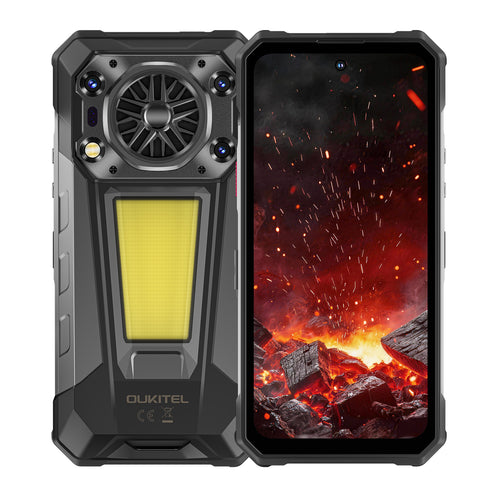
Some outdoor devices now integrate an igniter with other practical tools. The OUKITEL WP63, for example, combines an electric outdoor igniter that uses a flameless heating coil with a rugged phone, large battery, camping light, loudspeaker, and reverse charging. This reduces the number of separate tools a user needs to carry while keeping communication, lighting, power, and fire-starting support in one device.
What Is an Outdoor Igniter?
An outdoor igniter provides the initial heat or spark needed to begin combustion. It does not create a complete campfire by itself. The user must place the ignition source against suitable tinder, allow the tinder to catch, and then gradually add larger material.
Electric outdoor igniters differ from disposable fuel lighters because they draw energy from a battery rather than storing liquid fuel. This can remove the need to monitor lighter-fluid levels, although the igniter becomes dependent on the device having enough remaining power.
Common uses include:
- Lighting properly prepared campfire tinder
- Starting a compatible camp stove
- Igniting a controlled cooking fire
- Creating warmth in an emergency
- Producing a visible signal where fire is legal and safe
- Supporting outdoor work that requires a controlled flame
An outdoor igniter is best treated as one part of a fire-starting system. Dry tinder, safe surroundings, weather awareness, and a backup ignition method remain important.
How an Electric Igniter Works

Electric igniters generally use stored battery power to create a spark or activate a flameless heating coil at the ignition point. The exact operating method depends on the device, so users should follow its product instructions instead of assuming that every electric igniter works the same way.
Unlike a fuel lighter, an electric igniter normally does not depend on a reservoir of butane or another combustible liquid. That can be convenient during long trips because there is no fuel chamber to refill. The main limitation is that the battery must retain enough energy to operate the igniter.
Before activating one, prepare the fire area completely. Place suitable tinder in position, remove unnecessary flammable objects, and identify how the flame will be extinguished. Do not activate an igniter while searching for tinder or arranging equipment with the other hand.
Outdoor Igniter vs. Lighter, Matches, and Ferro Rod
Each fire-starting method has different strengths.
| Fire-starting tool | Main advantage | Main limitation | Best use |
|---|---|---|---|
| Electric outdoor igniter | No disposable fuel is required | Depends on battery power | Campsites, field kits, controlled outdoor use |
| Fuel lighter | Fast, familiar operation | Fuel can run out or leak | Routine short trips |
| Matches | Light and inexpensive | Vulnerable to moisture and wind | Backup in protected storage |
| Ferro rod | Durable and independent of batteries | Requires practice and suitable tinder | Bushcraft and long-term backup |
| Stormproof matches | Better resistance to difficult weather | Limited quantity | Emergency kits |
An electric igniter offers convenience, but experienced outdoor users should avoid relying on a single method. Waterproof matches or a ferro rod can provide redundancy if the electronic device is damaged or its battery becomes depleted.
When Is an Outdoor Igniter Most Useful?
An outdoor igniter is valuable when it solves a specific problem: the user needs a controlled ignition source but wants to avoid carrying another fuel-powered tool.
It can be especially useful during multi-day trips, outdoor work, vehicle travel, and emergency preparation. The benefit becomes greater when the igniter is integrated into equipment that the user already intends to carry.
Starting a Camp Stove or Prepared Campfire
At a legal campsite, an igniter can help start dry tinder or a compatible camp stove. Preparation still determines whether the fire succeeds.
Before ignition:
- Confirm that fires are permitted.
- Use an established fire ring or designated cooking area.
- Clear loose leaves, dry grass, and unnecessary equipment.
- Prepare tinder and progressively larger fuel before starting.
- Keep water or another suitable extinguishing method nearby.
- Make sure someone is responsible for monitoring the fire.
An igniter should not be used to compensate for poor preparation. Wet wood, oversized fuel, or an exposed location can cause repeated failed attempts and unnecessary battery consumption.
Never pour fuel onto an active flame or activate an igniter close to an open fuel container. Fuel vapors can spread beyond the visible liquid and ignite suddenly.
Providing Warmth, Cooking, or an Emergency Signal
Fire can support cooking and warmth when conditions permit. In a genuine emergency, it may also improve visibility to rescuers. These uses require judgment because an uncontrolled fire can turn a manageable problem into a more serious one.
Before creating an emergency fire, consider:
- Nearby vegetation and wildfire risk
- Wind direction and strength
- Availability of bare ground or an established fire area
- Whether smoke could create another hazard
- Whether a safer signaling method is available
- Whether the fire can be fully extinguished
A flashlight, SOS light, whistle, loudspeaker, reflective material, or electronic communication device may be safer than fire in dry or windy conditions. Fire should never be treated as the default signaling method.
Working in Windy, Damp, or Remote Environments
Traditional matches can become unreliable after exposure to moisture, while fuel lighters may be awkward to operate in strong wind. An electric igniter can provide another option, but it cannot make soaked tinder burn or eliminate the effects of severe weather.
For remote travel, keep ignition materials in a dry container and prepare more than one method. A sensible kit may include:
- An electric igniter
- Waterproof matches
- Dry commercial tinder
- A ferro rod
- A compact fire-resistant base where permitted
- An extinguishing method
The goal is not to carry every fire-starting tool available. It is to avoid having a single point of failure when warmth or cooking may matter.
How to Use an Outdoor Igniter Safely

An outdoor igniter should be handled with the same caution as a conventional lighter. Its compact size and electronic design do not make the flame or hot ignition area harmless.
Keep the device away from children and do not activate it as a demonstration, joke, or fidget tool. Use it only when the fire area is ready and the intended material is positioned safely.
Prepare a Controlled Fire Area First
Choose bare ground, a fire ring, or another designated surface. Maintain distance from tents, sleeping bags, dry vegetation, vehicles, batteries, fuel containers, and aerosol products.
Avoid lighting a fire beneath low branches or beside materials that could melt, ignite, or release harmful fumes. Never use an outdoor igniter inside a tent, vehicle, cabin, or another enclosed space.
Once the fire is burning, remain with it. A small fire can spread through grass, roots, leaves, or windblown embers even when the main flame appears controlled.
Keep It Away From Fuel Vapors and Flammable Gear
Do not activate an igniter while handling gasoline, camp fuel, solvents, adhesives, aerosol sprays, or other volatile substances. Close and move fuel containers before attempting ignition.
Check that gloves, jacket cuffs, straps, and loose equipment are clear of the ignition area. Synthetic outdoor materials can melt rapidly and cause serious burns.
If the igniter is integrated into another device, hold the device only as directed. Do not obstruct the ignition area, modify its protective structure, or insert objects into the mechanism.
Check Fire Restrictions and Conditions
The presence of a fire ring does not automatically mean a fire is currently permitted. Restrictions may change because of heat, drought, wind, or local emergency conditions.
If fire use is prohibited, do not activate the igniter. Use a permitted cooking system, prepared food, insulated clothing, electronic signaling equipment, or another non-flame alternative.
The safest decision is sometimes not to start a fire at all.
When an Outdoor Igniter Is Not the Right Tool
An igniter should not be used when the surrounding risk is greater than the benefit of creating a flame.
Avoid using it during:
- Active burn bans
- Extreme wildfire conditions
- Strong or unpredictable wind
- Suspected gas or fuel leaks
- Indoor or enclosed-space emergencies
- Situations involving damaged batteries
- Conditions where extinguishing water is unavailable
- Areas where sparks or flames are prohibited
It is also the wrong tool for investigating a smell of gas, checking whether fuel is present, thawing equipment, drying clothing, or warming a battery. These uses can cause fire, explosion, toxic fumes, or device damage.
Wet Fuel May Require a Different Plan
An electric igniter cannot make saturated material behave like dry tinder. Repeatedly applying heat to wet fuel may drain the battery without producing a stable fire.
Keep a small amount of dry tinder protected from moisture. If all available material is soaked, prioritize shelter, dry clothing, communication, and movement to a safer location rather than depending on repeated ignition attempts.
A Backup Method Still Matters
Electronic tools can fail after physical damage, depleted power, contamination, or prolonged exposure to severe conditions. Carrying a small manual backup adds little weight and prevents the igniter from becoming the only fire-starting option.
This is especially important on routes where cold, isolation, or delayed rescue could make fire more than a convenience.
A Built-In Outdoor Igniter for Remote Adventures
[product-card-1]

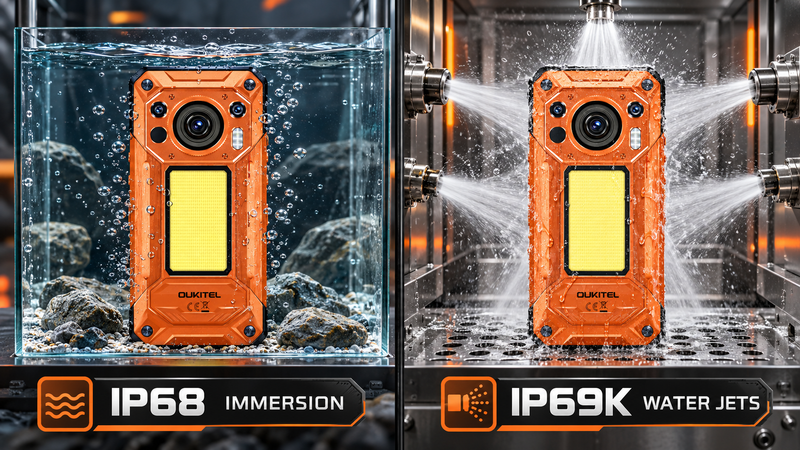
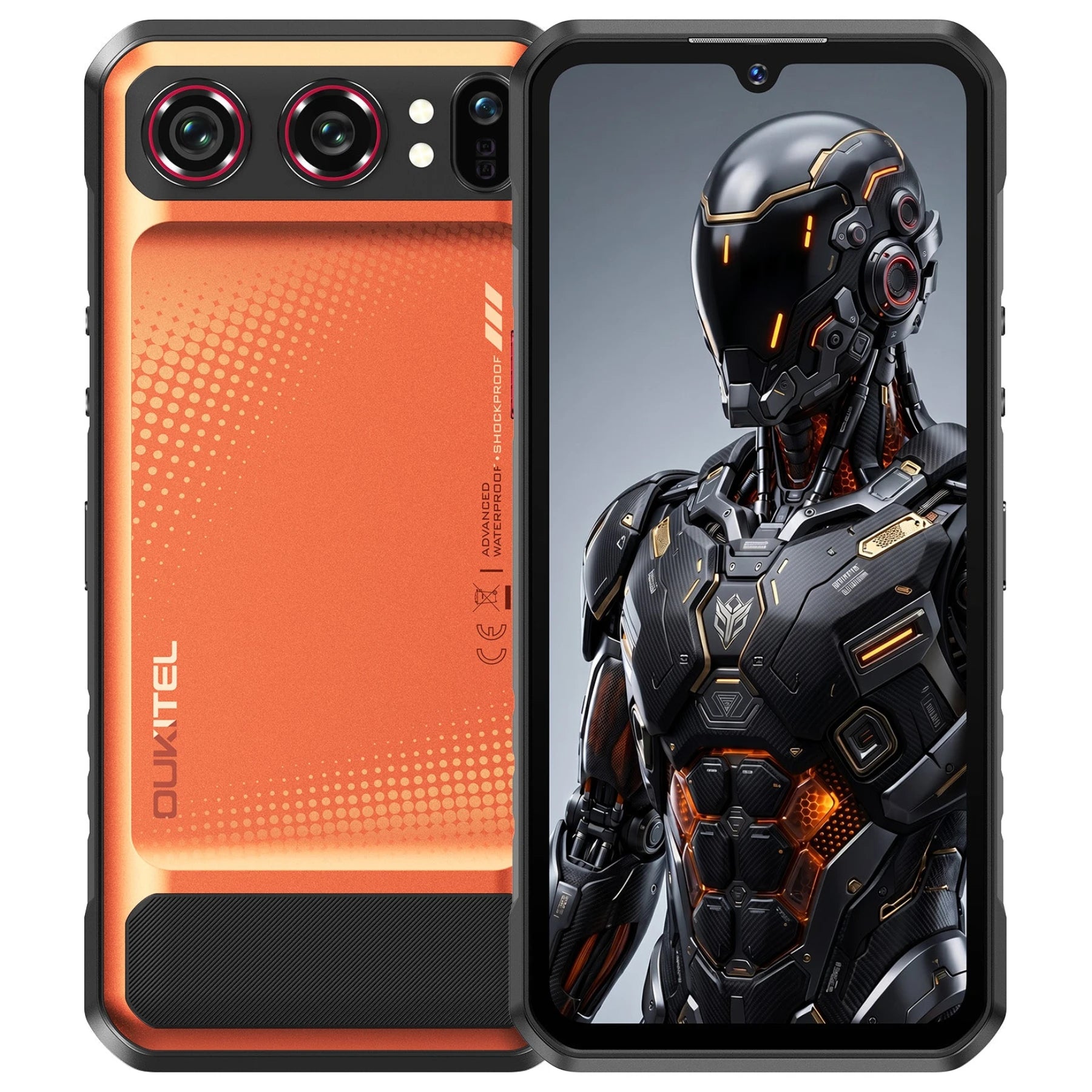
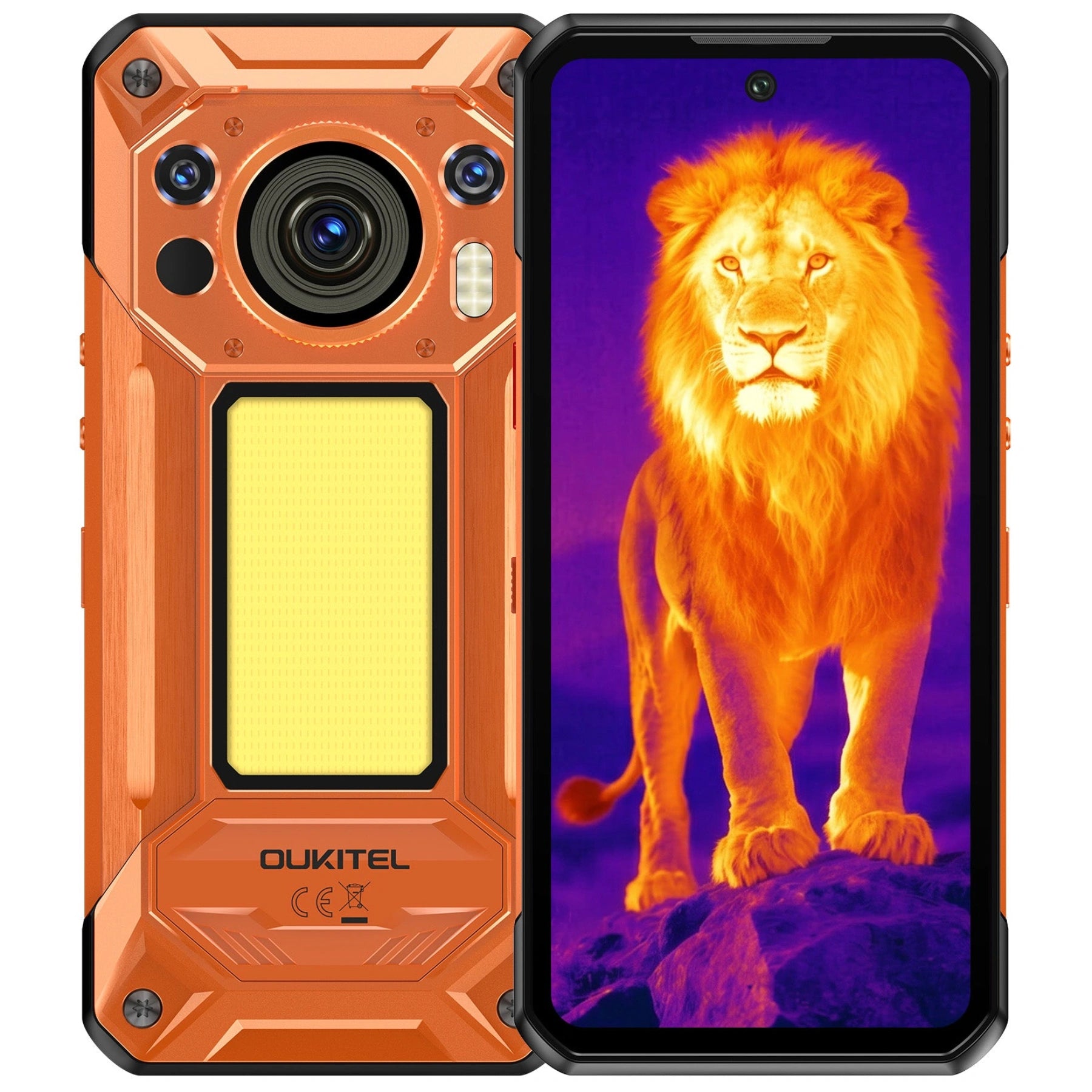
The OUKITEL WP63 integrates an electric outdoor igniter with a flameless heating coil into a rugged smartphone. The feature is intended for controlled outdoor situations such as lighting prepared tinder or supporting cooking, warmth, and signaling when conditions allow.
Integrating the igniter into a phone means the tool is already attached to equipment many users carry for navigation and communication. It also avoids relying on a separate disposable lighter that can be misplaced or run out of fuel.
The igniter is supported by a broader set of outdoor features:
- A 20,000mAh battery
- 33W charging for the phone
- 18W reverse charging
- A built-in Type-C power-sharing cable
- A camping light with multiple brightness and signaling modes
- A high-volume 3W loudspeaker
- IP68 and IP69K ingress protection
- MIL-STD-810H rugged construction
- 5G connectivity and satellite-navigation support
These features give the WP63 a clearer role than a phone with an igniter alone. During a remote trip, the battery can keep maps and communication functions available, the camping light can illuminate a work area, the loudspeaker can help attract attention, and reverse charging can provide emergency power to another compatible device.
The igniter should still be used as a controlled tool rather than a guarantee of survival. It cannot replace fire awareness, suitable tinder, local permission, an extinguishing method, or backup equipment.
Readers planning longer trips can compare related priorities in the guides to choosing a phone for camping and hiking and checking reverse-charging compatibility. Other outdoor models are available through the OUKITEL rugged-phone collection.
What to Check Before Choosing an Outdoor Igniter
Before buying an igniter or a device with one built in, look beyond the novelty of creating a flame.
Consider the following questions:
- Is the activation control protected against accidental use?
- Can the device be operated securely with cold or wet hands?
- Does it depend on a rechargeable battery?
- How will it be stored around children or shared equipment?
- Is the ignition area protected from dirt and damage?
- Are operating instructions available?
- Can it be cleaned without touching sensitive components?
- Will a separate backup still be required?
- Are there travel restrictions affecting the device?
For an integrated device, also consider its primary function. A phone should still meet your needs for network compatibility, navigation, battery life, durability, storage, cameras, and everyday usability. The igniter is most valuable when the rest of the device already fits the trip.
FAQ
Does an Electric Outdoor Igniter Need Lighter Fluid?
No. An electric outdoor igniter uses battery power rather than a refillable reservoir of lighter fluid. It still requires sufficient charge and suitable tinder or fuel.
Can an Outdoor Igniter Work at High Altitudes?
It may work, but starting and maintaining a fire can become more difficult because of wind, cold, moisture, and reduced oxygen. Carry dry tinder and a backup ignition method, and follow local fire restrictions.
Can You Take a Device With a Built-In Igniter on an Airplane?
Do not assume it is permitted. A built-in igniter may be restricted in checked luggage, cabin baggage, or both. Contact the airline and departure airport before traveling, and do not pack the device if its acceptance cannot be confirmed.
Conclusion
An outdoor igniter is a compact ignition tool for prepared campfires, compatible stoves, emergency warmth, and signaling where flames are legal and conditions are controlled. Electric models remove the need for disposable lighter fuel, but they still depend on battery power, dry tinder, safe surroundings, and responsible handling.
The OUKITEL WP63 expands the idea by combining an electric igniter that uses a flameless heating coil with a 20,000mAh battery, camping light, loudspeaker, reverse charging, built-in charging cable, and rugged protection. That combination can reduce the number of separate tools carried during camping, fieldwork, overlanding, or emergency preparation.
Its value comes from being available when a controlled ignition source is genuinely useful—not from encouraging a fire in every situation. Prepare the fire area first, obey restrictions, maintain a backup method, and never create a flame unless it can be safely controlled and completely extinguished.



Leave a comment
Your email address will not be published. Required fields are marked *