


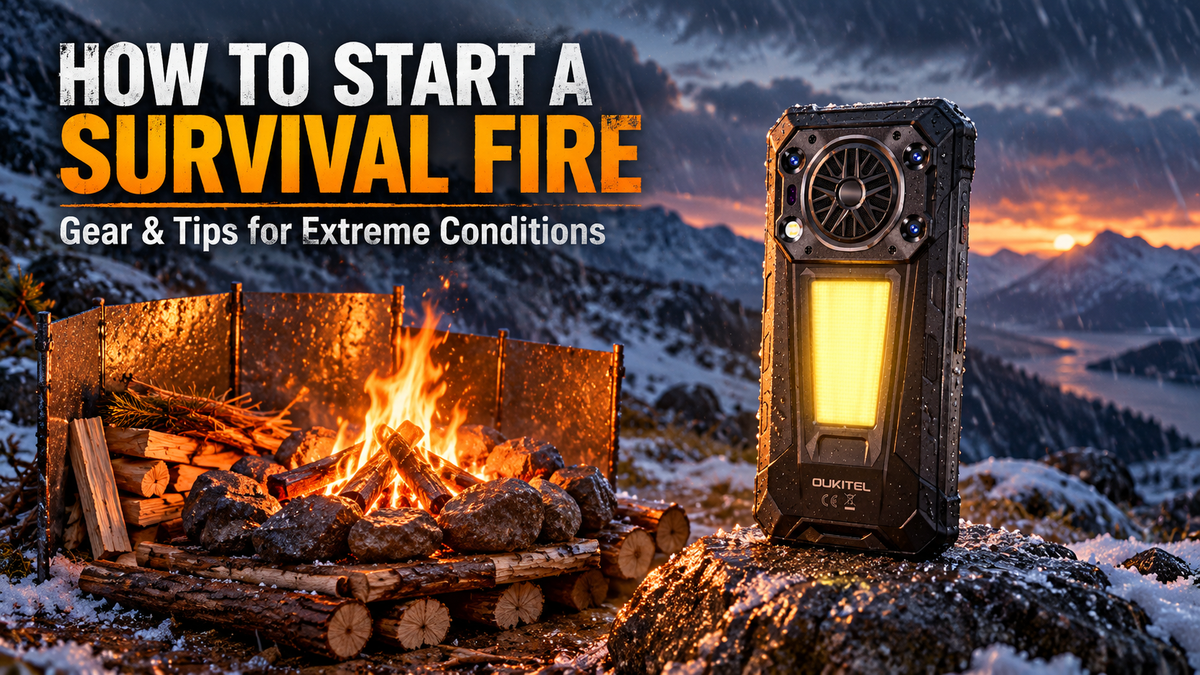
To start a survival fire in extreme conditions, first choose a safe, sheltered site, build a dry base, and prepare tinder, kindling, and larger fuel before attempting ignition. Use a reliable primary igniter backed by at least one independent method, protect the initial flame from wind and moisture, and add fuel gradually without restricting airflow.
A fire can provide warmth, help dry damp equipment, heat food, and create a visible signal. However, it is not always the safest response. Strong wind, dry vegetation, local fire restrictions, fuel leaks, or an enclosed shelter can make ignition more dangerous than the cold or darkness you are trying to manage.
Good preparation matters more than repeatedly applying a flame to wet material. A dependable survival-fire plan combines site selection, dry tinder, prepared fuel, controlled ignition, backup equipment, and a way to extinguish the fire completely.
Decide Whether Starting a Fire Is Safe and Necessary
Before gathering wood, decide whether a fire will genuinely improve your situation. If you have warm clothing, an insulated shelter, communication equipment, and enough food, creating a fire in dangerous conditions may add unnecessary risk.
A survival fire is most useful when it can provide:
- Essential warmth during dangerous cold
- A controlled way to heat food or water
- A place to dry damp outer layers
- Light at a fixed emergency location
- A visible signal where fire is permitted
- Psychological reassurance while waiting for help
Do not start one simply because you have an ignition tool. The ability to create heat does not guarantee that the surrounding environment can contain it safely.
Check Fire Restrictions, Wind, and Wildfire Risk
Look at the ground, vegetation, weather, and surrounding terrain. Dry grass, loose leaves, low branches, peat, roots, and strong wind can allow a small flame to spread rapidly.
Avoid ignition when:
- A burn ban or fire restriction is active
- Wind is strong or changing direction unpredictably
- The ground contains dry roots or deep organic material
- Sparks could reach tents, vehicles, fuel, or dry vegetation
- You cannot obtain enough water or soil to extinguish the fire
- Smoke could endanger other people or block visibility
- The only available location is enclosed
Wind deserves particular attention. A sheltered hollow may reduce direct gusts, but it can also collect smoke. Choose a location that limits wind without trapping combustion gases around people.
Choose Fire Only When It Improves Your Situation
Time and energy are limited during an emergency. Collecting wet fuel for an hour may be less useful than building shelter, changing into dry layers, sending your location, or moving out of an exposed area.
Prioritize immediate threats:
- Move away from hazards.
- Treat serious injuries.
- Protect yourself from wind and precipitation.
- Establish communication or signaling.
- Start a fire only if it can be managed safely.
A fire is a tool, not the complete survival plan.
Prepare a Safe Fire Site Before Ignition

Prepare the site before activating a lighter, match, ferro rod, or electric igniter. Once tinder begins burning, you should not need to leave the flame unattended while searching for wood.
Select a level area away from overhanging branches, tents, sleeping bags, backpacks, fuel containers, batteries, and synthetic clothing. Use an established fire ring whenever one is available.
Find a Sheltered Location Away From Tents and Vegetation
Natural features such as large rocks or a gentle earth bank can reduce wind. Maintain enough open space to prevent heat and sparks from reaching nearby objects.
Clear loose combustible material around the fire site. Do not build directly beside a tree trunk, beneath exposed roots, or against a rock face that may crack when heated.
Never use a fire inside:
- A tent
- A vehicle
- A snow cave
- A closed cabin without an approved fire system
- A small improvised shelter
- Any area containing fuel vapors
Open flames consume oxygen and produce dangerous gases even when smoke is not immediately obvious.
Build a Dry Base on Wet, Frozen, or Snow-Covered Ground
Wet or frozen ground can absorb heat from a small flame. Snow may melt beneath the fire, causing the fuel structure to collapse or become soaked.
Create a stable platform using appropriate dry material. A layer of dry wood placed side by side can separate the first flame from moisture below. In snow, the platform must be wide and stable enough to avoid tipping as the surface changes.
Do not use flammable manufactured materials, sealed containers, batteries, aerosol cans, or treated wood as a fire base.
Keep an Extinguishing Method Ready
Before ignition, place water, loose mineral soil, or another suitable extinguishing material within reach. The correct method depends on the location and type of fire, but you should not begin without a realistic way to stop it.
A fire that cannot be extinguished is not controlled.
Collect and Prepare Fuel for Difficult Conditions
Successful fires are built from several sizes of material. Large branches rarely ignite directly, especially when they are cold or wet.
Prepare three basic groups:
| Fuel stage | Purpose | Suitable characteristics |
|---|---|---|
| Tinder | Receives the first heat | Fine, dry, easy to ignite |
| Kindling | Expands the small flame | Thin pieces with exposed dry surfaces |
| Larger fuel | Sustains the fire | Progressively thicker, reasonably dry wood |
Arrange enough material before ignition. In rain or cold, the first flame may last only briefly. Delays between fuel stages can allow it to go out.
Find Dry Material Inside Wet Wood
Wood that looks wet outside may contain drier material beneath its outer surface. Dead branches protected by dense tree cover or held above the ground are often more useful than wood lying in water, mud, or snow.
Split or break suitable material only when it can be done safely with the tools available. Exposing the interior can reveal a drier surface that catches more easily.
Avoid damaging living trees simply to obtain fuel. Fresh green wood contains substantial moisture and generally burns poorly.
Prepare Enough Fuel Before Creating a Flame
Make a larger supply than you initially expect to need. Damp fuel may burn slowly, and cold conditions can increase the amount required to maintain useful heat.
Organize material by size so you can reach it without leaving the fire. Keep the driest tinder and kindling protected from rain and ground moisture.
Choose the Right Fire-Starting Gear
Extreme conditions call for redundancy. No single ignition method should be expected to work after every drop, storm, battery failure, or equipment problem.
A practical kit may include:
- An electric igniter
- A fuel lighter
- Waterproof matches
- A ferro rod
- Protected commercial tinder
- Dry natural tinder stored in a waterproof bag
- A compact cutting tool appropriate for the trip
Keep ignition methods in separate locations. If every match, lighter, and tinder bundle is stored in one wet pouch, carrying several tools provides little real redundancy.
Use an Electric Igniter for Prepared Tinder
An electric igniter uses a flameless heating coil to apply focused heat without disposable lighter fuel. It is useful only when the coil can make direct contact with thin, dry tinder.
Do not expect an electric igniter to light a thick branch or saturated wood. Prepare fine tinder first, position it inside the fire structure, and activate the igniter only when the surrounding site is ready.
Keep fingers, gloves, straps, and loose clothing away from the flameless heating coil. Allow the coil to cool before closing its protective cover or placing the device into a pocket.
Carry an Independent Backup
Battery-powered ignition should be supported by a method that does not depend on the same battery. Waterproof matches or a ferro rod can remain usable if an electronic device runs out of power.
A fuel lighter can provide a familiar backup, but protect it from moisture and inspect it before the trip. Do not wait until an emergency to discover that it is empty or damaged.
Start a Fire in Wind, Rain, Snow, or Cold
The first flame is the most vulnerable stage. Concentrate heat in a small area, allow air to reach it, and protect it from direct precipitation and strong wind.
Build the fuel structure loosely enough for airflow. Packing material tightly can smother the flame, while spacing it too widely prevents heat from reaching the next pieces.
Shield the Ignition Area Without Trapping Smoke
Use the landscape or a stable, nonflammable windbreak to reduce direct gusts. The shield should not sit so close that it reflects excessive heat onto equipment or blocks all airflow.
Position your body upwind when possible so smoke and sparks move away from your face. Avoid leaning directly over the tinder while using an igniter.
In rain, prepare fuel beneath temporary overhead protection only if that protection can be removed before ignition and kept safely away from the flame. Never light a fire beneath a low tarp, poncho, or tent awning.
Create a Stable Flame Before Adding Larger Fuel
Begin with tinder and the thinnest dry kindling. Once several pieces are burning steadily, add slightly larger material.
A useful progression is:
- Ignite prepared tinder.
- Allow the ember or flame to spread through the tinder bundle.
- Add thin kindling without crushing the flame.
- Wait for the kindling to burn steadily.
- Add larger pieces gradually.
- Preserve gaps for airflow.
Adding a heavy log too soon can flatten the tinder and remove heat from the developing fire.
Adjust for Wet or Frozen Ground
If the flame weakens repeatedly, inspect the base. Meltwater, damp soil, or snow may be cooling the tinder from below.
Strengthen the dry platform and reduce exposure to precipitation. Do not simply apply the igniter for longer periods. Correcting the fuel and base is usually more effective than repeatedly heating unsuitable material.
OUKITEL WP63 as Part of an Outdoor Fire Kit
[product-card-1]

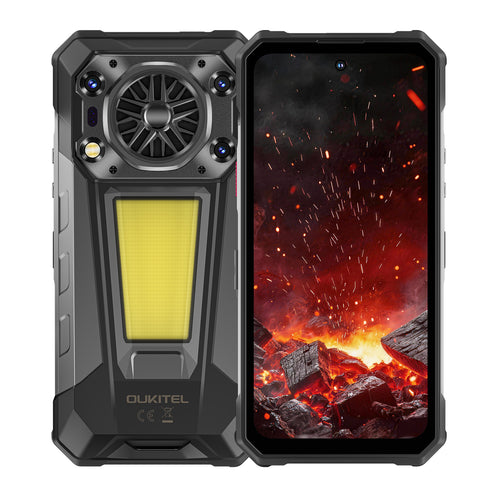
The OUKITEL WP63 integrates an electric outdoor igniter into the top of the phone. When viewed from the front, the transparent igniter module rises at approximately the ten-o’clock position above the front camera. Inside it, a flameless heating coil applies focused heat to properly prepared tinder.
The igniter includes two stages of protection. Opening its cover does not automatically activate the flameless heating coil; the function must also be enabled through the phone’s dedicated control. Users should prepare the fire site and tinder before activating it and allow the coil to cool before closing the module.
The WP63 also provides tools that can support a wider emergency plan:
- A 20,000mAh battery for extended phone operation
- 33W charging for replenishing the phone
- 18W reverse charging
- A built-in Type-C cable for compatible devices
- A camping light with multiple lighting and signaling modes
- A high-volume 3W loudspeaker
- IP68 and IP69K ingress protection
- MIL-STD-810H rugged construction
The camping light can illuminate fuel preparation without occupying one hand, while the loudspeaker and lighting modes provide alternatives to fire-based signaling. Reverse charging can supply emergency energy to a compatible GPS device, phone, or small accessory.
These features do not replace essential survival equipment. The WP63 should be paired with protected tinder, a manual ignition backup, shelter materials, suitable clothing, navigation tools, and a communication plan.
For broader trip preparation, see the guide to choosing a phone for camping and hiking. Users comparing other outdoor devices can also explore the OUKITEL rugged-phone collection.
Maintain the Fire Without Wasting Fuel
Once the fire is stable, keep it no larger than necessary. A compact fire requires less fuel, is easier to control, and can still provide useful warmth.
Add fuel gradually. Large additions can reduce airflow or create more heat and sparks than the site can contain.
Preserve Airflow
Watch how the fire responds after each piece is added. Dense smoke and a weakening flame may indicate wet fuel or restricted airflow.
Reposition material carefully with an appropriate tool. Do not reach into the fire with bare hands or move burning pieces outside the prepared area.
Dry the Next Pieces Near—Not Over—the Fire
Damp wood can be placed near enough to benefit from warmth, but not so close that it ignites unexpectedly, blocks movement, or falls into the fire.
Do not hang wet clothing directly above an open flame. Synthetic materials can melt, and clothing may fall as supports shift.
Know When to Stop Trying
Repeated failure can consume time, energy, tinder, and battery power. If conditions prevent a safe, stable flame, switch priorities.
Focus on:
- Insulation from the ground
- Protection from wind and precipitation
- Dry clothing
- Emergency communication
- Light or sound signaling
- Warm food or drink from a safe alternative
- Moving to shelter when navigation remains safe
Never use gasoline, alcohol, aerosol sprays, batteries, plastics, or unknown chemicals to force a fire to start. Sudden ignition, toxic fumes, and explosions can cause injuries far worse than the original exposure problem.
Extinguish the Fire Completely Before Leaving

Stop adding fuel well before departure. Allow larger pieces to burn down, then use the available extinguishing method until the fire is fully cooled.
Spread remaining material carefully, extinguish it, and inspect the surrounding ground. Roots and organic soil can retain heat below the visible surface.
Do not leave until:
- No flames remain
- No embers glow
- No smoke appears
- The surrounding ground is cool
- Burned material cannot reignite
- The area is safe if wind returns
Never bury a hot fire and assume it is extinguished. Covered embers may continue burning beneath the surface.
FAQ
What Is the Best Tinder to Carry for Wet Conditions?
The best tinder is dry, lightweight, easy to ignite, and stored in a sealed waterproof container. Carry prepared tinder rather than depending entirely on natural material remaining dry.
Can You Build a Survival Fire Directly on Snow?
A fire should not be built directly on unstable snow. Construct a wide, dry, stable platform first so melting snow does not soak the fuel or cause the fire structure to collapse.
How Many Fire-Starting Methods Should a Survival Kit Include?
Carry at least two independent methods. A battery-powered igniter should be backed by an option such as waterproof matches, a fuel lighter, or a ferro rod.
Can an Electric Igniter Work at High Altitude?
The igniter may still produce heat, but wind, cold, moisture, and reduced oxygen can make the tinder and developing flame harder to sustain. Use dry prepared tinder, shelter the ignition area, and carry a backup method.
Conclusion
Starting a survival fire in extreme conditions depends more on preparation than flame power. Choose a safe site, build a dry base, prepare several sizes of fuel, protect the first flame, and keep independent ignition methods available.
The OUKITEL WP63 brings an electric igniter with a flameless heating coil, large battery, camping light, loudspeaker, reverse charging, and rugged protection into one outdoor device. Its built-in igniter can reduce the need for a separate disposable lighter, but it works best as part of a complete kit rather than as the only fire-starting option.
Start a fire only when it improves your situation and can be safely controlled. Keep it small, monitor it continuously, and extinguish every ember before leaving.









Leave a comment
Your email address will not be published. Required fields are marked *