


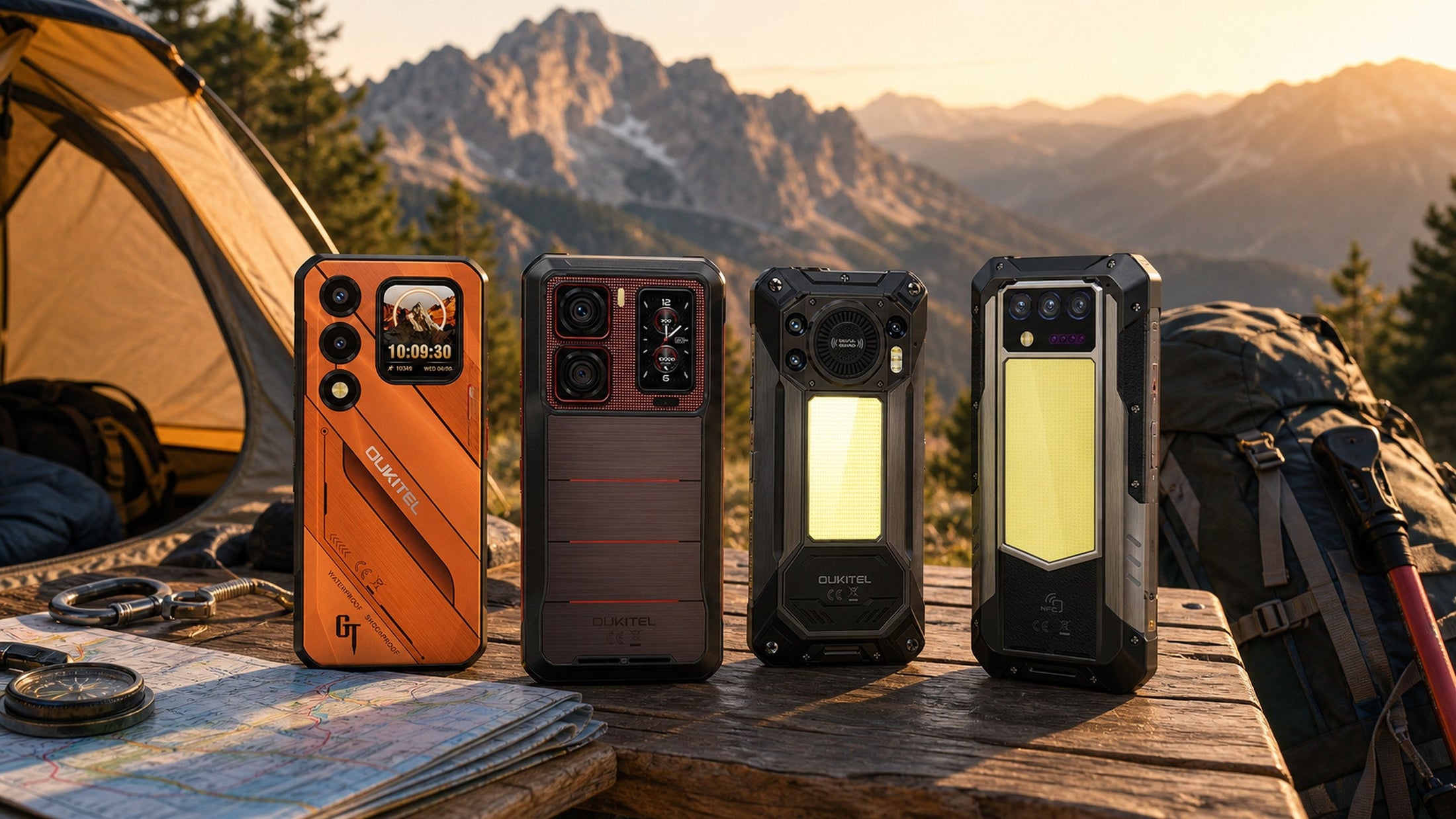
The best phone for camping and hiking should provide enough battery life for the trip, remain usable in rain and dust, store maps offline, support the required network, and fit comfortably into your carrying system. The largest battery is not always the best choice because additional capacity also increases thickness and pack weight.
For day hikes and regular travel, the slimmer OUKITEL WP66 offers an 11,000mAh battery without moving into extreme-capacity territory. The WP300 is a balanced option for multi-day trips, while the WP61 Plus suits groups that prioritize battery reserve and compatible DMR communication. The WP100 Titan provides the most energy for basecamps and vehicle-supported travel but is too heavy for many weight-conscious backpackers.
No phone should be treated as the only emergency device on a remote route. Cellular service can disappear, batteries can fail, and terrain can limit radio communication.
Quick Verdict
Best for Day Hikes and Easier Everyday Carry: OUKITEL WP66
The OUKITEL WP66 is the most suitable starting point for hikers who want a large battery without the extreme dimensions of an expedition-focused phone.
Its current specifications include:
- 11,000mAh battery
- 33W input charging
- Reverse-charging support
- 15.8mm thickness
- 5G MediaTek Dimensity 7025 processor
- Android 16
- 512GB storage with expansion support
- IP68, IP69K, and MIL-STD-810H ratings
The WP66 is still a rugged, big-battery phone rather than an ultralight device. However, its 15.8mm body is considerably thinner than the WP300, WP61 Plus, and WP100 Titan. That makes it easier to integrate into everyday use and shorter outdoor trips.
Its 450-nit display is another consideration. It should be tested in the lighting conditions where it will be used, especially if the route crosses exposed terrain in bright sunlight.
Best Balance for Multi-Day Hiking: OUKITEL WP300
The OUKITEL WP300 balances capacity, charging, storage, and weight more evenly than the highest-capacity options.
Its listed specifications include:
- 16,000mAh battery
- 45W input charging
- 18W reverse charging
- 510g body weight
- 23.2mm thickness
- 5G and Wi-Fi 6
- 512GB storage with expansion support
- Modular detachable accessories
- IP68, IP69K, and MIL-STD-810H ratings
A 510g phone is still heavy for backpacking. However, it is 141.1g lighter than the WP61 Plus and 366.6g lighter than the WP100 Titan. For hikers who want more than 11,000mAh without approaching one kilogram, the WP300 offers a more manageable compromise.
Its availability can vary by color and regional variant, so check the product page before relying on it for an upcoming trip.
Best for Group Communication and Long Remote Trips: OUKITEL WP61 Plus
The OUKITEL WP61 Plus is designed for users who value endurance and an additional group-communication method more than minimal pack weight.
Its specifications include:
- 20,000mAh battery
- 45W input charging
- Supported reverse charging
- Built-in 2W DMR walkie-talkie
- 651.1g body weight
- 27.5mm thickness
- Android 16
- 512GB storage
- 1,200-lumen camping light
- IP68, IP69K, and MIL-STD-810H ratings
The DMR function can provide another way for nearby group members using compatible equipment to communicate without cellular service. It is not equivalent to a satellite messenger or personal locator beacon, and it does not guarantee contact with emergency services.
The WP61 Plus is better suited to group trips, remote worksites, overlanding, and situations where communication and battery reserve justify its 651.1g weight. Solo ultralight hikers are likely to find it excessive.
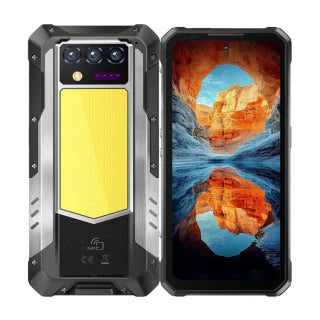
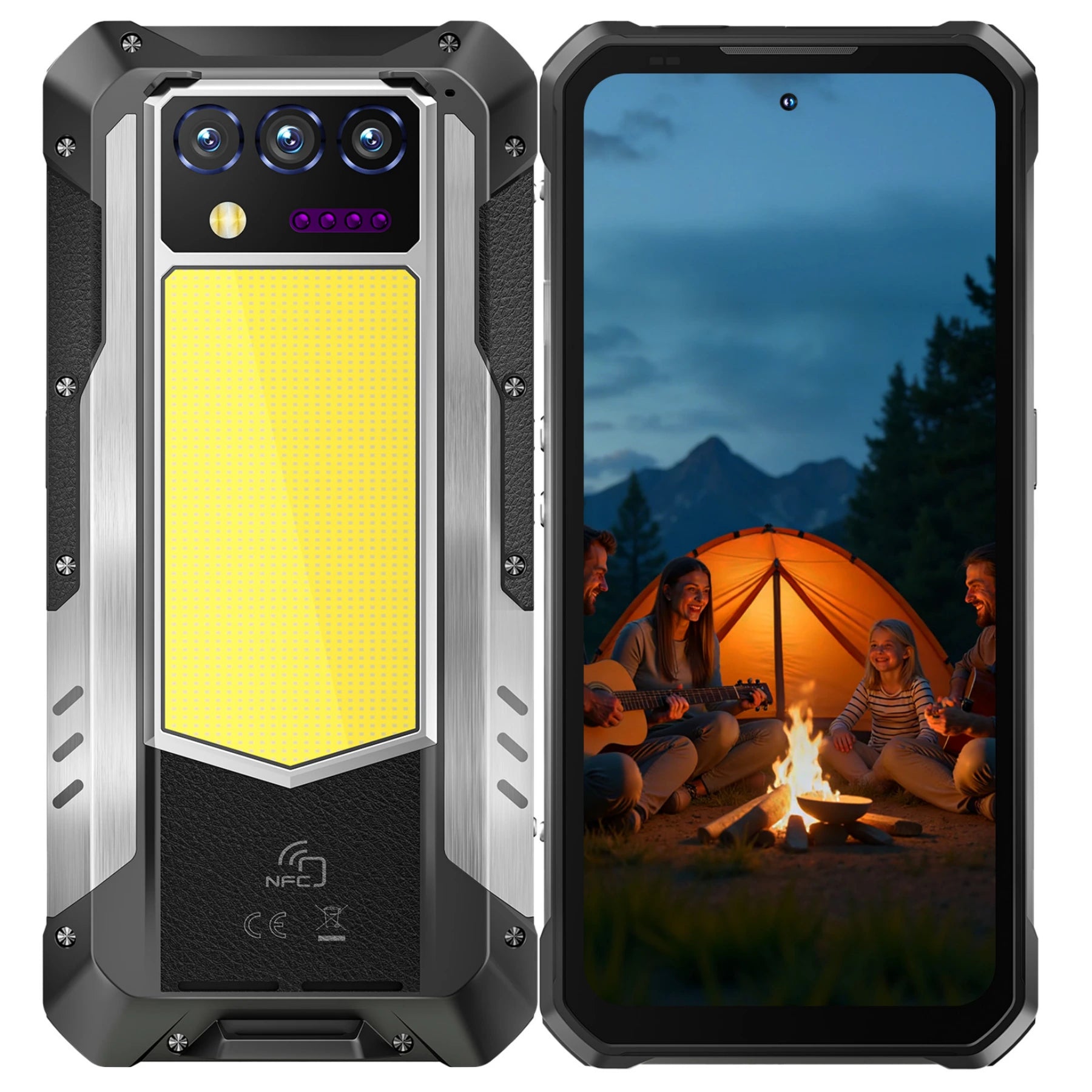
Best for Basecamps and Maximum Off-Grid Capacity: OUKITEL WP100 Titan
The OUKITEL WP100 Titan offers the largest battery and the widest range of integrated camp functions in this comparison.
Its official specifications list:
- 33,000mAh battery
- 66W input charging
- 18W reverse charging
- 876.6g body weight
- 35.6mm thickness
- Built-in 100-lumen projector
- 1,200-lumen camping light
- Dual-frequency L1+L5 GPS support
- 5G MediaTek Dimensity 7300 processor
- IP68, IP69K, and MIL-STD-810H ratings
The WP100 Titan makes the most sense at a basecamp, in a vehicle, or on a trip where it can replace a phone, power bank, camp light, and entertainment device.
At 876.6g, it is not a conventional backpacking phone. Carrying it on a long trail requires a secure pack location and a clear reason for needing its capacity and integrated tools. Availability should also be checked by region and variant before purchase.
Match the Phone to the Type of Outdoor Trip

Choosing the right phone starts with the route rather than the specification sheet.
Prioritize Low Weight and Navigation for Day Hikes
A day hiker who starts with a fully charged phone may not need 20,000mAh or 33,000mAh. Lower weight and easier access can be more useful than several days of theoretical runtime.
For a day hike, prioritize:
- Reliable offline-map support
- Sufficient storage
- A screen that is readable outdoors
- Secure one-handed handling
- Water and dust protection
- Enough battery for navigation and emergency calls
- Compatibility with the local cellular network
- A comfortable pocket, holster, or pack location
The WP66 fits this use better than the extreme-capacity models because its 11,000mAh battery and thinner body provide a more practical balance.
Balance Battery Capacity and Pack Weight for Backpacking
Multi-day backpacking creates a harder decision. Navigation, photography, weak signals, cold temperatures, and long periods away from an outlet can increase power use, but every additional gram must be carried across the entire route.
The WP300 is the middle option in this comparison. Its 16,000mAh capacity can support longer trips, while its 510g weight remains below that of the WP61 Plus and WP100 Titan.
Before choosing, compare the phone with an alternative setup. A smaller phone plus a power bank may weigh less, more, or about the same depending on the devices selected. A separate power bank also lets a hiker keep backup energy isolated instead of storing everything in one device.
Choose Maximum Capacity for Basecamps, Overlanding, and Vehicle Camping
Basecamp and vehicle-supported trips reduce the penalty of a heavy phone. In these settings, integrated lights, reverse charging, a projector, and maximum battery capacity can be more useful.
The WP100 Titan is the clearest fit when the device stays mostly at camp or in a vehicle. The WP61 Plus is more suitable when crew communication or movement between nearby work and camp areas matters.
Do not use a phone’s camping light as the only light source. Carry a separate headlamp or flashlight so that navigation and communication do not depend on the same battery.
What to Compare in a Camping or Hiking Phone
Battery capacity attracts attention, but it should be evaluated alongside several other factors.
Weight, Thickness, Grip, and Carrying Method
A rugged phone should be carried where it can be reached without falling or interfering with movement.
Model
Battery
Weight
Thickness
Best fit
WP66
11,000mAh
Not listed on current page
15.8mm
Day hikes and regular outdoor use
WP300
16,000mAh
510g
23.2mm
Multi-day trips
WP61 Plus
20,000mAh
651.1g
27.5mm
Group and remote trips
WP100 Titan
33,000mAh
876.6g
35.6mm
Basecamp and vehicle camping
Do not place a heavy phone in an open pack pocket where it can fall during scrambling. A closed hip-belt pocket, secured shoulder pouch, or protected internal compartment may be more appropriate.
Test the carrying setup with the pack fully loaded. A phone that feels manageable at home may bounce, pull on a strap, or restrict movement after several hours.
Battery Capacity, Charging Time, and Reverse Charging
Battery use depends on:
- Screen brightness
- Refresh rate
- GPS activity
- Camera and video use
- Cellular signal strength
- Hotspot use
- Temperature
- Background applications
- Camping lights
- Reverse charging
Poor coverage can increase power consumption because the phone continues searching for a network. The National Park Service advises hikers in low-coverage areas to consider turning a phone off or using airplane mode until it is needed. This preserves battery, but users must understand which navigation, Bluetooth, or emergency features remain available under their chosen settings. See the Mount Rainier hiking guidance.
Reverse charging is useful for topping up earbuds, a watch, a camera, or another phone. It still consumes the source phone’s battery and loses some energy during transfer. For step-by-step instructions, see how to charge one phone with another.
Offline Navigation, Screen Visibility, and Storage
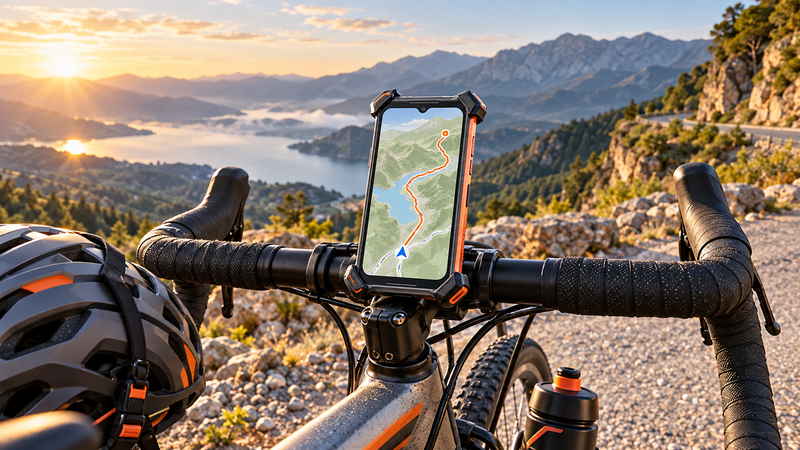
GPS positioning and map data are different systems. A phone may continue calculating its position without cellular service, but it cannot display complete map information unless that data has already been downloaded or stored.
Before leaving coverage:
- Download the full route and surrounding area.
- Save the trailhead and emergency exit points.
- Store permits and reservations offline.
- Save screenshots of essential route information.
- Test the map application in airplane mode.
- Carry a backup map and compass appropriate to the route.
- Confirm that another group member also has the route.
Storage matters when the phone must hold large offline maps, photos, videos, and travel documents. All four compared models provide substantial internal storage, but available capacity is lower than the advertised total after the operating system and installed applications are considered.
A bright display helps in exposed terrain, although maximum brightness uses more power. Keep the screen off when it is not required and avoid running navigation continuously if periodic checks are sufficient.
Water, Dust, Drop, and Temperature Protection
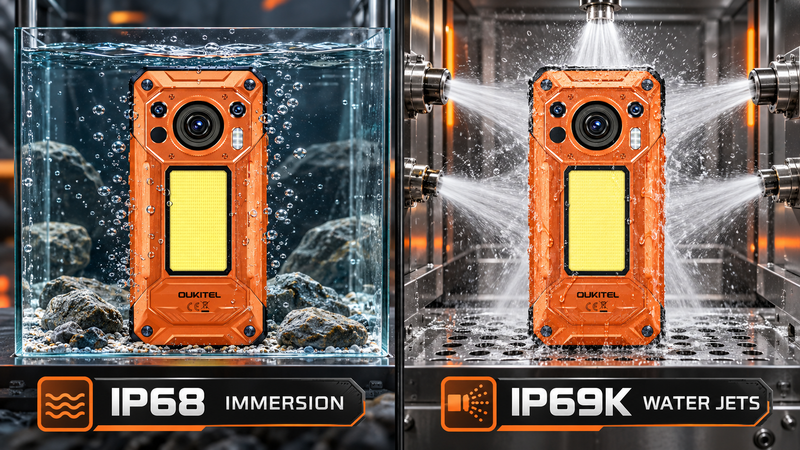
IP68, IP69K, and MIL-STD-810H ratings indicate specific test conditions. They do not make a phone immune to:
- Saltwater corrosion
- Repeated impacts
- Damaged port covers
- Chemical exposure
- Water entering a cracked enclosure
- Pressure beyond the test conditions
- Charging while the port is wet
- Battery damage from extreme heat or cold
Inspect the phone after a hard fall. A distorted frame, cracked display, loose cover, or damaged seal may reduce the protection it originally provided.
Do not connect a charging cable until the port is clean and completely dry.
Compare the Best OUKITEL Phones for Camping and Hiking
| Model | Main advantage | Main limitation |
|---|---|---|
| WP66 | Thinner body with 11,000mAh capacity | Weight is not listed on the current product page |
| WP300 | Balanced 16,000mAh capacity and 510g weight | Availability may vary |
| WP61 Plus | 20,000mAh battery and compatible DMR communication | Heavy for backpacking |
| WP100 Titan | Maximum capacity and integrated camp functions | 876.6g weight |
The WP66 is the most appropriate of these four for shorter hikes and everyday use. The WP300 provides a stronger multi-day balance. The WP61 Plus is a specialized option for groups and remote operations, while the WP100 Titan is closer to a mobile basecamp tool.
Product specifications and availability were checked on August 26, 2026. Prices, stock, software, and regional variants can change.
Other current options can be compared through the OUKITEL rugged phone collection.
Build a Reliable Navigation and Communication Setup

A phone should support a larger outdoor plan rather than replace it.
Download Maps, Routes, Contacts, and Trip Details Before Leaving
Save the following information offline:
- Route and surrounding map area
- Trailhead location
- Expected turnaround time
- Emergency contacts
- Park or land-management contacts
- Campsite information
- Weather forecast captured before departure
- Medical information
- Vehicle location
- Group members’ phone and radio details
Share the itinerary with a trusted contact who is not joining the trip. Include the route, group members, expected return time, vehicle information, and when the contact should report an overdue party.
For a broader preparation checklist, use the separate guide to staying connected and prepared while hiking.
Use Cellular, Wi-Fi, and Group Radio Functions Within Their Limits
Cellular coverage may be weak or completely unavailable beyond developed areas. A 5G label does not guarantee coverage, and the phone must support the carrier’s regional bands.
DMR communication can help nearby group members when they use compatible radios with matching settings. Its range is affected by:
- Trees and terrain
- Elevation
- Rock and buildings
- Interference
- Antenna position
- Frequency and power
- Regional regulations
Do not advertise or depend on a single maximum range. Test the equipment before departure and agree on channels, call signs, check-in times, and what to do after losing contact.
Carry a Satellite Messenger or Personal Locator Beacon When the Route Requires One
A rugged phone, large battery, and DMR radio do not create a direct satellite distress link.
The National Park Service warns that cell phones may not work in remote areas and recommends considering a personal locator beacon or satellite phone for backcountry camping. Review the NPS camping preparation guidance.
NOAA explains that a registered 406MHz personal locator beacon transmits a distress alert into the search-and-rescue system and is designed for wilderness users. A PLB is a specialized emergency device, not a replacement for planning or navigation. Learn about NOAA-supported 406MHz emergency beacons.
Choose communication equipment according to the remoteness, weather, terrain, group experience, and expected rescue response—not according to the phone’s battery size alone.
Strengths and Limitations in Real Outdoor Use

Larger Batteries Extend Runtime but Increase Pack Weight
A 20,000mAh or 33,000mAh battery may reduce charging anxiety, but the extra weight is carried during every step. Maximum capacity is most useful when outlets are unavailable for several days or when the phone must support other equipment.
Day hikers should not automatically select the largest battery. A lighter setup may be easier to access and less tiring.
Rugged Ratings Reduce Risk but Do Not Make a Phone Indestructible
A rugged phone provides more protection against expected outdoor exposure than a typical slim device. It can still be damaged by a severe fall, crushed under equipment, exposed to saltwater, or charged with a wet port.
Carry it securely and inspect it after significant impacts.
Camping Lights and Reverse Charging Consume the Same Battery Reserve
Integrated lights and reverse charging can replace separate accessories in some situations, but they draw from the same battery needed for maps and communication.
Decide in advance how much charge must remain for essential use. A convenient light or projector should not consume the reserve needed for the return route.
Cold, Heat, and Weak Signal Can Shorten Expected Runtime
Cold temporarily reduces battery performance and can cause a phone to shut down earlier than expected. Keep the phone insulated close to the body when conditions are cold, while preventing condensation when moving into a warm environment.
Heat also accelerates battery stress. Do not leave the phone in direct sunlight, a closed vehicle, or against hot cooking equipment.
In weak coverage, use an appropriate battery-saving plan. Airplane mode can conserve power, but users should understand that it may disable cellular communication and other radios until they are manually re-enabled.
Choose the Right Phone for Each Outdoor User
Casual Campers and Day Hikers
Choose the WP66 when a thinner rugged phone with an 11,000mAh battery is sufficient. It provides more battery reserve than a conventional phone without moving directly to expedition-level size.
Multi-Day Backpackers and Group Hikers
Choose the WP300 when 16,000mAh and 510g create an acceptable balance. Consider the WP61 Plus when compatible DMR communication and a 20,000mAh reserve justify the extra weight.
Overlanders, Basecamp Users, and Remote Field Teams
Choose the WP100 Titan when maximum energy, reverse charging, camp lighting, and the projector provide genuine value. The WP61 Plus may be more appropriate when group communication matters more than the projector.
FAQ
Can You Take a 20,000mAh or 33,000mAh Phone on an Airplane?
Airline rules are based on watt-hours, not mAh alone. The FAA states that rechargeable batteries up to 100Wh are generally allowed, 101–160Wh batteries require airline approval, and batteries above 160Wh are prohibited. Check the Wh marking and contact the airline before travel. Review the current FAA battery rules.
Can a Portable Solar Panel Charge a Rugged Phone?
Yes, if the panel or connected power controller provides a compatible, stable output. Charging depends on sunlight, panel orientation, temperature, cable quality, and the phone’s supported input. A battery pack between the panel and phone can provide more stable energy, but it adds weight.
Does Cold Weather Permanently Damage a Phone Battery?
Short-term cold usually reduces available performance temporarily. Prolonged exposure, charging below the permitted temperature, condensation, and extreme conditions can cause damage. Follow the model’s operating and charging temperature limits.
Can a Big-Battery Phone Replace a Power Bank on Every Trip?
No. It can reduce the need for a separate power bank, but concentrating navigation, communication, lighting, and spare energy in one device creates a single point of failure. A separate power source may be safer for remote or multi-device trips.
Conclusion
The best camping or hiking phone depends on the trip.
The WP66 is the most practical starting point for day hikes and regular outdoor use. The WP300 offers the strongest balance for multi-day travel, while the WP61 Plus suits groups that need additional battery capacity and compatible DMR communication. The WP100 Titan provides the most off-grid energy but is better suited to basecamps and vehicle-supported trips than weight-sensitive backpacking.
Compare capacity with weight, charging time, screen visibility, offline storage, navigation, communication, and how the phone will be carried. Most importantly, treat the phone as one part of the safety system. Remote routes may still require a paper map, compass, satellite messenger, or registered personal locator beacon.


Leave a comment
Your email address will not be published. Required fields are marked *