


Your phone is probably water-resistant rather than completely waterproof. To determine what it can safely handle, find the exact model’s official IP rating and read the manufacturer’s stated water depth, exposure time, and test conditions.
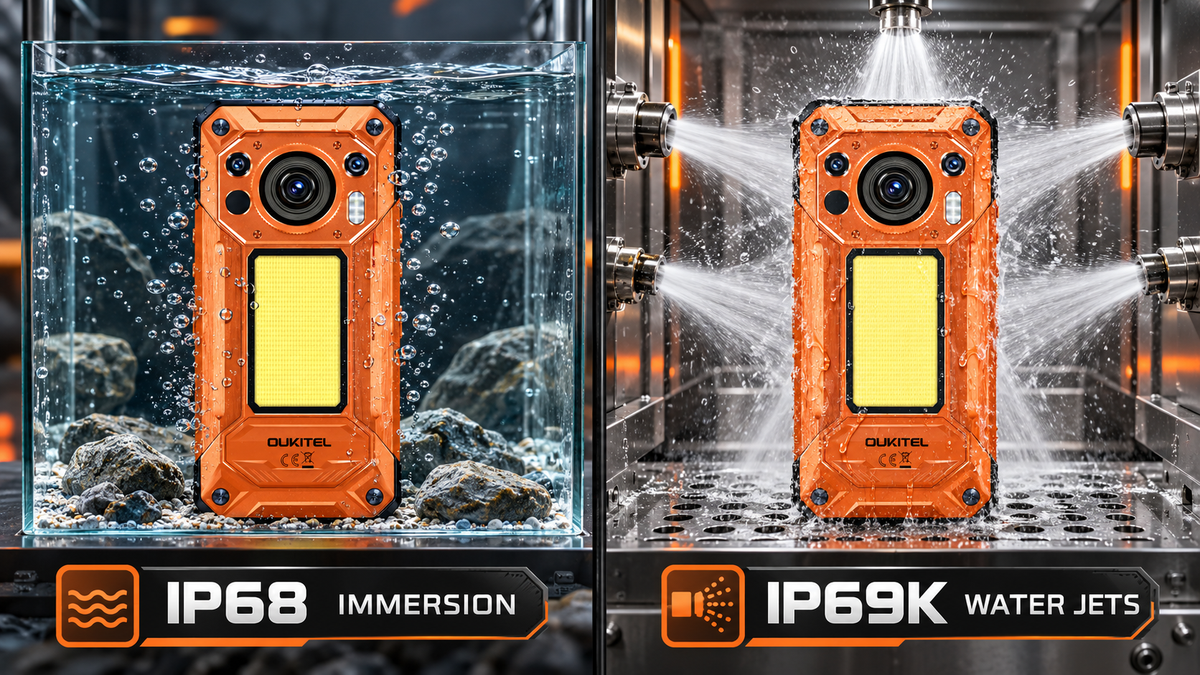
Many conventional smartphones carry an IP68 rating, which generally addresses dust protection and immersion under specified laboratory conditions. A rugged phone that also carries an IP69K rating has been tested for a different challenge: controlled high-pressure, high-temperature water jets.
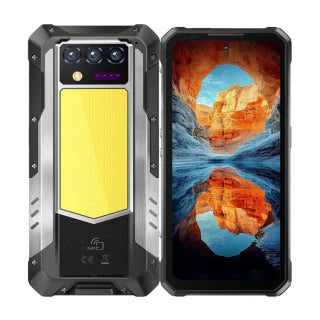
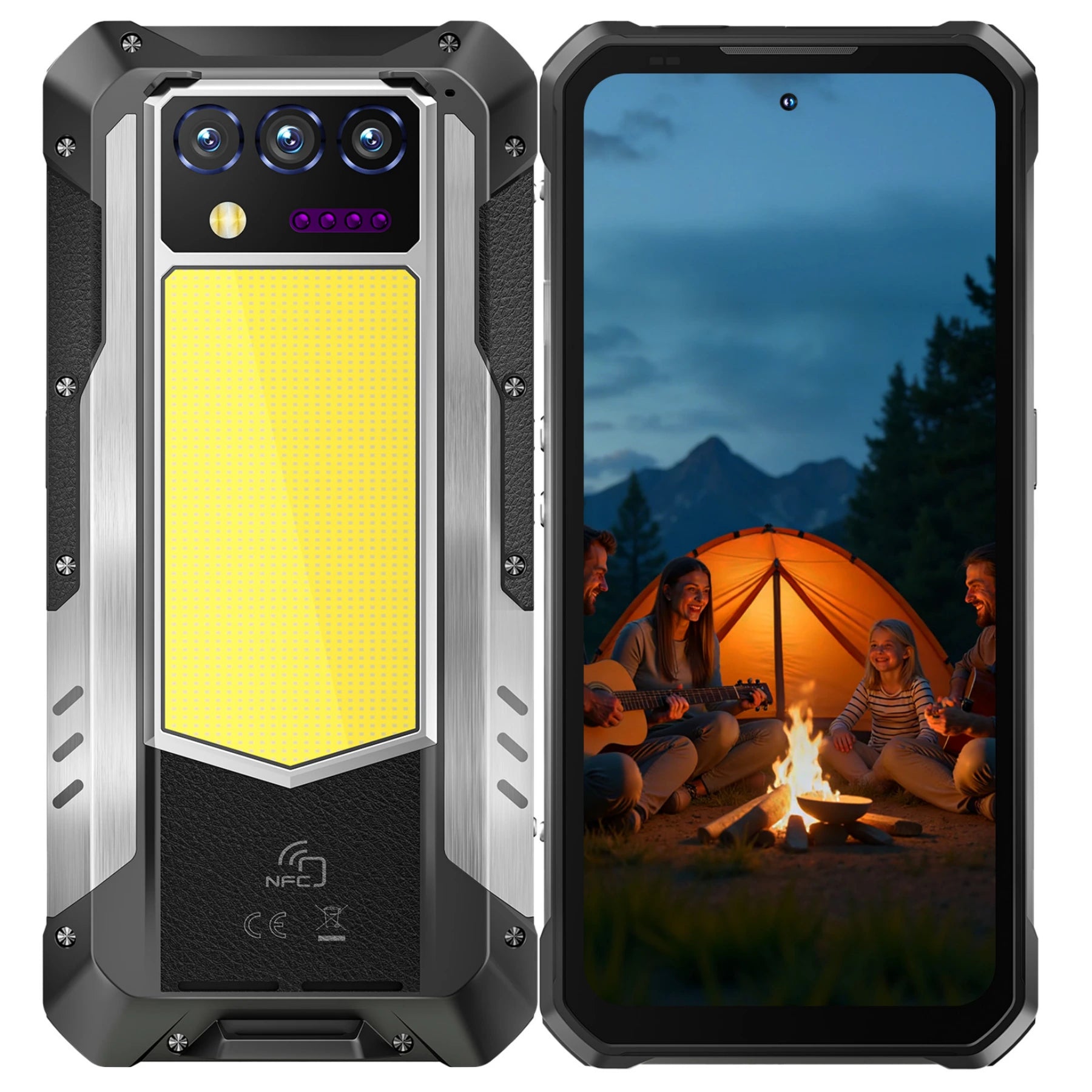
That distinction matters. A phone capable of surviving temporary immersion in relatively still water is not automatically designed to resist concentrated, forceful spray. The OUKITEL WP500 Ultra combines IP68, IP69K, and MIL-STD-810H ratings for wet industrial work, forceful mud spray, severe weather, and other harsh environments where an IP68-only phone may not cover the same exposure pattern.
No rating makes a phone indestructible or permanently waterproof. Protection still depends on intact seals, properly closed port covers, correct use, and exposure within the tested limits.
The Short Answer: Most Phones Are Water-Resistant, Not Waterproof
“Waterproof” suggests that water cannot enter a device under any circumstances. That is not what a normal smartphone IP rating guarantees.
An IP-rated phone is tested against particular forms of dust or water exposure under controlled conditions. The rating does not automatically cover every liquid, depth, temperature, pressure, or length of time.
To check your phone:
- Identify the exact model and regional version.
- Open the manufacturer’s official product page or manual.
- Find the complete IP rating.
- Read the stated depth, duration, and water conditions.
- Check whether port covers must be closed.
- Review cleaning, drying, and warranty instructions.
Do not rely on a retailer description that says only “waterproof.” A complete rating supported by clearly stated test conditions provides more useful information.
Read the Entire Rating, Not Just the Word “Waterproof”
An IP code normally begins with the letters “IP,” followed by numbers describing enclosure protection.
In IP68:
- The first digit, 6, indicates the stated level of protection against solid-particle ingress.
- The second digit, 8, identifies water protection during immersion under conditions specified for the product.
IP68 is a controlled enclosure test for dust ingress and immersion under stated conditions. The code describes measured test performance; it is not a promise that the device will remain protected in every real-world situation.
A rating can also include an “X.” For example, IPX8 means a water-protection level is declared while that particular code does not state a solid-particle rating.
What Does IP68 Mean for a Smartphone?

IP68 is common among water-resistant smartphones because it addresses two everyday concerns: dust and accidental immersion.
The “6” Indicates Dust-Tight Enclosure Protection
The first digit in IP68 is 6, representing the highest numbered solid-particle protection level in the IP system. It indicates that the tested enclosure is dust-tight under the relevant conditions.
That can help around:
- Dry trails and campsites
- Workshops and construction areas
- Sand and loose soil
- Warehouses and farms
- Dusty roads and outdoor equipment
Dust-tight does not mean the exterior requires no maintenance. Dirt can still collect around speakers, microphones, buttons, charging ports, and port-cover edges. Abrasive material left in these areas may cause wear even when it does not enter the protected internal enclosure.
The “8” Covers Specified Immersion Conditions
The second digit addresses water ingress during immersion. However, IP68 does not assign one universal depth and duration to every smartphone.
One manufacturer may specify a particular depth and exposure time, while another may publish different conditions. This is why the official product documentation matters more than the rating alone.
When evaluating an IP68 phone, check:
| Condition | What to Confirm |
|---|---|
| Water depth | The maximum depth specified by the manufacturer |
| Exposure time | How long the test condition applies |
| Water type | Usually controlled freshwater unless stated otherwise |
| Device condition | Whether ports and covers must be sealed |
| Movement | Whether the test involves stationary immersion |
| Temperature | The conditions under which the test was performed |
For practical use, IP68 is most relevant to rain, splashes, and accidental freshwater immersion within the stated limits. It does not automatically demonstrate resistance to concentrated jets or water striking the enclosure with substantial force.
What Does IP69K Add Beyond IP68?

IP69K addresses a different water-exposure pattern. Instead of placing the device in water, the test directs controlled high-pressure, high-temperature water jets toward the enclosure.
IP69K is a controlled enclosure test for high-pressure, high-temperature water jets. It evaluates a different type of water exposure from immersion.
For smartphone buyers, the essential point is simple:
- IP68 focuses on immersion under stated conditions.
- IP69K focuses on forceful water jets under defined test conditions.
One does not automatically prove the other.
Why Concentrated Water Pressure Creates a Different Challenge
During relatively still-water immersion, pressure is distributed around the enclosure according to depth and the test setup. A water jet directs force toward specific areas, such as:
- Enclosure seams
- Charging-port covers
- Buttons
- Speaker openings
- Microphone openings
- Camera surrounds
- SIM or memory-card covers
That concentrated exposure can challenge seals differently from immersion. A phone may perform well during an IP68 immersion test without having been evaluated against the IP69K water-jet test.
This is why it is inaccurate to describe IP69K as simply “deeper waterproofing.” It evaluates a different type of exposure.
Where IP69K Protection Is Most Relevant
IP69K can provide useful additional protection in environments involving:
- Heavy rain driven by wind
- Mud and forceful spray
- Wet industrial or utility work
- Agricultural equipment
- Vehicle maintenance
- Outdoor machinery
- Demanding cleaning environments
- Severe worksite conditions
This does not mean users should deliberately clean a phone with a pressure washer. Real equipment can vary in nozzle design, distance, pressure, temperature, angle, and exposure time. The rating applies to the defined test, not every uncontrolled water jet.
IP68 vs. IP69K: The Essential Difference
The easiest way to understand the two ratings is to consider the direction and force of the water.
| Rating | Primary Water Test | Practical Meaning |
|---|---|---|
| IP68 | Immersion under specified conditions | Protection against accidental submersion within the manufacturer’s limits |
| IP69K | High-pressure, high-temperature water jets | Additional protection against concentrated, forceful spray under defined conditions |
| IP68 + IP69K | Both separate test categories | Broader protection against immersion and demanding water-jet exposure |
Many conventional smartphones stop at IP68 because their expected risks are rain, splashes, spills, and accidental immersion. For everyday users, that may be sufficient.
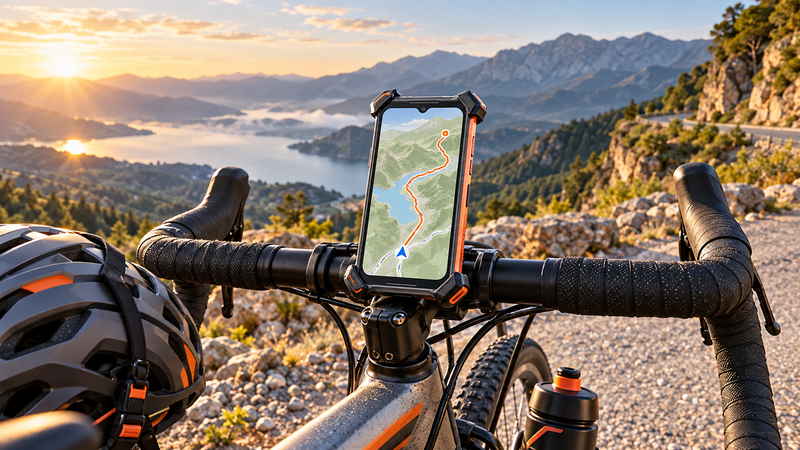
A rugged phone may face a wider range of conditions. Workers, cyclists, hikers, farmers, mechanics, emergency personnel, and field technicians may encounter mud, wind-driven rain, dirty equipment, and water striking the device with more force.
In those situations, carrying both ratings demonstrates a more complete approach to ingress protection. It shows that the enclosure has been evaluated for two different water challenges rather than only one.
However, IP69K should not be treated as a replacement for IP68. A water-jet rating does not by itself describe prolonged immersion performance. Buyers exposed to both risks should look for both ratings.
For a more technical breakdown, see OUKITEL’s guide towhat IP68 and IP69K mean for rugged phones.
How OUKITEL Combines IP68 and IP69K Protection
[product-card-1]
OUKITEL rugged phones are designed for users who face more demanding conditions than occasional household splashes. Selected models combine IP68, IP69K, and testing based on MIL-STD-810H rather than relying on a single water-resistance claim.
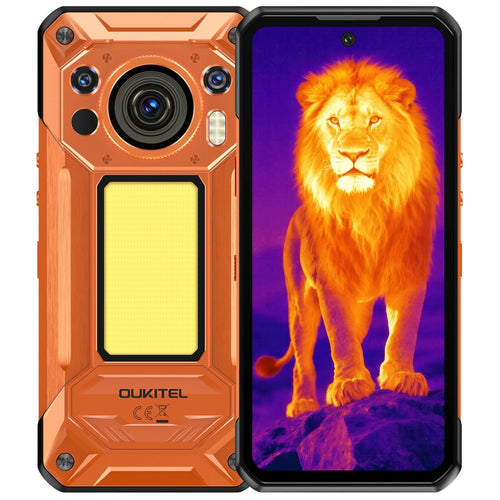
The OUKITEL WP500 Ultra provides a clear example. Its official specifications list:
- IP68 protection
- IP69K protection
- MIL-STD-810H rating
- IP68 immersion in up to 1.5 meters of freshwater for as long as 30 minutes
- Protection against 1.5-meter drops under stated test conditions
- A sealed rugged enclosure for dust, water, and harsh field conditions
- An operating temperature range of -20°C to 55°C
The IP68 rating addresses dust and the specified freshwater immersion condition. IP69K adds protection under a defined high-pressure, high-temperature water-jet test. MIL-STD-810H relates to selected broader environmental tests rather than water ingress alone.
This combination makes the WP500 Ultra especially relevant to wet industrial sites, muddy construction zones, utility inspections, severe weather, and field operations where water can strike the device with more force than ordinary rain or a brief spill.
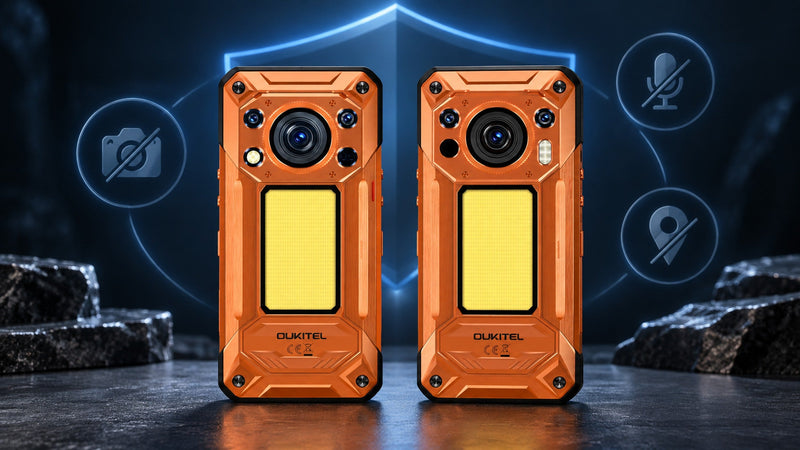
Beyond ingress protection, the WP500 Ultra is built as a professional field tool: a 10,000mAh battery supports long shifts, while AI thermal imaging and a 108MP main camera help teams inspect and document equipment in demanding environments. Its Privacy Kill Switch, Dimensity 8300 platform, 12GB of physical RAM, and 1TB of storage add security and performance without changing the core message: use the phone within its rated water limits.
Rugged Engineering Still Has Defined Limits
Strong ratings should be described accurately. The WP500 Ultra is not immune to all liquid damage, and neither IP68 nor IP69K automatically covers:
- Saltwater
- Chlorinated pool water
- Soap or detergent
- Oils and solvents
- Steam
- Diving
- Prolonged underwater use
- Exposure beyond the stated depth or duration
- Water entering through damaged seals
- Charging while the port is wet
IP69K also does not mean a user should intentionally pressure-wash the phone. It demonstrates controlled test performance, not unrestricted exposure to any industrial cleaning system.
Users comparing models for outdoor or professional work can review the widerOUKITEL rugged-phone collection, checking the individual specifications of each phone rather than assuming every model has identical protection.
When Your Phone’s Water Resistance May No Longer Be Reliable
An IP rating applies to the tested enclosure in the required condition. Water resistance can become less reliable as the device ages or suffers damage.
Inspect the phone before exposing it to wet conditions. Look for:
- A cracked or lifting screen
- Bent or separated enclosure sections
- Deformed corners
- Loose charging-port covers
- Missing or damaged seals
- Dirt trapped around cover edges
- Condensation inside camera lenses
- Swelling or changes in body shape
- Damage around buttons or speakers
A severe impact can create a gap too small to notice easily. A phone may continue operating normally while its original water protection has already been compromised.
Repairs are another consideration. Screen replacement, battery replacement, enclosure opening, adhesives, seals, and reassembly quality can all affect water resistance. After service, ask whether the repair provider performed an appropriate enclosure test and what that test established.
Do not verify a repaired or damaged phone by putting it in water. Deliberate immersion is not a safe diagnostic method.
Water Conditions the Ratings Do Not Automatically Cover
Saltwater, Pools, Soap, and Chemicals
Standard smartphone water-resistance claims generally focus on controlled water conditions. Seawater contains salt that can accelerate corrosion, while pools contain chlorine and other chemicals. Soap reduces surface tension and may behave differently around small openings and seals.
If a phone encounters saltwater, pool water, or another liquid, follow the manufacturer’s cleaning instructions. Do not assume that an IP69K rating provides universal chemical resistance.
Swimming, Diving, and Moving Water
Swimming introduces movement, changing depth, repeated force, and longer exposure. Diving adds increasing pressure. Waves and strong currents can direct water at the enclosure in ways that differ from a stationary immersion test.
OUKITEL’s guide tousing IP68 phones around swimming and water explains why an IP68 rating should not be treated as approval for recreational swimming.
Use a dedicated underwater housing or appropriate waterproof equipment when underwater operation is genuinely required.
Steam, Hot Water, and Temperature Changes
Steam and hot water can affect adhesives, membranes, and seals differently from normal-temperature freshwater. Rapid changes between heat and cold can also stress enclosure materials.
Avoid using a phone in saunas, hot tubs, steam rooms, or directly under a hot shower unless the manufacturer explicitly approves that use.
What to Do if Your Phone Gets Wet

Remove the phone from the liquid and disconnect cables or accessories. Do not immediately connect a charger just because the exterior looks dry.
Follow these steps:
- Turn off the phone if the manufacturer’s instructions recommend it and this can be done safely.
- Wipe the exterior with a clean, soft cloth.
- Keep the charging port facing downward where practical.
- Allow the device and port to air-dry in a ventilated place.
- Do not use direct heat, an oven, or a hair dryer.
- Do not insert metal objects, tissues, or cotton swabs into the port.
- Wait until the charging area is completely dry before reconnecting power.
- Seek qualified service if problems remain.
OUKITEL’s currentwarranty and water-exposure guidance specifically warns against charging a wet device because moisture in the USB port can cause short circuits.
Stop using the phone and request support if you notice unusual heat, repeated restarts, display problems, internal camera condensation, enclosure separation, or battery swelling.
FAQ
Is IP69K Better Than IP68?
IP69K is not simply a higher version of IP68. IP68 addresses immersion under stated conditions, while IP69K addresses controlled high-pressure, high-temperature water jets. A phone with both ratings has been evaluated for both exposure types.
Can an IP68 Phone Withstand a High-Pressure Water Jet?
Not necessarily. An IP68 rating does not automatically prove IP69K performance. Unless the phone also has a verified water-jet rating, keep it away from pressure washers and forceful spray.
Does IP69K Mean a Phone Is Safe for Swimming?
No. IP69K tests water jets, not recreational swimming. Swimming can involve prolonged exposure, changing pressure, movement, salt, chlorine, and conditions outside the rating.
Can Water Resistance Be Restored After a Phone Repair?
It may be possible when appropriate parts, seals, adhesives, assembly procedures, and post-repair testing are used. However, you should not assume the original rating remains valid after the enclosure has been opened. Ask the repair provider what testing was completed.
Conclusion
To answer “Is my phone waterproof?”, start with its exact official rating. Most phones are water-resistant within defined limits, not permanently waterproof.
IP68 mainly addresses dust protection and immersion under manufacturer-specified conditions. IP69K addresses a separate challenge: controlled high-pressure, high-temperature water jets. A phone with both ratings offers broader protection than a device tested only for immersion.
The OUKITEL WP500 Ultra demonstrates this dual approach by combining IP68, IP69K, and MIL-STD-810H ratings. It is designed for industrial water exposure, extreme mud, forceful spray, demanding outdoor work, and other conditions where broader ingress protection supports real field use.
Even this level of protection has boundaries. Keep covers properly closed, inspect the enclosure after impacts, avoid saltwater and chemicals, never charge the phone while wet, and treat every rating as a defined test result rather than permission for unlimited water exposure.



Leave a comment
Your email address will not be published. Required fields are marked *