

A silicon-carbon battery is not a completely different alternative to a lithium-ion battery. It is an advanced type of lithium-ion battery that introduces silicon into the anode—the part of the cell that stores lithium ions during charging.
Compared with a conventional graphite-based anode, silicon-carbon technology can store more energy within a similar amount of space. Smartphone manufacturers can use that advantage to increase battery capacity, reduce device thickness, or balance both goals.
However, silicon-carbon technology does not make battery drain disappear. Screen brightness, network conditions, processor efficiency, temperature, applications, and charging habits still determine how long a phone lasts in everyday use.
Is a Silicon-Carbon Battery Different From a Lithium-Ion Battery?
The phrase “silicon-carbon vs. lithium-ion” can be misleading because both batteries belong to the lithium-ion family. A more accurate comparison is:
Silicon-carbon lithium-ion battery vs. conventional graphite-anode lithium-ion battery.
Both designs typically contain the same four basic components:
- A cathode, or positive electrode
- An anode, or negative electrode
- An electrolyte that transports lithium ions
- A separator between the two electrodes
During charging, lithium ions move from the cathode and are stored in the anode. During use, they travel back toward the cathode while electrical energy powers the phone.
The principal difference is what happens inside the anode.
Silicon-Carbon Is an Advanced Type of Lithium-Ion Battery
Most conventional smartphone batteries use graphite as the primary anode material. Graphite is widely used because it is stable, predictable, and suitable for repeated charging cycles.
A silicon-carbon battery adds silicon-containing material to the anode. Carbon remains important because it helps maintain electrical conductivity and structural stability while the silicon stores additional lithium.
Commercial batteries generally do not use a solid piece of pure silicon. Instead, manufacturers combine carefully engineered forms of silicon with carbon, graphite, binders, coatings, and other materials.
The term “silicon-carbon” can therefore describe multiple formulations. Two phones carrying the same battery label may use different silicon percentages, cell structures, or manufacturing methods.
The Main Difference Is the Material Used in the Anode
The anode affects how much energy a battery can store. Graphite performs reliably, but the amount of lithium it can hold is limited by its structure.
Silicon can store substantially more lithium per unit of active material. In plain language, introducing silicon into the anode allows a battery to hold more energy without requiring the same increase in physical volume.
That advantage is valuable in smartphones because the battery competes for space with cameras, processors, speakers, antennas, cooling materials, and reinforced structural components.
| Battery design | Typical anode approach | Main advantage | Main challenge |
|---|---|---|---|
| Conventional lithium-ion | Primarily graphite | Mature and stable technology | Lower energy density |
| Silicon-carbon lithium-ion | Silicon-containing material combined with carbon | More capacity within limited space | Expansion must be carefully controlled |
| Solid-state battery | Defined by a solid electrolyte, not the anode alone | Potential safety and energy-density advantages | Manufacturing and commercialization challenges |
Silicon-carbon and solid-state are not interchangeable terms. One describes anode material; the other describes the electrolyte system.
Why Conventional Smartphone Batteries Face a Capacity Problem
Smartphones are expected to support larger displays, faster networks, more powerful processors, advanced cameras, navigation, artificial intelligence, and longer software use. All these functions require energy.
Manufacturers can add a larger battery, but conventional battery growth creates physical compromises. More battery volume usually means a thicker, heavier phone or less space for other components.
Graphite Anodes Limit How Much Energy Fits Into a Small Space
Graphite has served lithium-ion batteries well because it offers predictable cycling and manageable expansion. Its disadvantage is that only a limited amount of lithium can be stored within a given mass of material.
Once manufacturers approach the practical limits of a graphite-based cell, they cannot significantly increase capacity without adding more active material or redesigning other parts of the battery.
For a smartphone, that can mean:
- A thicker enclosure
- Additional weight
- Less room for cameras or cooling
- Reduced space for speakers and antennas
- More difficult internal layout
- Longer charging times for a larger cell
Silicon-carbon technology does not remove all these constraints, but it gives phone designers more flexibility.
Larger Batteries Usually Make Phones Thicker and Heavier
The relationship between battery capacity and phone size is especially visible in rugged smartphones. These devices already need reinforced corners, sealing, protective frames, and impact-resistant internal structures.
Adding a conventional high-capacity battery can make the finished phone difficult to carry in a normal pocket or operate with one hand.
This does not mean that maximum-capacity phones are poorly designed. A very large battery can be appropriate for remote worksites, expeditions, vehicle-based travel, and emergency preparation. The point is that battery capacity always involves a portability decision.
OUKITEL’s guide to big-battery phones explains why mAh should be compared alongside weight, thickness, charging power, and intended use.
How Silicon-Carbon Technology Improves Smartphone Batteries

The main benefit of silicon-carbon technology is higher energy density. Energy density describes how much energy can be stored relative to battery size or weight.
By adding silicon to the anode, manufacturers can pursue more battery capacity without increasing the cell by the same proportion.
More Energy Can Be Stored Without the Same Increase in Volume
A silicon-containing anode can accommodate more lithium than a conventional graphite-only design. The result is a better capacity-to-volume relationship.
In practical smartphone design, this can be used in several ways:
- Fit a larger-capacity battery into a familiar phone size
- Reduce the thickness required for a chosen capacity
- Create more internal space for cameras or cooling
- Limit the weight increase associated with longer runtime
- Balance rugged protection with easier daily carrying
The gain at the anode does not translate directly into an equally large improvement for the finished battery. A complete cell also contains a cathode, electrolyte, separator, current collectors, casing, and inactive materials.
Manufacturers must therefore evaluate the performance of the entire battery rather than relying on the theoretical capacity of silicon alone.
Manufacturers Can Choose More Capacity or a Slimmer Phone
Higher energy density does not force every silicon-carbon phone to become thinner. A manufacturer may use the available space to fit an even larger battery while maintaining the previous dimensions.
This creates two broad design approaches:
| Design priority | How silicon-carbon technology can help |
|---|---|
| Maximum endurance | Increase capacity without making the phone proportionally larger |
| Slimmer construction | Maintain a high capacity while reducing battery volume |
| Balanced daily use | Improve capacity while keeping weight and thickness manageable |
| Rugged portability | Create more room for protection without excessive bulk |
The finished dimensions still depend on the entire phone. Battery packaging, camera depth, cooling, antenna placement, display construction, and enclosure reinforcement all contribute.
Does Silicon-Carbon Technology Provide Longer Battery Life?
Silicon-carbon technology can improve battery life when it allows a manufacturer to fit more capacity into the same space. However, it does not make the phone inherently more power-efficient.
A phone with an 8,000mAh silicon-carbon battery has more stored charge than a comparable 5,000mAh phone, but actual runtime still depends on how quickly the hardware and software consume that energy.
Higher Capacity Can Extend Runtime in a Similar-Sized Device
The most direct benefit is a larger energy reserve without a proportionally larger enclosure. This can be useful for people who regularly use:
- GPS navigation
- 5G cellular data
- Mobile hotspots
- Video recording
- Outdoor screen brightness
- Work and communication applications
- Gaming or media playback
- Reverse charging
More capacity can reduce how frequently the phone needs to be connected to an outlet. It may also provide a larger safety margin during travel, field work, or power interruptions.
Nevertheless, manufacturer standby, calling, video, and gaming figures are measured under different conditions. They should not be treated as guaranteed results for every user.
Display, Signal, Processor, and Usage Still Affect Endurance
Battery chemistry determines how energy is stored. It does not determine how efficiently the phone uses that energy.
Major sources of battery drain include:
- High screen brightness
- High display refresh rates
- Weak cellular or Wi-Fi signals
- Background location access
- Continuous navigation
- Camera and video use
- Gaming and sustained processing
- Mobile hotspot activity
- Extreme temperatures
- Battery age
If a phone is losing power unusually quickly, the cause may be an application or setting rather than insufficient battery capacity. The guide to why phone batteries drain quickly covers these issues in more detail.
What Are the Limitations of Silicon-Carbon Batteries?
Silicon offers greater storage potential, but it presents an important engineering problem: it expands as it takes in lithium during charging and contracts during discharge.
Repeated expansion can damage the material, weaken electrical contact, and reduce the amount of energy the cell can store over time.
Silicon Expansion Must Be Controlled During Charging
Commercial silicon-carbon batteries use several techniques to manage expansion. Depending on the cell design, these may include:
- Combining silicon with carbon structures
- Controlling silicon particle size
- Using flexible binders
- Applying protective coatings
- Adjusting electrolyte additives
- Limiting the usable voltage range
- Managing current and temperature during charging
Advanced binders can help control silicon expansion during repeated charging and discharging. These engineering measures do not eliminate expansion, but they keep it within limits that allow the battery to function reliably.
Visible phone swelling is never a normal result of silicon expansion. If the screen lifts, the enclosure separates, or the battery area changes shape, stop using and charging the device and contact qualified service support.
Chemistry Alone Does Not Guarantee Better Cycle Life or Safety
A silicon-carbon label does not prove that a battery will retain capacity longer than every graphite-based battery. Cycle life depends on the complete cell design, silicon content, charging limits, temperature control, manufacturing quality, and battery-management system.
Safety also depends on more than the anode. Important elements include:
- Cell separators
- Electrolyte formulation
- Temperature monitoring
- Charging control
- Short-circuit protection
- Mechanical enclosure
- Manufacturing consistency
- Compatible chargers and cables
Silicon-carbon technology should therefore be evaluated through the finished phone’s capacity, size, charging behavior, warranty, and real-world performance—not as a stand-alone guarantee.
How the OUKITEL WP68 Air Uses Silicon-Carbon Technology
[product-card-1]
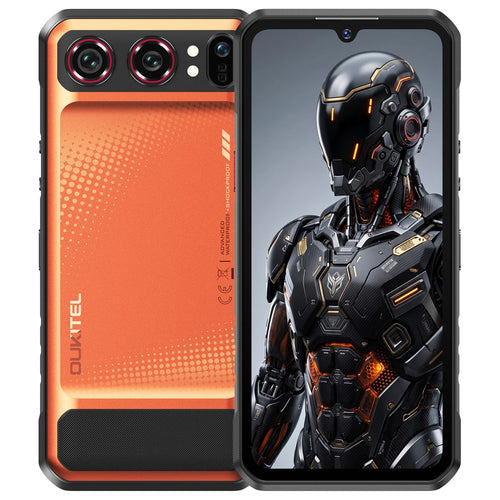
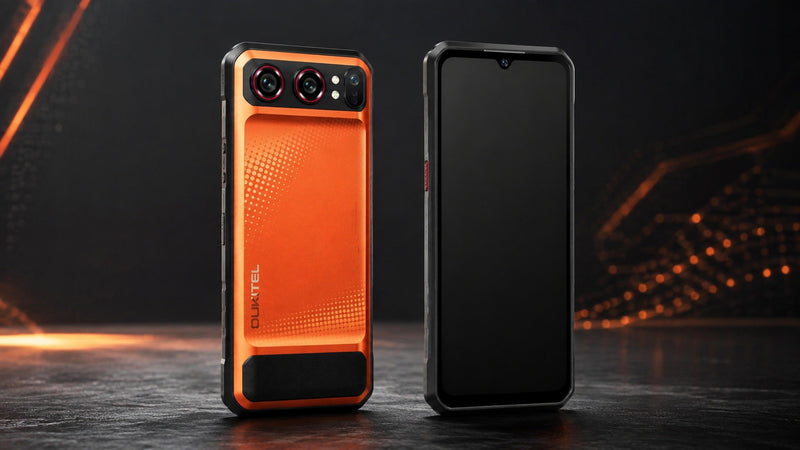
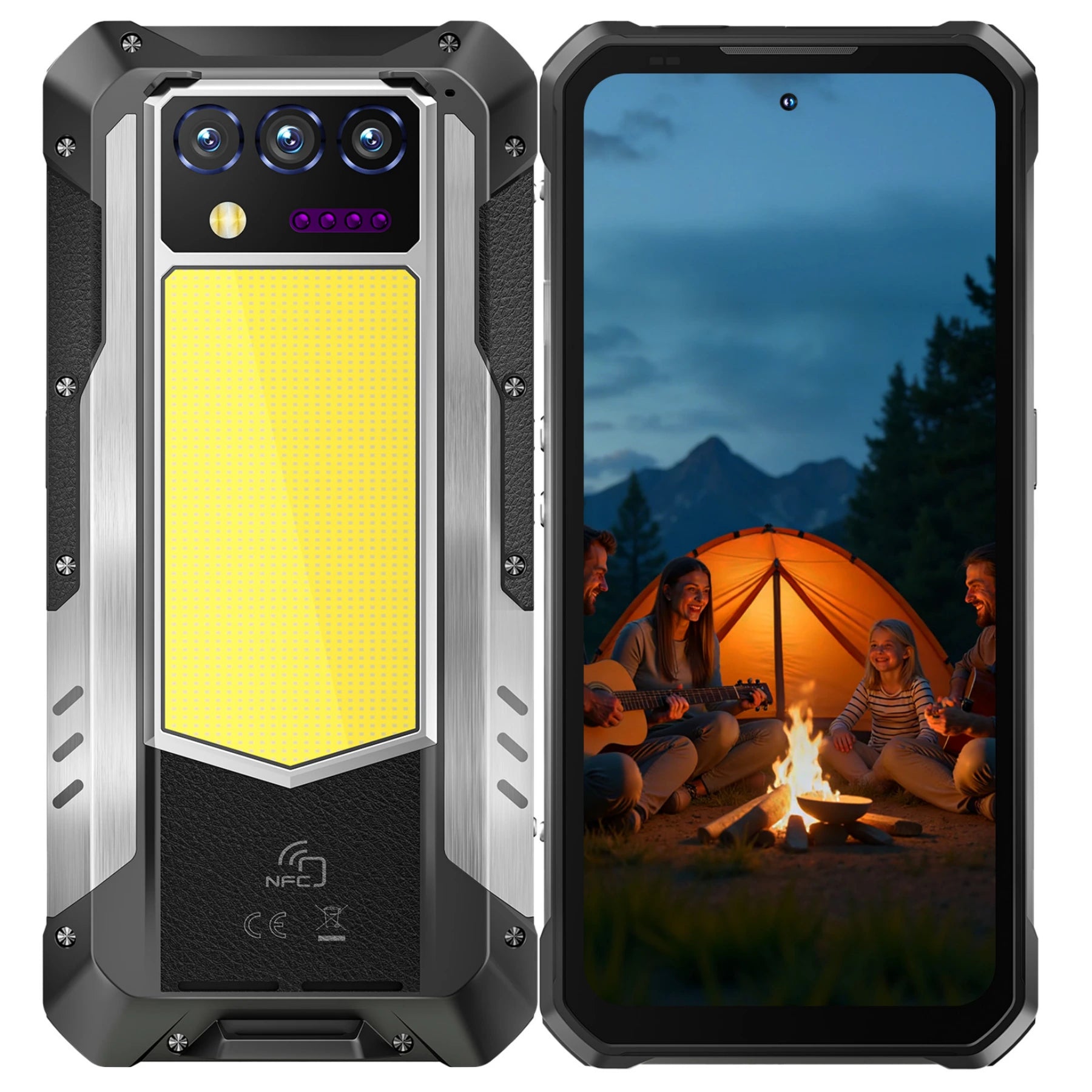
The OUKITEL WP68 Air demonstrates how a silicon-carbon battery can support a slimmer high-capacity rugged phone.
Its verified battery and body specifications include:
| Specification | OUKITEL WP68 Air |
|---|---|
| Battery type | Silicon-carbon polymer |
| Battery capacity | 8,000mAh |
| Body thickness | 11.9mm |
| Weight | 309.5g |
| Charging power | 45W |
| Listed full charging time | 1 hour 50 minutes |
| Reverse charging | Supported |
| Protection ratings | IP68, IP69K and MIL-STD-810H |
Specifications were checked on September 10, 2026. Product availability, regional versions, software, and specifications should be verified again before publication or purchase.
An 8,000mAh Battery Inside an 11.9mm Rugged Body

By introducing silicon into the anode material, the battery can store more power without requiring the same increase in volume. This is the key technology that helps the WP68 Air combine an 8,000mAh battery with an 11.9mm body.
Battery chemistry is not the only reason for the finished dimensions. The internal layout, cell packaging, cooling, camera modules, antennas, display, and reinforced enclosure must all be designed to work together.
By leveraging this higher-density silicon-carbon technology, the OUKITEL WP68 Air achieves what was previously impossible for rugged phones: packing a massive 8,000mAh battery into an ultra-slim 11.9mm profile, without sacrificing military-grade durability or everyday pocketability.
Balancing Battery Capacity, Weight, Charging, and Protection
At 309.5g, the WP68 Air remains heavier than a mainstream smartphone, but it is designed to be easier to carry than many extreme-capacity rugged phones.
Its 45W charging support helps reduce the downtime associated with replenishing an 8,000mAh battery. Reverse charging also allows it to provide power to another compatible device through USB OTG, although doing so reduces the phone’s remaining runtime.
The phone carries IP68, IP69K, and MIL-STD-810H ratings. Its IP68 specification covers freshwater immersion at up to 1.5 meters for up to 30 minutes under stated test conditions. These ratings do not make the phone indestructible or guarantee protection after impact, seal wear, saltwater exposure, or misuse.
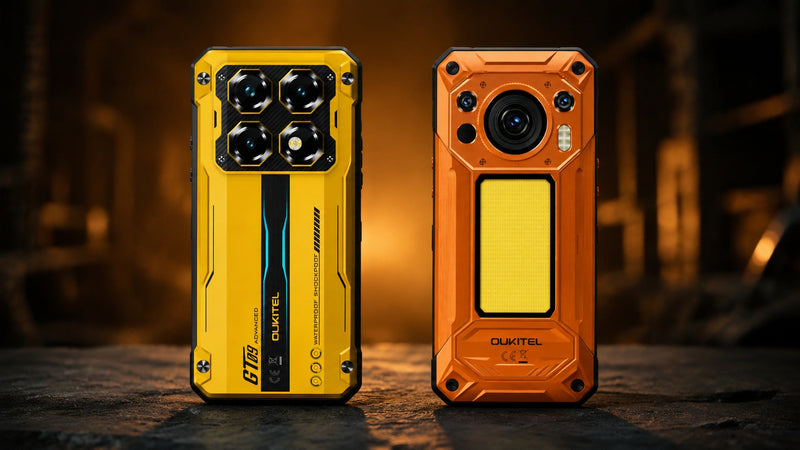
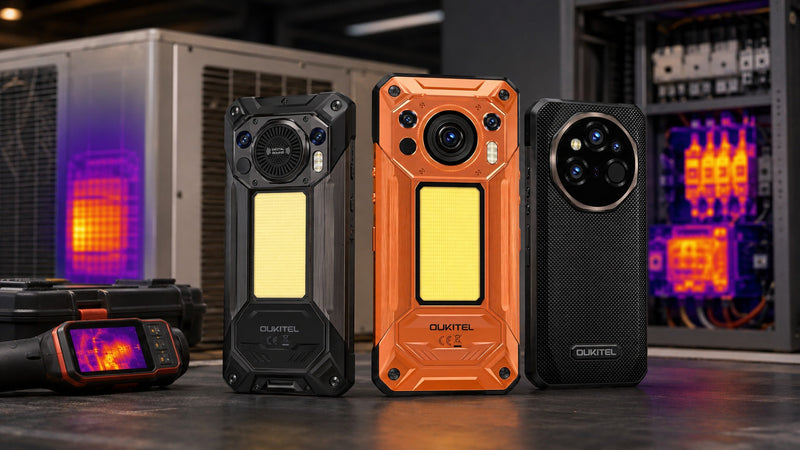
The OUKITEL rugged phone collection includes larger-capacity alternatives for users who value maximum off-grid endurance more than slim construction.
Who Benefits Most From a Silicon-Carbon Battery Phone?
Silicon-carbon technology is most valuable when battery capacity and portability are both important.
It may benefit:
- Field workers who carry a phone throughout a shift
- Drivers using extended navigation
- Travelers who have irregular access to charging
- Hikers who want additional capacity without extreme weight
- Users who frequently rely on 5G, cameras, or mobile hotspots
- People who want rugged protection in a more manageable design
A conventional phone may remain preferable for users who prioritize the lowest possible weight and can recharge daily. An extreme-capacity rugged phone may be better for remote expeditions, basecamps, or users who frequently power other devices.
The best choice depends on the finished product, not the battery label alone.

FAQ
Does a Silicon-Carbon Battery Require a Special Charger?
No. A silicon-carbon phone uses the charging standard supported by the finished device. Use the manufacturer-supplied charger or a reputable compatible charger and cable. The phone’s charging controller determines the accepted power.
Does Silicon-Carbon Technology Make a Phone Charge Faster?
Not by itself. Charging speed depends on the cell design, charging controller, supported wattage, charger, cable, temperature, and battery level. Silicon-carbon technology mainly improves how much energy can fit within a given space.
Do Silicon-Carbon Batteries Need Different Daily Maintenance?
No special routine is required. Use compatible charging equipment, install software updates, avoid excessive heat, and do not charge a visibly damaged or swollen phone. These practices also apply to conventional lithium-ion batteries.
Can a Silicon-Carbon Battery Replace a Power Bank?
A higher-capacity phone may reduce the need for a power bank, especially during ordinary travel or work. It cannot provide unlimited energy, and reverse charging reduces the phone’s own runtime. A separate power bank may still be more practical when several devices require charging.
Conclusion
A silicon-carbon battery is an advanced lithium-ion battery that introduces silicon into the anode. The technology allows more energy to be stored within limited space, helping manufacturers increase capacity, reduce thickness, or balance both goals.
It does not solve every cause of poor smartphone battery life. Displays, processors, network conditions, applications, temperature, and charging behavior continue to affect real-world endurance. Silicon expansion must also be carefully managed to maintain stability and cycle life.
The OUKITEL WP68 Air shows the practical value of this technology by combining an 8,000mAh silicon-carbon polymer battery with an 11.9mm rugged body and 309.5g weight. Its advantage is not simply a larger battery—it is the balance between capacity, portability, charging, and protection.


Leave a comment
Your email address will not be published. Required fields are marked *