


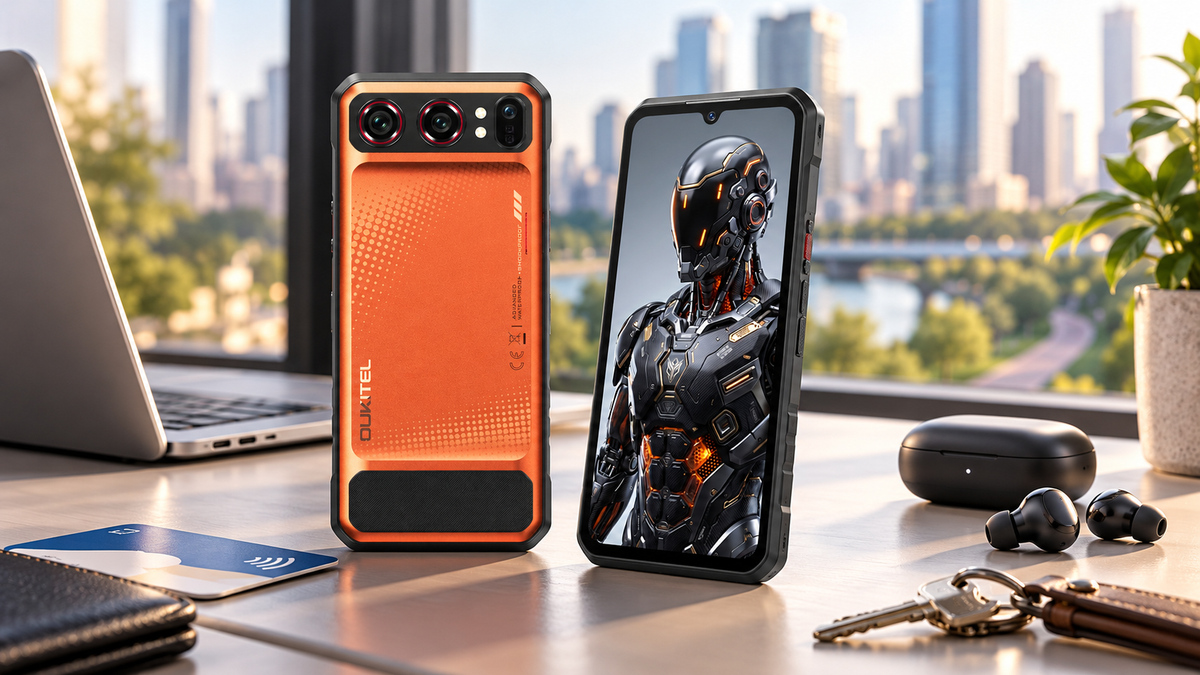
Yes, a rugged phone can be suitable for everyday use—but only if its protection does not make it unnecessarily heavy, thick, or awkward to carry.
Traditional rugged phones often use reinforced frames, sealed components, and very large batteries. These features improve durability and endurance, but they can also produce the “brick-like” design many consumers associate with the category.
The OUKITEL WP68 Air takes a different approach. Its silicon-carbon battery helps fit an 8,000mAh capacity into an ultra-slim 11.9mm body. At 309.5g, it remains a rugged phone, but it is considerably easier to carry, hold, and mount than many extreme-capacity models.
This combination helps the WP68 Air function as a primary everyday smartphone rather than a specialized device that only leaves the toolbox for outdoor trips.
Why Rugged Phones Have Traditionally Felt Too Bulky for Daily Use
Rugged phones need more physical protection than conventional smartphones. Reinforced corners, internal supports, sealed openings, impact-resistant materials, and larger batteries all compete for space inside the enclosure.
The result is often a device that provides useful protection but feels excessive during commuting, shopping, office work, messaging, or casual photography.
Reinforced Frames and Sealed Components Add Thickness
A rugged phone must protect vulnerable components such as the display, battery, cameras, charging port, buttons, speakers, and internal circuit boards.
Manufacturers may use:
- Reinforced exterior frames
- Raised edges around the display
- Protected camera modules
- Sealed charging and card ports
- Impact-absorbing corner structures
- Additional internal supports
- Adhesives, membranes, and gaskets
These elements require physical space. A thicker body is therefore not always a design failure; it may reflect the intended protection level.
However, reinforcement is only one part of the equation. The battery can occupy a significant proportion of a phone’s internal volume, especially when manufacturers pursue capacities far above those of conventional smartphones.
Large Conventional Batteries Require More Internal Space
Battery capacity is commonly measured in milliamp-hours, or mAh. A higher figure generally means the battery can store more charge, although actual runtime also depends on the processor, display, signal conditions, software, temperature, and user behavior.
Traditional big-battery phones often increase capacity by using a physically larger battery pack. That approach can provide impressive endurance, but it may also increase:
- Body thickness
- Overall weight
- Charging time
- Pocket bulk
- Wrist fatigue
- Mounting difficulty
For fieldwork or multi-day travel, these trade-offs may be acceptable. For everyday use, they can become the main reason a buyer avoids a rugged phone.
Extra Weight Affects More Than Pocket Comfort
A heavy phone does not only feel different in a pocket. It can influence almost every routine interaction.
Additional weight may become noticeable when:
- Holding the phone during a long call
- Reading while standing on public transport
- Recording video for several minutes
- Following navigation on foot
- Using the phone with one hand
- Attaching it to a bicycle or vehicle mount
- Carrying it alongside other work equipment
The best everyday rugged phone should therefore provide enough battery and protection without automatically maximizing both at the expense of portability.
How Silicon-Carbon Battery Technology Changes Rugged-Phone Design
Silicon-carbon technology addresses one of the underlying causes of rugged-phone bulk: the amount of space needed to store a useful quantity of energy.
A silicon-carbon battery remains part of the lithium-ion battery family. The important difference is the use of silicon in the negative-electrode material rather than depending entirely on a conventional graphite-based approach.
Higher Energy Density Stores More Power in Less Space
Silicon can store more lithium ions than graphite by mass. When incorporated into a carefully engineered silicon-carbon anode, it can help increase the battery’s energy density.
In practical smartphone design, higher energy density can support two goals:
- Increase battery capacity without increasing volume by the same proportion.
- Maintain the desired capacity while reducing the battery space required.
The WP68 Air uses the second advantage to support a slimmer rugged-phone design. By introducing silicon into the negative-electrode material, the battery can store more power without demanding the same volume as a lower-density conventional design. This is the central technical reason the phone can combine an 8,000mAh battery with an 11.9mm body.
Battery chemistry is not the only factor. Circuit-board layout, cooling, camera depth, antenna placement, reinforcement, display construction, and sealing also affect final dimensions. However, the silicon-carbon battery gives the engineers more freedom to reduce thickness without shrinking capacity to an ordinary smartphone level.
Rugged Protection No Longer Has to Mean Extreme Bulk
A rugged phone still needs enough structural material to handle its intended environment. Silicon-carbon technology does not remove the frame, seals, or reinforced corners.
Instead, it reduces one of the largest sources of bulk, allowing the overall design to become slimmer while retaining room for protective construction.
This changes the role a rugged phone can play. Rather than serving only as a worksite tool, emergency backup, or camping device, a slimmer model can move more naturally between:
- Home
- Office
- Commuting
- Outdoor recreation
- Travel
- Fieldwork
- Everyday errands
Readers interested in the battery technology itself can see OUKITEL’s explanation of what a silicon-anode battery is. For a direct comparison with conventional battery designs, see silicon-carbon versus lithium-ion batteries.
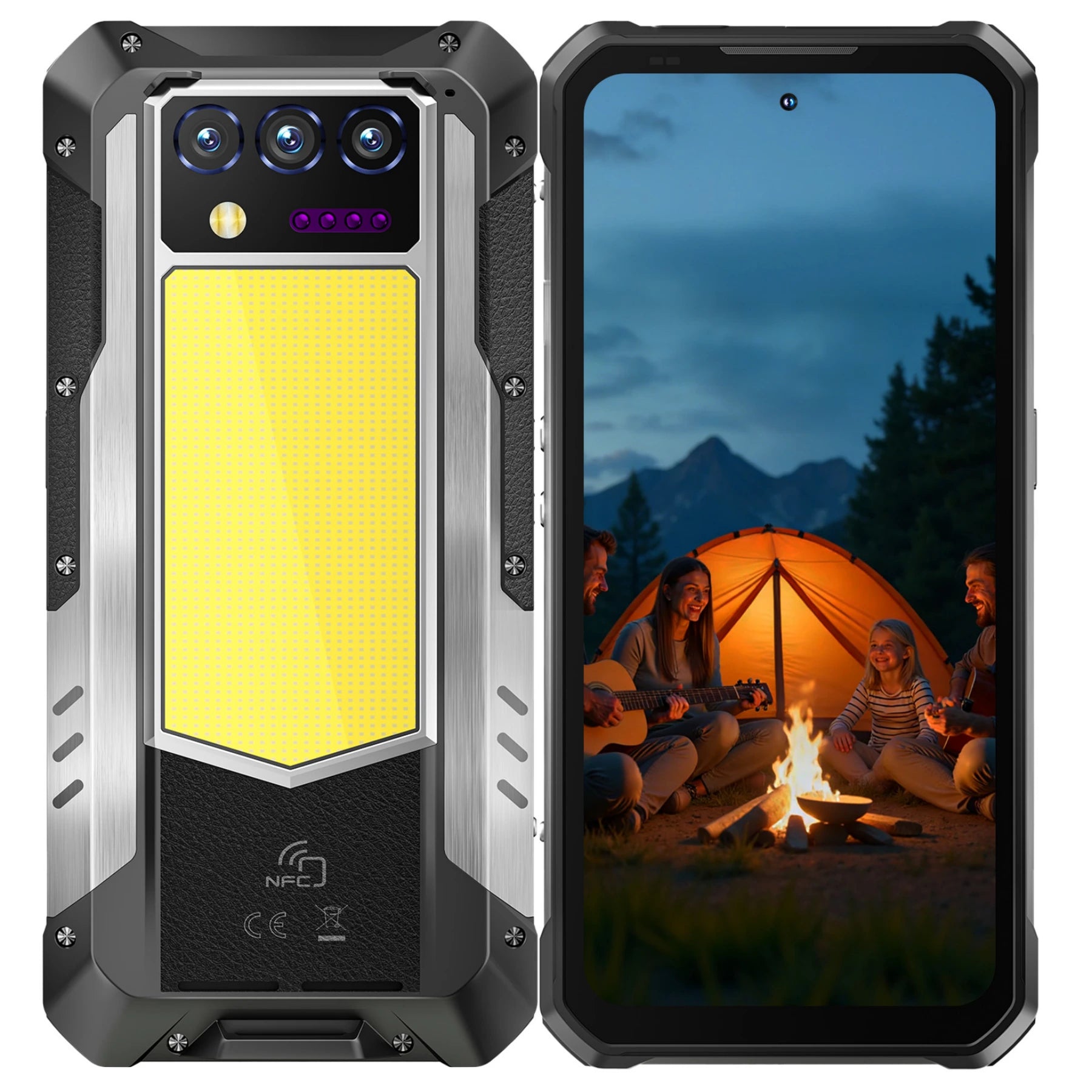
The OUKITEL WP68 Air Redefines the Everyday Rugged Phone
[product-card-1]
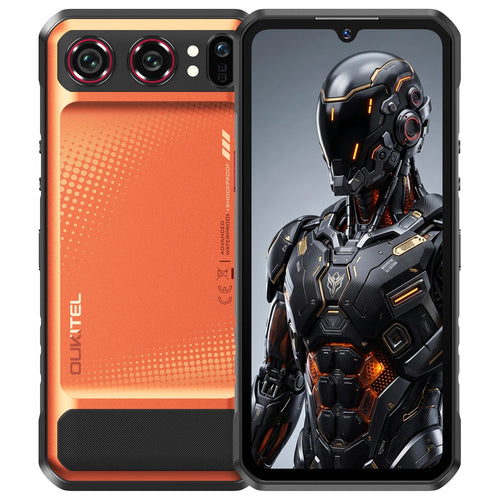
The OUKITEL WP68 Air directly addresses the stereotype that rugged phones must be exceptionally thick and uncomfortable.
Its verified specifications include:
| Specification | OUKITEL WP68 Air |
|---|---|
| Battery capacity | 8,000mAh |
| Battery material | Silicon-carbon polymer |
| Body thickness | 11.9mm |
| Weight | 309.5g |
| Charging power | 45W |
| Reverse charging | Supported |
| Rugged ratings | IP68, IP69K, and MIL-STD-810H |
| Network | 5G |
| Internal storage | 512GB |
| Display refresh rate | 120Hz |
Specifications should be checked again on the official product page before publication or purchase because availability, regional configurations, and software details may change.
An 8,000mAh Battery Inside an Ultra-Slim 11.9mm Body
The 11.9mm measurement is the WP68 Air’s defining advantage. It places a large battery inside a body that is much closer to the dimensions consumers expect from an everyday phone than from an oversized expedition device.
That affects how the phone fits into daily routines. It is easier to slide into many pockets, store in a bag compartment, position inside a vehicle holder, or secure in a compatible bicycle mount.
The body remains visibly rugged, with reinforced edges and a protected camera area. The difference is that the protection does not sit around an extremely thick battery pack.
The WP68 Air redefines the slimness limit for an everyday rugged phone with its 11.9mm body.
A 309.5g Design That Is Easier to Carry and Mount
At 309.5g, the WP68 Air is heavier than many conventional smartphones. It should not be described as an ultralight phone.
The relevant comparison is with rugged phones containing extremely large batteries, specialized thermal systems, projectors, powerful lights, or other heavy-duty hardware. Some of those devices can be substantially heavier and thicker.
For everyday users, 309.5g represents a more manageable compromise: enough structure and battery capacity to provide real rugged-phone benefits without carrying the mass of a maximum-endurance field device.
The weight also matters when the phone is mounted. A thinner body can sit closer to the attachment point, creating less leverage than a much thicker, top-heavy design. Users must still choose a mount that supports the phone’s dimensions and weight.
Rugged Protection Without a Brick-Like Profile
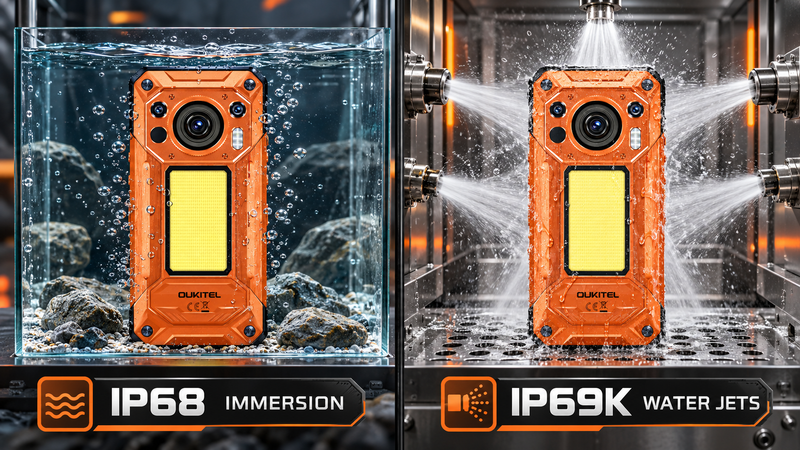
The WP68 Air carries IP68, IP69K, and MIL-STD-810H ratings.
Its official specifications state an IP68 condition of immersion in up to 1.5 meters of freshwater for as long as 30 minutes. IP69K addresses a separate controlled high-pressure, high-temperature water-jet test.
IP68 and IP69K cover two different forms of protection: controlled immersion and high-pressure, high-temperature water jets. These ratings remain controlled test results rather than a promise of unlimited protection.
For everyday use, the combination makes the WP68 Air better prepared for:
- Heavy rain
- Dusty commutes
- Outdoor work
- Muddy trails
- Accidental freshwater exposure
- Drops and rough handling
- Active travel
It does not make the phone indestructible or permanently waterproof. Damaged seals, previous impacts, unauthorized repairs, saltwater, chemicals, steam, and charging while wet can still cause problems.
What the Slimmer Design Changes in Everyday Use
Specifications matter only when they improve the experience of using the phone.
More Comfortable Carrying During Commuting and Travel
A slimmer phone occupies less space in a pocket or travel bag. It is less likely to catch on clothing, press awkwardly against the body, or require a dedicated equipment pouch.
This is particularly useful for users who want one phone for both work and personal life. They can move from an outdoor shift to a commute, restaurant, hotel, or office without switching devices.
The WP68 Air is still larger and heavier than a slim mainstream phone. Buyers who want the lightest possible device may prefer a conventional smartphone with a protective case. The advantage is the balance between reinforced construction, battery capacity, and everyday portability.
Better Balance in Bicycle and Vehicle Mounts
Very thick rugged phones can sit far above a mounting surface. Their weight creates additional leverage when the bicycle, motorcycle, or vehicle moves across uneven terrain.
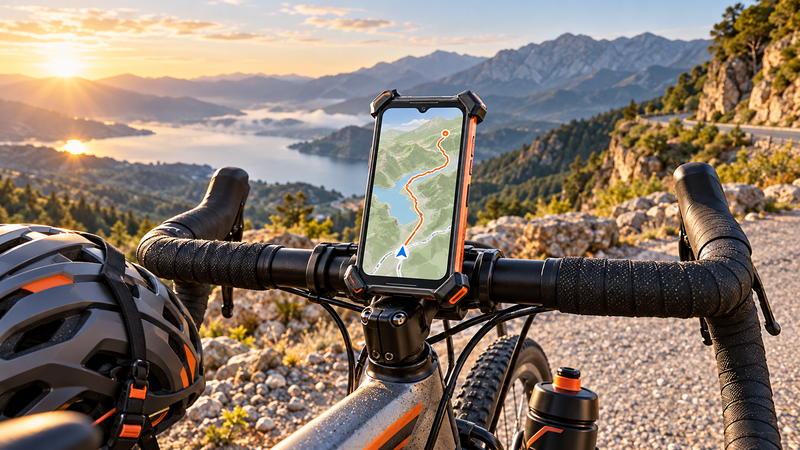
The WP68 Air’s 11.9mm profile allows it to sit closer to a compatible mount, producing a more compact and balanced setup. This is useful for navigation during cycling, delivery work, commuting, and vehicle-based fieldwork.
Mount compatibility should still be verified using the phone’s dimensions of 178.4 × 83.2 × 11.9mm and its 309.5g weight. A mechanically locking mount is preferable for demanding movement.
Less Hand Fatigue During Calls and Navigation
Weight and thickness affect grip. A very thick phone forces the hand into a wider position, while additional mass becomes more noticeable during extended use.
The WP68 Air’s slimmer profile makes routine tasks feel closer to using a conventional smartphone:
- Reading messages
- Browsing websites
- Following maps
- Making video calls
- Capturing photographs
- Reviewing documents
- Watching videos
The reinforced frame remains substantial, but the phone avoids the oversized feel associated with many high-capacity rugged models.
Can the WP68 Air Handle Normal Smartphone Tasks?
A rugged phone is not suitable for everyday use merely because it is slim. It must also perform the tasks expected from a primary smartphone.
Connectivity, Payments, and Daily Communication
The WP68 Air supports 5G, Wi-Fi, Bluetooth 5.2, NFC, and multiple satellite-navigation systems. These capabilities allow it to support routine uses such as:
- Calls and messaging
- Cloud applications
- Contactless payments where compatible
- Turn-by-turn navigation
- Wireless accessories
- Work communication
- Media streaming
Network compatibility remains region- and carrier-dependent. Buyers should compare the supported bands with their carrier before ordering.
Display, Applications, and Storage
The phone uses a 6.88-inch display with a 120Hz refresh rate. The higher refresh rate supports smoother scrolling and interface movement, although actual responsiveness also depends on the application and system load.
Its Dimensity 7025 processor, 12GB of physical RAM, and 512GB of internal storage are designed to handle everyday Android use, including communication, productivity, navigation, media, and common work applications.
Storage can also be expanded with a compatible TF card, which may benefit users carrying offline maps, site photographs, videos, manuals, and project files.
Photography and Work Documentation
The WP68 Air includes a 64MP main camera, a 32MP front camera, an 8MP night-vision camera, and a macro camera.
Camera resolution alone does not determine image quality. Processing, sensor size, stabilization, lighting, and lens quality all influence the result. Users whose main priority is flagship video or advanced computational photography should compare real samples before purchasing.
For everyday records, travel photographs, document capture, site images, video calls, and casual sharing, the camera system supports the phone’s role as a primary device rather than only an emergency backup.
Does a Slimmer Rugged Phone Still Provide Enough Battery Life?
An 8,000mAh battery provides considerably more capacity than many conventional smartphones, but no responsible article should promise a universal number of days.
Runtime depends on:
- Screen brightness
- Refresh-rate settings
- Mobile-signal strength
- 5G usage
- Navigation
- Photography and video
- Gaming
- Background applications
- Temperature
- Battery age
The key everyday benefit is additional reserve. A commuter can use navigation, messaging, photography, and mobile data with less concern that normal use will exhaust the battery before reaching a charger.
The WP68 Air supports 45W charging, helping reduce the inconvenience of replenishing its larger battery. Charging speed can vary with temperature, battery level, charger compatibility, and concurrent use.
Reverse charging is also supported. This allows the phone to supply power to a compatible accessory or another device through the correct cable, although doing so reduces the WP68 Air’s remaining battery reserve.
For most everyday users, the 8,000mAh capacity is a more balanced choice than carrying an extremely large battery every day. Those spending several days away from charging may still benefit from a heavier model.
Who Should Choose a Slim Rugged Phone for Everyday Use?
The WP68 Air is particularly relevant to people whose phones move between normal and demanding environments.
Suitable users include:
- Commuters exposed to frequent rain
- Cyclists using handlebar navigation
- Delivery drivers
- Travelers carrying offline maps
- Warehouse and maintenance workers
- DIY users
- Parents who want additional durability
- Hikers and campers
- People who have repeatedly damaged ordinary phones
- Workers moving between offices and outdoor sites
These users need stronger protection but may not require a projector, thermal-imaging system, walkie-talkie, oversized camping light, or the largest possible battery.
A slim rugged phone gives them protection they can use every day instead of specialized hardware they carry only occasionally.
Buyers can compare other form factors and battery capacities in the OUKITEL rugged-phone collection.
When a Larger Rugged Phone May Still Be the Better Choice
The WP68 Air is designed around balance. It is not intended to replace every heavy-duty rugged model.
A larger phone may be more suitable when:
- Work lasts several days without charging.
- The phone must power other equipment regularly.
- Thermal imaging is required for inspections.
- Team communication requires built-in DMR hardware.
- A powerful integrated work or camping light is essential.
- Maximum off-grid capacity matters more than weight.
- The device spends more time in a vehicle or equipment case than in a pocket.
The right choice depends on the most demanding realistic day, not the largest specification available.
FAQ
Is a Silicon-Carbon Battery Still a Lithium-Ion Battery?
Yes. A silicon-carbon battery is still part of the lithium-ion battery family. The difference is that silicon is incorporated into the anode material to support higher energy density than a conventional graphite-only design.
Does the WP68 Air Need a Protective Case for Everyday Use?
Its rugged enclosure is designed to provide integrated protection, so a heavy case may be unnecessary. A compatible screen protector or secure holder can still provide additional protection against scratches, sharp impacts, and drops from height.
Can a Slim Rugged Phone Withstand Rain and Accidental Drops?
The WP68 Air carries IP68, IP69K, and MIL-STD-810H ratings, supporting use around rain, dust, controlled water exposure, and demanding environments. These ratings do not guarantee survival in every accident, and protection can be reduced by damage or improper use.
Is the WP68 Air Comfortable Enough to Use as a Primary Phone?
For users willing to carry 309.5g, its 11.9mm thickness makes it considerably more practical for everyday use than many oversized rugged phones. Buyers prioritizing minimum weight may still prefer a conventional smartphone, while those prioritizing durability and battery reserve may find the trade-off worthwhile.
Conclusion
Rugged phones can be suitable for everyday use, but the traditional combination of thick construction and oversized batteries has created a lasting reputation for bulk.
The OUKITEL WP68 Air shows how silicon-carbon battery technology can change that equation. By increasing energy density, its silicon-enhanced anode helps fit an 8,000mAh battery into an ultra-slim 11.9mm rugged body.
At 309.5g, it remains more substantial than a conventional slim smartphone, but it avoids the extreme thickness and weight of many heavy-duty models. It also retains 5G, NFC, a 120Hz display, large storage, modern Android performance, and IP68/IP69K/MIL-STD-810H protection.
For commuters, travelers, cyclists, active families, and professionals who want one phone for both normal life and demanding conditions, the WP68 Air breaks the stereotype that rugged protection must feel like carrying a brick.


Leave a comment
Your email address will not be published. Required fields are marked *