


A silicon anode battery is a lithium-ion battery that uses silicon-containing material in the negative electrode instead of relying entirely on conventional graphite. Silicon can store considerably more lithium per unit of anode material, creating the potential for higher energy density.
In a smartphone, higher energy density can be used in two ways: manufacturers can fit more capacity into a similar space, or they can reach a target capacity with a smaller and lighter battery pack. The final result still depends on the percentage of silicon used, cell construction, packaging, thermal control and the phone’s complete internal design.
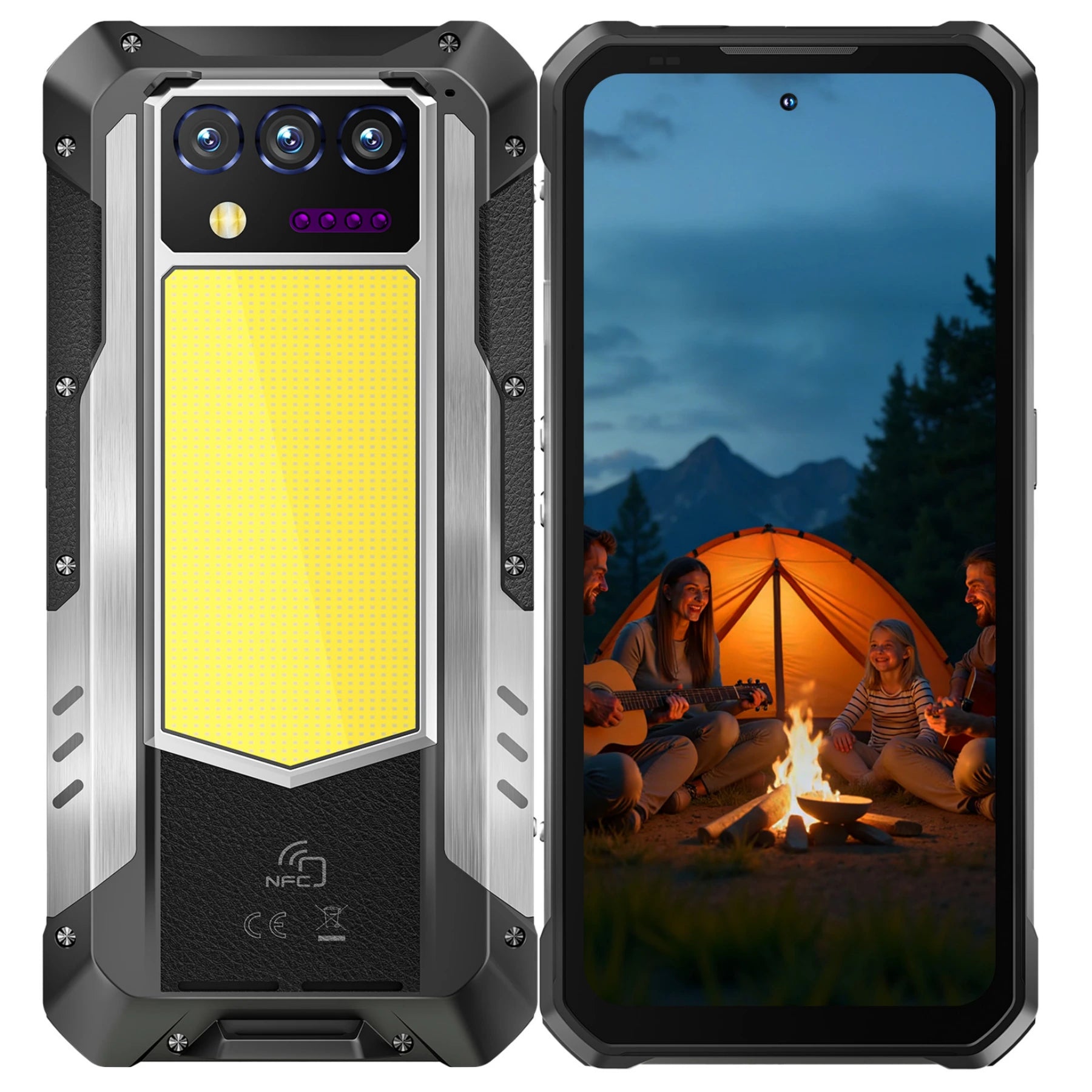
The OUKITEL WP68 Air demonstrates the second approach. It combines an 8,000mAh silicon-carbon polymer battery with an 11.9mm body and a weight of 309.5g. That is unusually slim for a rugged phone with this capacity, but battery chemistry is only part of the explanation.
What Is a Silicon Anode Battery?
A silicon anode battery remains a type of rechargeable lithium-ion battery. It is not a completely different battery system.
The main difference is the material used in its anode. Conventional lithium-ion batteries generally use graphite as the principal active material in this electrode. A silicon anode battery introduces silicon, silicon oxide or a silicon-carbon composite to increase the amount of lithium the anode can store.
Most commercially practical batteries described as “silicon anode” or “silicon-carbon” do not use a solid block of pure silicon. They combine silicon-containing particles with graphite, carbon structures, binders and other materials designed to keep the electrode electrically connected and mechanically stable.
This distinction matters because pure silicon offers impressive theoretical capacity but also undergoes severe physical expansion during charging. A composite design attempts to gain some of silicon’s capacity advantage while controlling the problems that would otherwise shorten battery life.
How a Silicon Anode Differs From a Conventional Graphite Anode

To understand why this technology can make a phone thinner, it helps to understand what the anode does.
What the Anode Does During Charging and Discharging
A lithium-ion battery contains four main functional parts:
- A positive electrode, or cathode
- A negative electrode, or anode
- An electrolyte that transports lithium ions
- A separator that keeps the electrodes apart while allowing ion movement
During charging, lithium ions move from the cathode through the electrolyte and are stored in the anode. During discharge, those ions move back toward the cathode while electrons travel through the external circuit to power the phone.
The amount of lithium the electrodes can reversibly store influences the battery’s capacity. Improving only the anode does not automatically multiply the energy of the complete cell, because the cathode, electrolyte, voltage, inactive materials and packaging also affect the final result.
Why Commercial Batteries Combine Silicon With Carbon
Graphite has been widely used because it provides relatively stable cycling, predictable manufacturing and manageable volume change. Its storage capacity is lower than silicon’s, but it is easier to control.
Silicon can store far more lithium by mass. Research literature commonly gives graphite a theoretical capacity of approximately 372mAh per gram, while crystalline silicon can reach approximately 3,579mAh per gram in a highly lithiated state. An Accounts of Chemical Research review discusses silicon’s high theoretical capacity and the difficulty of translating it into practical full-cell performance.
The headline difference does not mean a finished phone battery will provide nearly ten times the capacity. A complete battery contains many materials besides the anode, and commercial electrodes must prioritize stability, safety, manufacturing yield and cycle life.
Silicon-carbon composites provide a compromise. Carbon helps maintain conductive pathways and structural integrity, while silicon raises the anode’s storage potential.
Why Silicon-Carbon Is Not the Same as a Pure-Silicon Battery
“Silicon-carbon” is a broad description rather than one universal formula. Batteries can use different:
- Silicon percentages
- Silicon particle sizes
- Silicon oxide materials
- Carbon structures
- Binders
- Electrolyte additives
- Electrode coatings
- Formation processes
These differences influence capacity, expansion, charging behavior and longevity. Two phones can both advertise silicon-carbon batteries without using identical cell designs or delivering the same energy-density improvement.
The OUKITEL WP68 Air product page identifies its battery material as silicon-carbon polymer, but it does not publish the silicon percentage or cell-level Wh/L and Wh/kg figures. It would therefore be inaccurate to claim a precise energy-density improvement over a particular graphite battery without comparable test data.
Why Silicon Can Store More Energy in Less Space
Silicon’s appeal comes from its ability to accommodate much more lithium than graphite at the material level.
Silicon Offers Much Higher Theoretical Capacity Than Graphite
When a battery charges, silicon forms lithium-silicon phases capable of holding a large number of lithium atoms. This gives silicon its high theoretical specific capacity.
That potential can increase the amount of charge stored in a given mass of active anode material. In a well-engineered cell, the manufacturer may use that advantage to:
- Increase capacity without proportionally enlarging the battery
- Reduce battery volume while maintaining capacity
- Reduce battery mass
- Reserve more internal space for other components
- Improve the balance between capacity and phone thickness
The actual gain is smaller than the difference between the theoretical capacities of pure silicon and graphite. Battery design is limited by the cathode, electrode loading, voltage, expansion allowances, packaging and safety margins.
Higher Energy Density Reduces the Space Needed for a Target Capacity
Energy density can be expressed by mass or volume:
- Gravimetric energy density describes energy stored per unit of mass, usually Wh/kg.
- Volumetric energy density describes energy stored per unit of volume, usually Wh/L.
For a smartphone, both matter. Higher volumetric energy density helps the battery occupy less internal space, while higher gravimetric energy density can reduce weight for the same stored energy.
This is the central reason silicon-containing anodes are relevant to slim phones. If a battery can store more energy within the same physical envelope, a manufacturer does not need to increase thickness at the same rate as capacity.
Battery capacity in mAh is not itself a measurement of size or energy density. Two 8,000mAh batteries can differ in:
- Nominal voltage
- Physical volume
- Weight
- Electrode chemistry
- Packaging
- Safety margins
- Charging characteristics
- Cycle-life targets
That is why the same stated capacity can appear in phones with different dimensions.
Cell Packaging and Phone Design Still Affect the Final Size
A higher-density cell does not guarantee a thin phone by itself. The battery shares space with:
- Mainboard and processor
- Cameras
- Display assembly
- Cooling materials
- Speakers
- Antennas
- Charging port
- Structural frame
- Seals and port covers
- Impact protection
- Wireless components
A rugged phone adds another challenge. It needs reinforced corners, a protected display, sealed openings and an enclosure designed for drops, dust and water. These features normally increase size and weight.
Making a big-battery rugged phone thinner therefore requires both improved cell chemistry and careful mechanical design.
How the OUKITEL WP68 Air Fits an 8,000mAh Battery Into a Slim Rugged Phone

The OUKITEL WP68 Air uses a silicon-carbon polymer battery rather than a conventional graphite-only design.
Its verified specifications include:
| Specification | WP68 Air |
|---|---|
| Battery capacity | 8,000mAh |
| Battery material | Silicon-carbon polymer |
| Body thickness | 11.9mm |
| Weight | 309.5g |
| Charging power | 45W |
| Listed full charging time | 1 hour 50 minutes |
| Reverse charging | Supported |
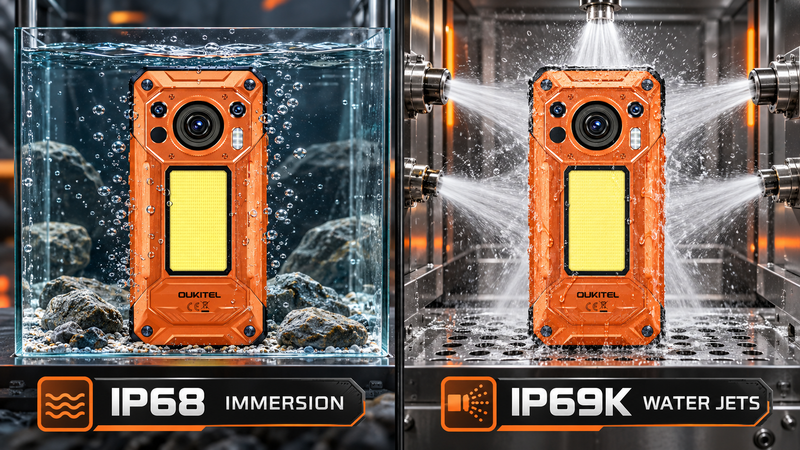
| Rugged protection | IP68, IP69K and MIL-STD-810H |
Specifications were checked on the OUKITEL product page on August 26, 2026. Availability, software and product details may change.
Silicon-Carbon Technology Increases Battery Energy Density
The silicon-containing anode helps the battery reach its target capacity without requiring the same volume that a lower-density design might need.
It is important to describe this carefully. OUKITEL has not published a directly comparable graphite version of the WP68 Air with the same enclosure and hardware. The available specifications therefore establish the phone’s dimensions and battery type, but they do not support a precise claim such as “X percent thinner solely because of silicon.”
The justified conclusion is that the higher-density silicon-carbon cell helps make the combination possible: an 8,000mAh battery inside an 11.9mm rugged enclosure.
An 11.9mm Body and 309.5g Weight Reduce Traditional Rugged-Phone Bulk
Large-battery rugged phones often become thick and heavy because they combine a high-capacity cell with an impact-resistant enclosure. The WP68 Air follows a different design priority.
At 11.9mm and 309.5g, it is intended for users who want more battery capacity than a conventional slim smartphone while retaining easier everyday carrying than extreme-capacity rugged models.
The tradeoff is capacity. OUKITEL models designed for maximum endurance may offer 16,000mAh, 20,000mAh or 33,000mAh batteries, but they are considerably thicker and heavier.
The WP68 Air does not replace those devices for every use. It targets a different balance: sufficient outdoor and workday capacity without turning the phone into a basecamp-scale power device.
Readers comparing those tradeoffs can review the guide to big-battery phones and what matters beyond mAh.
Battery Packaging, Component Layout and Enclosure Design Work Together
The final dimensions also reflect the arrangement of the display, cameras, antennas, circuit boards and structural components.
The WP68 Air uses:
- A 6.88-inch display
- MediaTek Dimensity 7025 platform
- 512GB internal storage
- 5G connectivity
- IP68 and IP69K ingress protection
- MIL-STD-810H ruggedness claims
- Reinforced enclosure construction
Fitting these components around an 8,000mAh battery requires more than choosing a higher-capacity anode material. The battery shape, connector placement, board layout and enclosure structure must be designed together.
This is why silicon-carbon technology should be presented as an enabler of the thin design rather than its only cause.
Why Silicon Anodes Are Technically Difficult to Use
Silicon’s ability to store lithium creates its most important engineering problem: expansion.
Silicon Expands and Contracts During Battery Cycling
Silicon changes volume substantially as it absorbs lithium during charging and releases it during discharge. At the particle level, the change can be several times the original silicon volume under full lithiation.
A 2026 study in Nature Communications describes silicon’s theoretical specific capacity as roughly ten times that of graphite while also identifying mechanical stability as a central challenge for high-energy silicon anodes. Read the silicon-anode study.
The percentage associated with silicon particle expansion should not be applied directly to the entire finished battery. Commercial cells use composites, controlled silicon loading and mechanical allowances intended to reduce and manage the effect.
Repeated Expansion Can Affect the Electrode and Protective Interface
Expansion and contraction can:
- Crack active particles
- Disrupt electrical connections
- Stress the electrode binder
- Damage the solid-electrolyte interphase
- Consume lithium and electrolyte
- Increase resistance
- Cause capacity loss
The solid-electrolyte interphase, commonly called the SEI, forms on the anode surface. It helps control reactions between the electrode and electrolyte. When silicon expands and contracts, that layer can crack and reform, consuming active material and affecting long-term performance.
This is one reason that commercial silicon-carbon batteries need more engineering than simply replacing graphite with silicon.
Carbon Composites, Binders and Battery Management Help Control the Problem
Battery developers use several strategies to manage silicon:
- Mixing silicon with graphite or conductive carbon
- Using smaller or structured silicon particles
- Adding space to accommodate expansion
- Developing flexible binders
- Stabilizing the electrode-electrolyte interface
- Controlling charging voltage and current
- Managing temperature
- Limiting the depth of silicon utilization
The battery-management system also monitors voltage, current and temperature at the pack level. It cannot eliminate the material’s expansion, but it can keep operation within the limits defined by the cell designer.
What Silicon-Carbon Technology Means in Everyday Phone Use

Most users will not interact directly with the anode. They experience the technology through the phone’s size, weight, runtime and charging behavior.
More Capacity Without Proportionally Increasing Thickness
The primary benefit is a better capacity-to-size relationship. An 8,000mAh phone no longer needs to be as thick as users may expect from earlier rugged designs.
This does not mean all future silicon-carbon phones will be thin. A manufacturer may instead use the energy-density gain to increase capacity while keeping the previous dimensions.
Easier Daily Carrying for a Big-Battery Rugged Phone
Reduced thickness makes a phone easier to:
- Carry in a pocket or holster
- Hold for calls and navigation
- Use during travel
- Mount in a vehicle
- Carry through a long work shift
- Include in a hiking or emergency kit
At 309.5g, the WP68 Air remains heavier than many conventional consumer phones. The relevant comparison is with rugged phones offering similar endurance and protection, not with an ultra-thin 5,000mAh device.
Users selecting an outdoor phone should also compare screen visibility, network bands, storage, charging access and carrying method. The guide to the best phones for camping and hiking explains those broader requirements.
Charging Speed and Runtime Still Depend on the Complete Device
Silicon-carbon chemistry does not determine runtime by itself. Actual battery life depends on:
- Display brightness and refresh rate
- Processor efficiency
- Cellular signal
- GPS use
- Camera activity
- Gaming
- Background applications
- Temperature
- Power-management software
- Battery condition
The WP68 Air supports 45W input charging, but charging speed changes throughout the session. The phone will not necessarily draw peak power continuously, and temperature or charger compatibility can reduce the rate.
Use the supplied or officially supported charging equipment and follow the product instructions.
What to Compare Before Buying a Silicon-Anode Phone
“Silicon-carbon” should not be the only purchase criterion.
Battery Capacity, Watt-Hours, Weight and Body Thickness
Compare the complete relationship between:
- mAh
- Nominal voltage
- Watt-hours
- Body weight
- Body thickness
- Screen size
- Rugged protection
A phone can advertise an advanced battery but still be heavy because of its enclosure, cameras, cooling system or other hardware.
Charging Power, Temperature Control and Real Charging Time
Check both input wattage and stated charging time. A large battery with a high peak wattage may still take longer to fill than a smaller battery.
Independent tests conducted under disclosed conditions are more useful than comparing wattage labels alone.
Tested Runtime, Cycle Performance, Warranty and Replacement Support
Manufacturers do not always publish cycle-retention data for phone batteries. When available, look for:
- Remaining capacity after a stated number of cycles
- Temperature and charging conditions
- Test voltage range
- Battery warranty
- Repair options
- Replacement availability
Do not assume a silicon-carbon battery automatically lasts longer than graphite. Its long-term performance depends on the cell design and how well expansion and interface degradation are controlled.
FAQ
Is a Silicon Anode Battery the Same as a Solid-State Battery?
No. “Silicon anode” describes the negative-electrode material. “Solid-state” describes a battery that uses a solid electrolyte. A battery can use a silicon-containing anode while retaining a conventional liquid or gel electrolyte.
Can a Silicon-Carbon Battery Swell During Normal Use?
Silicon particles expand during charging, but a properly designed battery accounts for this behavior. Visible phone swelling is not normal. Stop using a device if its screen lifts, enclosure separates or battery appears swollen.
Does a Silicon Anode Battery Last Longer Than a Graphite Battery?
Not necessarily. Silicon can improve energy density, but cycle life depends on silicon content, particle structure, electrolyte, charging limits, temperature and battery management. The chemistry label alone does not prove longer service life.
Is a Silicon-Carbon Battery Safer Than a Conventional Lithium-Ion Battery?
It should not be considered automatically safer or less safe based only on its anode label. Safety depends on the complete cell, separator, electrolyte, manufacturing quality, protection circuits, mechanical design and charging system.
Conclusion
A silicon anode battery uses silicon-containing material to store more lithium in the negative electrode. Because silicon has much higher theoretical capacity than graphite, it can help increase the battery’s energy density.
In the OUKITEL WP68 Air, a silicon-carbon polymer cell helps make an 8,000mAh battery possible within an 11.9mm, 309.5g rugged phone. The result is not created by chemistry alone. Battery packaging, internal layout, thermal control and enclosure engineering all contribute to the finished design.
Silicon also presents challenges, especially expansion and interface degradation during cycling. Commercial silicon-carbon composites are designed to capture part of silicon’s capacity advantage while maintaining practical stability.
For buyers, the useful question is not simply whether a phone uses silicon. Compare the finished product’s capacity, thickness, weight, charging time, runtime, ruggedness, warranty and long-term support. WP68 Air’s main achievement is the balance between these factors: an 8,000mAh battery and rugged protection without the bulk usually associated with high-capacity rugged phones.



Leave a comment
Your email address will not be published. Required fields are marked *