Safe sea kayaking requires a plan for navigation, communication, cold-water immersion, and changing coastal conditions. Before launching, leave a float plan, check the marine forecast, study tides and currents, dress for the water temperature, and carry communication equipment that remains accessible after a capsize.
A phone can support offline navigation and group coordination, but it should not be the primary emergency communication device at sea. Carry a marine VHF radio where local services monitor it, and consider a satellite messenger or personal locator beacon for areas beyond reliable VHF or cellular coverage.
Plan the Trip Before Launching
Coastal conditions can change faster than a paddling group can return to shore. Planning should account for the route, the least experienced paddler, environmental conditions, equipment failures, and the possibility of an unplanned delay.
Leave a Float Plan With a Trusted Contact
A float plan tells someone where you are going, who is with you, and when authorities should be contacted if you do not return. Give it to a trusted person who will remain ashore and explain exactly what they should do if a check-in is missed.
Include:
- Launch, landing, and alternative landing locations
- Planned route and approximate distance
- Departure, turnaround, and expected return times
- Names and contact details of all paddlers
- Kayak colors and identifying features
- Vehicle description and parking location
- Marine VHF, satellite, PLB, and phone details
- Local emergency or coast guard contact information
- The time at which your contact should report the group overdue
Update the contact if the route or schedule changes. Confirm your safe return as soon as the trip ends.
A float plan supports a search but does not guarantee rescue. It is most useful when it is accurate, shared before departure, and paired with a clear overdue procedure.
Check Marine Weather, Tides, Currents, and Daylight
Do not rely on a general city forecast. Review the coastal or marine forecast for the paddling area and check wind direction, wind speed, wave height, visibility, air temperature, water temperature, and warnings.
Then check tide times and predicted current direction. An outgoing tide can expose rocks, mudflats, or landing hazards, while a strong current may carry a kayak away from the intended route. Wind opposing a current can also create shorter, steeper waves.
NOAA recommends checking marine forecasts, tides, currents, and local observations before going onto the water. Its marine conditions guidance provides access to official forecast, buoy, tide, and current resources.
Record the key information rather than assuming it will remain available online. Set limits for wind, waves, visibility, and current that match the group's experience. If the conditions exceed those limits, change the route or postpone the trip.
Pack for Cold Water, Capsizing, and Delayed Return
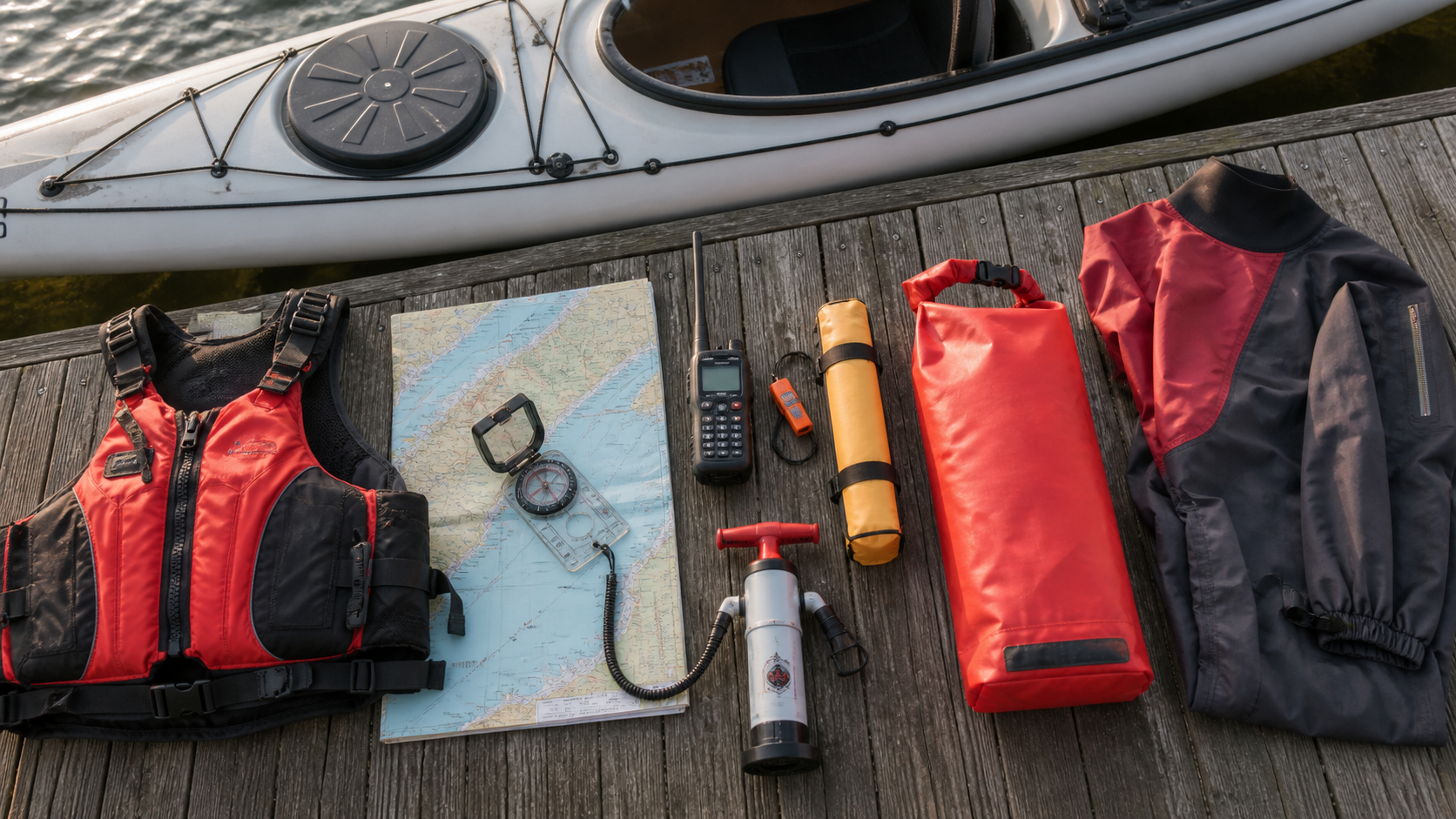
Dress for the water temperature, not only the air temperature. A warm, sunny day does not make cold water safe. Choose a properly fitted personal flotation device and suitable immersion protection, such as a wetsuit or drysuit, for the expected conditions.
The National Weather Service warns that sudden cold-water immersion can trigger an involuntary gasp, rapid breathing, and reduced ability to think or move effectively. Its cold-water safety guidance recommends wearing a life jacket, dressing for the water, filing a float plan, and carrying emergency communication equipment.
Before launching, confirm that the group has:
|
Safety need |
Recommended equipment |
|
Flotation |
Properly fitted PFD worn throughout the trip |
|
Immersion protection |
Wetsuit or drysuit suitable for the water temperature |
|
Rescue |
Bilge pump, paddle float, tow system, and spare paddle |
|
Navigation |
Marine chart, deck compass, and offline navigation |
|
Communication |
Waterproof marine VHF and an appropriate backup |
|
Signaling |
Whistle, light, mirror, and high-visibility equipment |
|
Delayed return |
Extra clothing, water, food, and emergency shelter |
Secure equipment so it remains with the kayak after a capsize. Essential communication and signaling devices should be reachable while you are in the water, not stored in a sealed hatch that you may be unable to access.
Navigate Safely in Changing Coastal Conditions
Marine navigation requires more than following a line on a phone. Wind, current, fog, waves, boat traffic, and shoreline features can change the safest route even when the destination remains visible.
Use Charts, a Compass, and Offline Navigation Together
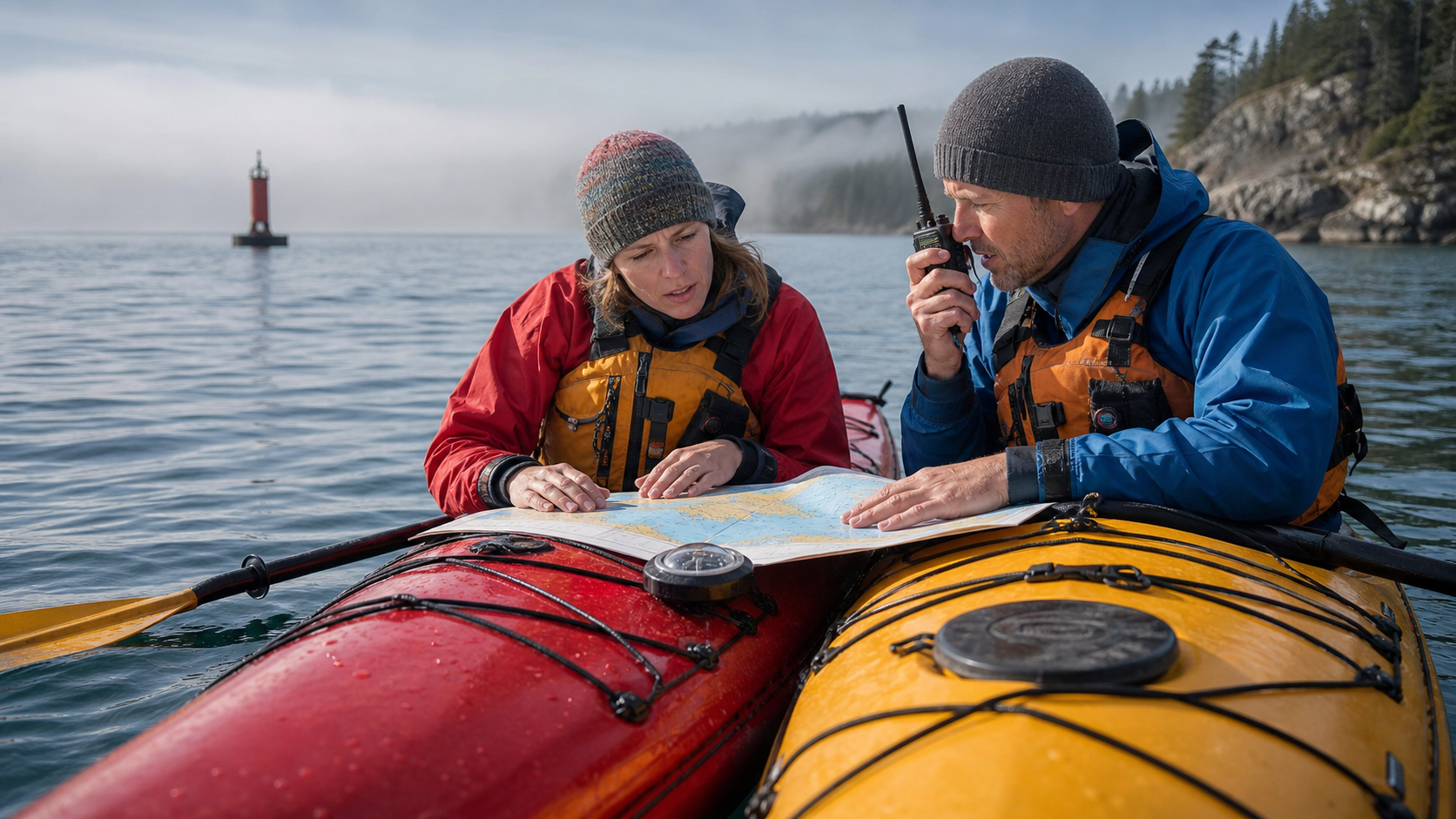
Review the chart before launching. Identify channels, navigation aids, restricted areas, exposed crossings, tidal hazards, landing points, and prominent features that can be recognized from water level.
Use three navigation layers:
- A marine chart for hazards and the wider route
- A compass for direction when visibility or landmarks are unreliable
- An offline GPS device or phone map for position checks
Download maps before the trip and verify that they open in airplane mode. Store launch, landing, alternative landing, and hazard locations as offline waypoints.
GPS can calculate a position without cellular coverage, but map tiles and live information may be unavailable unless downloaded in advance. A device can also fail, lose power, or display an inaccurate position. Cross-check electronic information with the chart, compass, time, speed, and visible features.
For a general explanation of offline positioning, see OUKITEL's guide to how GPS works in smartphones.
Prepare for Fog, Strong Currents, and Boat Traffic
Fog can remove visual references and make it difficult for larger vessels to see a kayak. If visibility deteriorates, keep the group close, confirm the compass course, move out of navigation channels when it is safe, and use appropriate sound and light signals.
Do not enter a busy crossing unless the entire group can complete it together. Larger vessels may have limited maneuverability, and a kayak can be difficult to detect against waves or shoreline clutter.
Strong current can alter the direction of travel even when the kayak is pointed at the destination. Plan a ferry angle when necessary and monitor progress against fixed landmarks or navigation aids. Avoid committing to a crossing if the group cannot maintain enough speed and control to compensate for the current.
If conditions exceed the group's limits, use the nearest safe landing instead of forcing the original route.
Keep the Group Together and Set Turnaround Points
Set the pace around the least experienced or slowest paddler. The group should remain close enough to communicate and assist with a rescue.
Assign lead and sweep paddlers where appropriate. Stop at crossings, exposed headlands, navigation decisions, and rest points until everyone is accounted for. Do not let a faster paddler continue alone to "check the route" unless that action is part of a trained and risk-assessed plan.
Agree on turnaround criteria before launching, including:
- Maximum acceptable wind or wave conditions
- Minimum visibility
- Latest departure from the destination
- Minimum remaining daylight
- Group fatigue, cold, injury, or seasickness
- Loss of essential navigation or communication equipment
A turnaround point is a safety decision, not an admission of failure. Return or land while the group still has enough energy, daylight, and control to manage the conditions.
Build a Reliable Communication Plan on the Water
A reliable communication plan uses equipment designed for the operating environment and keeps it accessible after a capsize. It also defines who will communicate, which channels or contacts will be used, and what information will be sent.
Carry a Marine VHF as the Primary Communication Tool
In coastal areas where it is monitored, a waterproof handheld marine VHF allows communication with nearby vessels, harbor authorities, and rescue services. Learn how to select the local calling and working channels and how to make a distress call before launching.
In the United States, VHF Channel 16 is the international distress, safety, and calling channel. Rules and channel use vary by country, so paddlers should check local maritime regulations.
Test the radio legally and appropriately before the trip. Keep it attached to the PFD or shoulder strap, where it can be reached with either hand. A radio stored inside the kayak may be inaccessible after a capsize.
A GPS-enabled VHF with Digital Selective Calling can transmit position information when correctly registered and configured. However, paddlers should still know how to make a clear voice call.
Keep Backup Devices Secured and Accessible
A backup communication device must remain attached to the paddler or PFD. Use retainers that prevent loss without creating an entanglement hazard, and confirm that controls can be operated with cold or gloved hands.
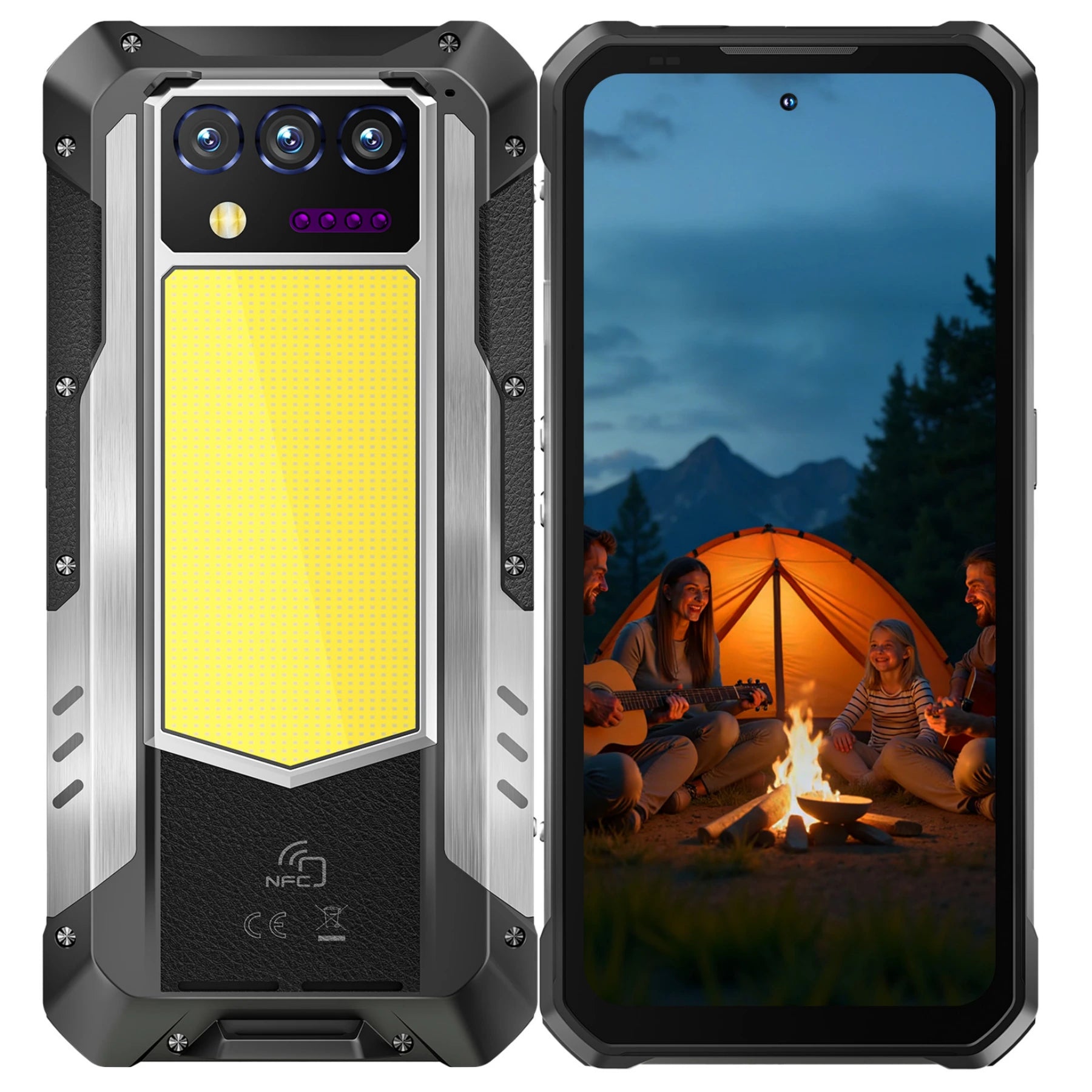
When fog, current, or changing weather separates paddlers, the OUKITEL WP61 Plus can provide an additional way for group members using compatible DMR or analog equipment to communicate without cellular coverage. Its 20,000mAh battery can also help keep downloaded maps and essential contact information accessible during a delayed return.
The phone should remain secured in a suitable waterproof case, particularly around saltwater. IP ratings describe controlled test conditions and do not guarantee protection from every combination of salt, pressure, impact, wear, or an improperly sealed port. The DMR function is a group communication backup - not a replacement for marine VHF, a satellite messenger, or a personal locator beacon. DMR equipment must not transmit on marine VHF channels.
Paddlers comparing battery capacity and outdoor durability can consult OUKITEL's guide to choosing a rugged phone without treating any phone as dedicated marine rescue equipment.
Agree on Check-In Times and Emergency Messages
Choose check-in points before departure, such as after launching, before and after an exposed crossing, at the turnaround point, and after landing.
The group should agree on:
- The marine VHF channel used for group communication
- Who carries each primary and backup device
- Which paddler will contact rescue services
- What message indicates a delay rather than an emergency
- What to do after losing contact
- Where the group will regroup or land
Keep messages short and specific. State the location, time, group condition, and next action. Avoid unnecessary radio traffic on calling or emergency channels.
Respond Quickly to Capsizing or an Emergency
A practiced response can prevent a capsize from developing into prolonged immersion, separation, or loss of equipment. Priorities are flotation, contact with the kayak, rescue, protection from cold, and communication.
Stay With the Kayak and Use a Practiced Rescue Method
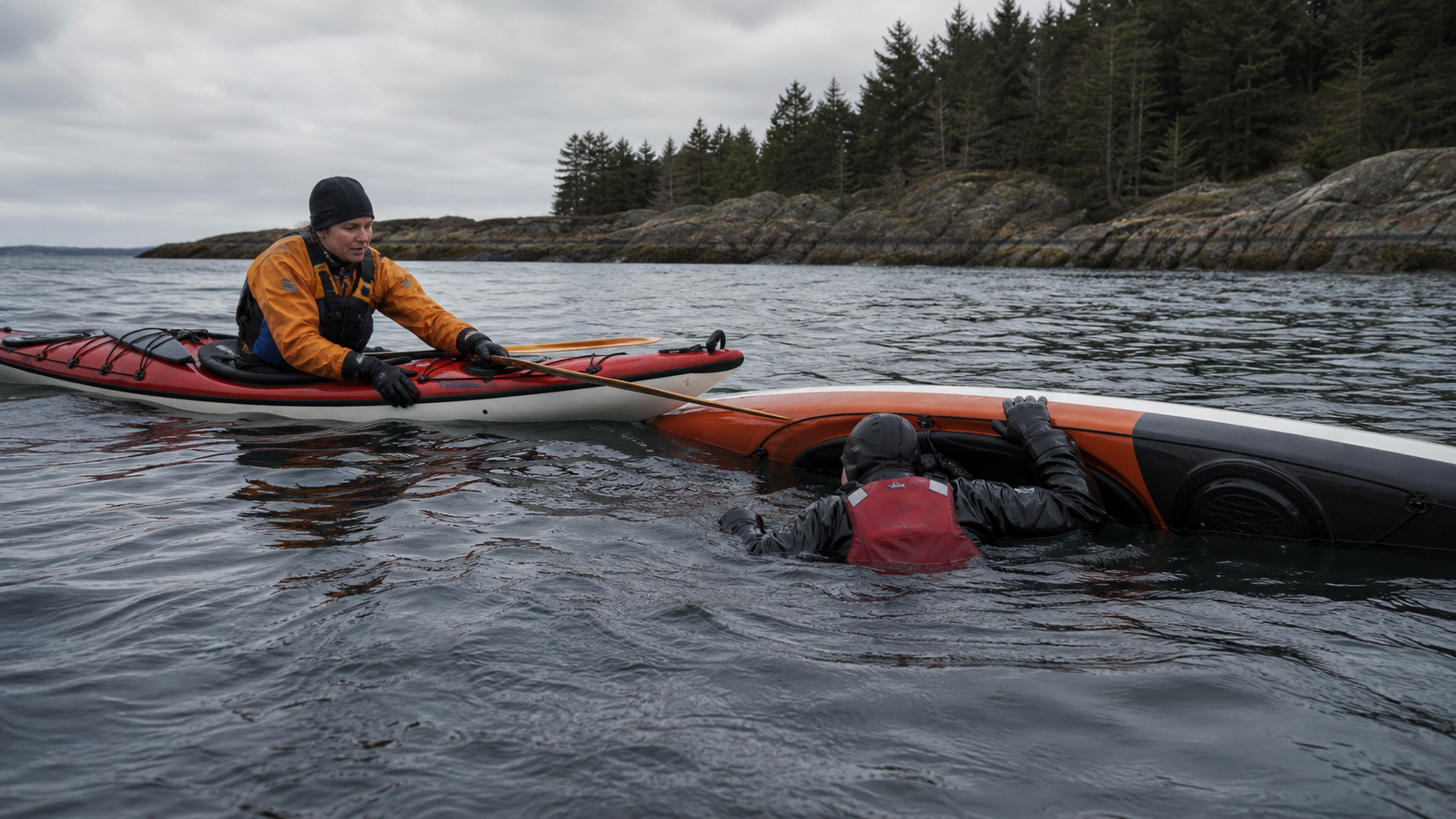
After capsizing, control breathing and maintain contact with the kayak and paddle when it is safe to do so. A kayak is generally easier for rescuers to see than a person alone in the water and can provide flotation or a platform for re-entry.
Use the rescue method practiced by the group, such as an assisted rescue, self-rescue, or tow to a safer position. Do not attempt an unfamiliar technique for the first time in rough water.
If re-entry is unsuccessful, stay with the kayak unless remaining there creates an immediate hazard. Use a whistle, light, mirror, bright clothing, or electronic distress device to attract attention.
Reduce Cold-Water Exposure and Watch for Hypothermia
Get as much of the body out of the water as possible and complete the rescue without unnecessary delay. Once the paddler is stable, replace wet layers when practical, add insulation, protect them from wind, and move toward a safe landing.
Watch for uncontrollable shivering, poor coordination, confusion, unusual behavior, slurred speech, or declining responsiveness. Treat these signs seriously and request professional assistance when needed.
Do not assume a paddler is safe simply because they have returned to the kayak. Cold exposure can continue during the paddle back, especially in wet clothing and strong wind.
Send a Distress Call With Your Position and Condition
For grave and imminent danger, use the locally recognized maritime distress procedure. In U.S. waters, the Coast Guard's VHF distress-call guidance instructs mariners to call on Channel 16 and provide the position, nature of the emergency, assistance required, number of people, and identifying information.
A clear voice call should include:
- "MAYDAY" repeated three times
- Identification or description of the kayak or group
- Position using coordinates or a clear landmark
- Nature of the emergency
- Number and condition of the paddlers
- Assistance required
- Kayak colors and other identifying details
Speak slowly and clearly. Remain on the radio when possible so rescuers can request more information or use the transmission to help locate the group. If the VHF call is unsuccessful, activate the appropriate satellite or beacon distress function.
FAQ
Can GPS Navigation Work Offshore Without Cell Service?
Yes. GPS positioning can work without cellular service because the device receives signals from navigation satellites. However, charts and map data must be downloaded in advance unless the device has another data connection. Always carry a chart and compass as backups.
Does an IP68 Phone Still Need a Waterproof Case at Sea?
Yes. A suitable waterproof case adds protection against saltwater, repeated splashes, impact, worn seals, and accidental submersion. Keep the phone attached to the paddler and rinse exposed equipment with fresh water according to the manufacturer's instructions.
Which Communication Device Should Be Attached to the PFD?
The primary waterproof marine VHF should usually be attached to the PFD where it can be reached after a capsize. A PLB, satellite communicator, whistle, and waterproof phone may also be attached when appropriate, provided they do not create an entanglement hazard.
Can a DMR Walkie-Talkie Use Marine VHF Channels?
No. DMR and marine VHF are different radio systems with different channel plans and regulations. A DMR radio should only use authorized frequencies and cannot replace a compliant marine VHF for communication with maritime rescue services and vessels.
Conclusion
Sea kayaking safety begins with conditions-based planning. Leave a float plan, check the marine forecast, tides, currents, water temperature, visibility, and daylight, and establish clear turnaround limits before launching.
Use a chart, compass, and offline navigation together. Keep the group close, carry a marine VHF on the PFD, and secure backup devices where they remain accessible after a capsize. Dress for immersion and practice rescue techniques before depending on them in open water.
A rugged phone can support offline information and compatible group communication, but it is only a backup layer. Marine VHF, suitable immersion protection, rescue equipment, sound judgment, and an appropriate satellite or beacon device remain the foundation of an effective sea kayaking emergency plan.