
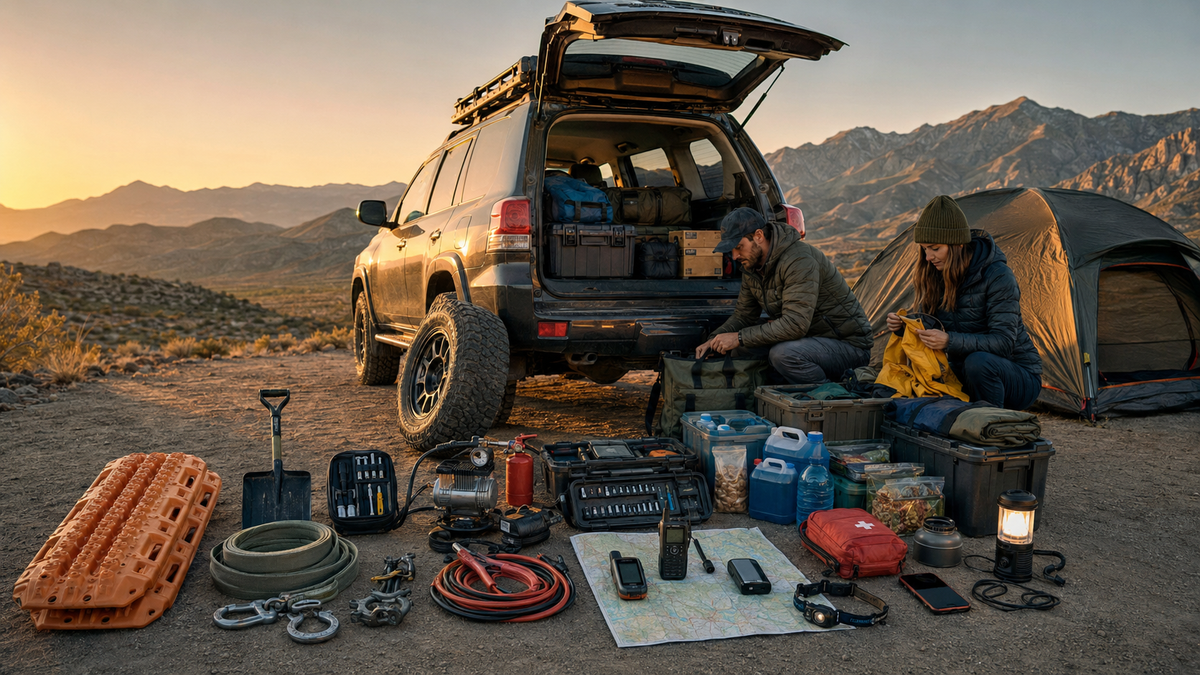
A complete overlanding gear list should cover vehicle recovery, tire repair, navigation, communication, first aid, water, food, shelter, lighting, backup power, and weather protection. The right setup helps you handle breakdowns, changing conditions, and longer stretches without fuel, supplies, or cell service. Use this guide to build a practical gear list for your route, vehicle, and level of remoteness.
Overlanding Gear List at a Glance
Start with equipment that protects mobility, communication, and essential daily needs. Items marked critical should remain accessible and ready to use, while route-dependent gear should be selected after checking fuel availability, terrain, weather, and distance from assistance.
Essential Equipment Checklist by Category and Priority
Here’s a quick look at the essential gear for your vehicle, campsite, and daily needs.
Essential Vehicle and Safety Gear
|
Category |
Essential Equipment |
Priority |
|
Vehicle recovery |
Recovery boards, rated recovery strap, compatible shackles, shovel |
Critical |
|
Tires |
Full-size spare tire, repair kit, compressor, pressure gauge |
Critical |
|
Vehicle repair |
Tool kit, vehicle-rated jack, jumper cables, spare fuses |
Critical |
|
Navigation |
Downloaded offline maps, GPS device, current paper map |
Critical |
|
Communication |
Two-way radio, satellite communicator |
Critical for remote routes |
|
First aid and safety |
First-aid kit, vehicle-rated fire extinguisher, emergency blanket |
Critical |
|
Fuel management |
Approved fuel container and compatible transfer equipment |
Route dependent |
Camping and Daily Supply Gear
|
Category |
Essential Equipment |
Priority |
|
Water |
Drinking water, backup container, suitable water filter or treatment method |
Critical |
|
Food and cooking |
Shelf-stable food, stove, fuel, cookware |
High |
|
Power and charging |
Power bank, vehicle charger, charging cables |
High |
|
Lighting |
Headlamp, flashlight, camp light |
High |
|
Shelter and sleep |
Tent, sleeping bag, sleeping pad |
High |
|
Clothing |
Layers, rainwear, gloves, sturdy footwear |
High |
|
Hygiene and waste |
Toiletries, sanitizer, waste bags |
High |
|
Vehicle storage |
Storage boxes, cargo straps, waterproof bags |
High |
Pack critical gear where it can be reached without unloading the vehicle. Recovery equipment should match the vehicle’s weight and approved recovery points, while jacks, straps, shackles, fuel containers, and electrical equipment should be inspected before every trip. Adjust all quantities for your route, group size, expected conditions, and distance between resupply points.
Essential Gear for a Safe and Self-Sufficient Overlanding Trip
A self-sufficient overlanding setup should help you recover the vehicle, maintain communication, manage basic repairs, and support daily needs far from developed facilities. Prioritize equipment that protects mobility, safety, water access, and emergency communication.
Vehicle Recovery, Tire, and Repair Gear
Carry recovery boards, a rated recovery strap, compatible shackles, and a shovel for mud, sand, or loose ground. Tire equipment should include a full-size spare, repair kit, compressor, and pressure gauge. Add a vehicle-rated jack, wheel tools, jumper cables, spare fuses, basic hand tools, and vehicle-specific replacement parts. Confirm the approved lifting and recovery points before departure, and practice using unfamiliar equipment in a controlled setting.

Navigation and Communication Beyond Cell Coverage
Download offline maps and carry a current paper map with fuel stops, water sources, alternate routes, and turnaround points marked. A satellite communicator provides a dependable way to send messages or request help when cellular service is unavailable. Share your planned route and expected return time with a trusted contact, and keep navigation and communication devices accessible inside the vehicle.

Off-Grid Power, Charging, and Emergency Lighting
Charge phones, GPS devices, radios, cameras, and headlamps before leaving. Use separate backup power for camp equipment so overnight charging does not weaken the starter battery. Reserve at least one headlamp or flashlight for vehicle repairs and emergencies.
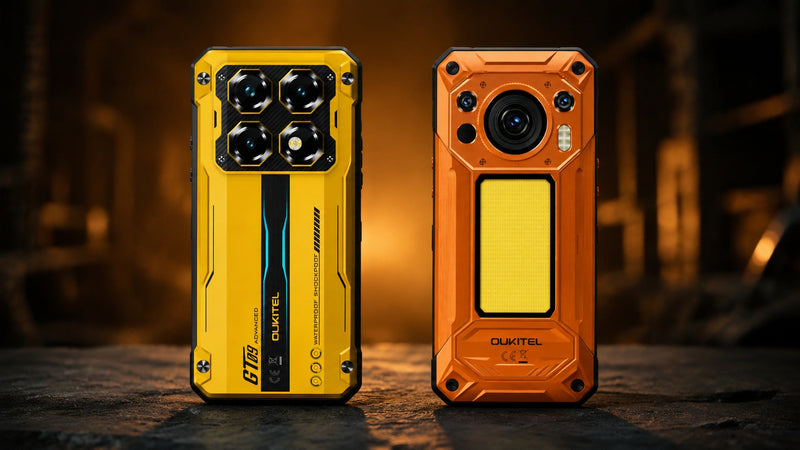
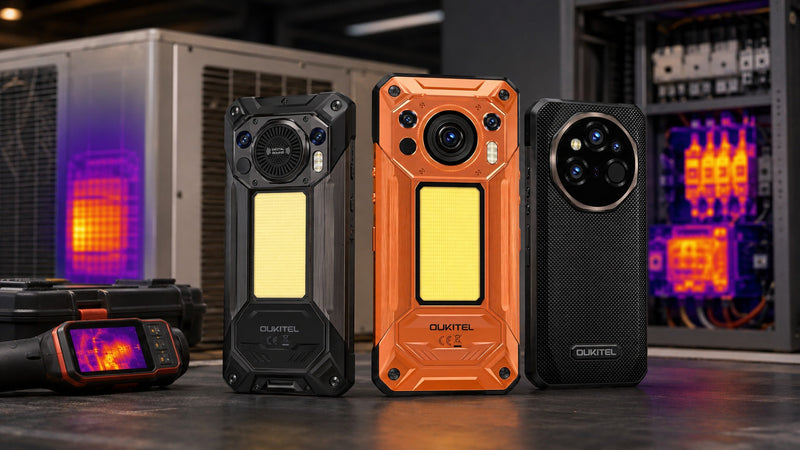
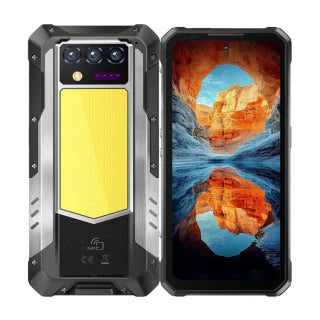
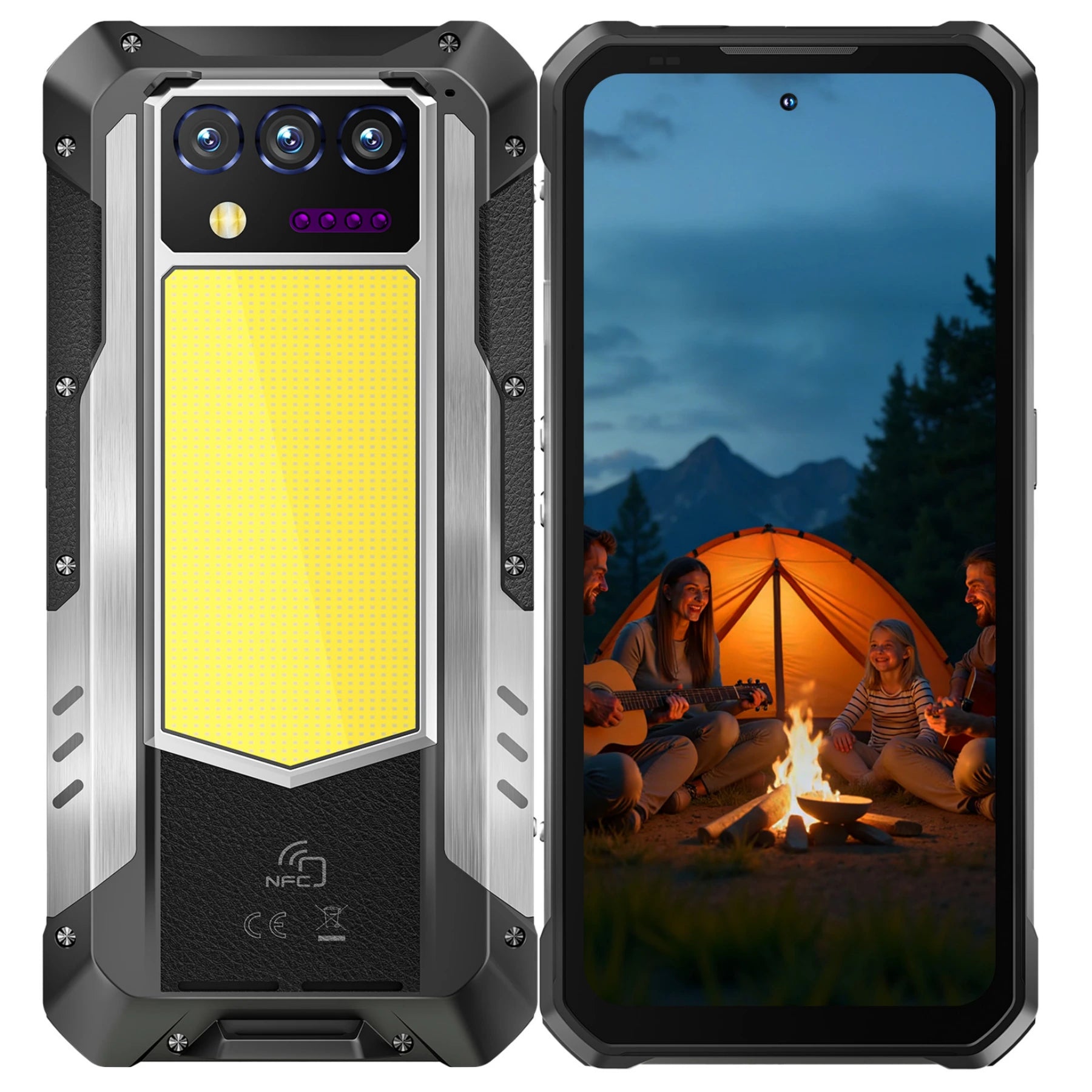
The OUKITEL WP100 Titan combines a 33,000mAh battery, 18W reverse charging, and a built-in 1,200-lumen light. It can support offline navigation, store trip information, recharge compatible small devices, and provide lighting around camp or during roadside checks. Cellular communication still depends on network coverage, so carry a satellite communicator and independent power and lighting backups on longer remote trips.
Safe, Weather-Ready Campsites for Overnight Stops
Choose firm, level ground outside dry riverbeds, flood channels, exposed ridgelines, and areas beneath unstable trees or rock faces. Check wind direction, drainage, temperature changes, and wildfire restrictions before setting up. Park in a position that allows a clear departure, secure tents and awnings for expected wind, and keep cooking equipment away from sleeping areas, dry vegetation, and stored fuel.
Water, Food, Hygiene, and Vehicle Storage
Calculate drinking and cooking water for every traveler, then add a reserve for delays or vehicle problems. Carry shelf-stable meals and a no-cook backup in case weather prevents stove use. Pack sanitation supplies and containers that follow local waste rules. Store heavy equipment low and close to secure mounting points, separate food from fuel and chemicals, and keep water, first aid supplies, recovery gear, and emergency equipment easy to reach.

How to Build a Custom Overlanding Gear List
A general checklist provides a useful starting point, but the final loadout should reflect your route, vehicle capacity, travel group, and access to fuel, water, repairs, and emergency assistance.
Route, Trip Length, and Resupply Distance
Map the distance between fuel stations, water sources, food stops, and repair services. Calculate supplies for the planned route, then add a reserve for delays, detours, or closed roads. Remote sections require more redundancy than routes that remain close to towns and developed campgrounds.
Match Gear to Terrain, Climate, and Season
Sand may require recovery boards, a shovel, and equipment for adjusting tire pressure, while rocky routes place greater demands on tires and underbody protection. Cold, heat, rain, snow, and high altitude affect water, clothing, shelter, battery performance, and fuel use. Check current and expected conditions along the entire route rather than relying on the forecast at the starting point.
Adjust Gear for Solo, Group, or Remote Travel
Solo travelers need independent recovery, navigation, and communication equipment because another vehicle may not be available to help. Groups can divide shared items such as tools, cooking equipment, and water treatment, but each vehicle should still carry basic safety, navigation, first-aid, and overnight supplies. Increase backup communication and emergency reserves as distance from assistance grows.
Balance Safety, Self-Recovery, and Vehicle Payload
Prioritize water, first aid, communication, tire repair, and recovery gear before comfort accessories. Check the vehicle’s payload limit and include passengers, fuel, water, accessories, and cargo in the total. Place heavy equipment low and near the center of the vehicle, secure every load, and keep roof cargo within the vehicle’s rated limit. Minimize heavy roof loads because a higher center of gravity can reduce stability on slopes and uneven ground.
Test and Organize Gear Before Departure
Test the compressor, lights, chargers, radios, and water equipment before packing. Confirm that the jack fits the vehicle’s approved lifting points, and practice using it only on firm, level ground according to the vehicle manual. Practice basic tire repair and recovery procedures in a controlled setting. Label storage boxes by function, keep emergency equipment accessible, and record expiration dates for medication, food, and first-aid supplies, and check the charge level and condition of every battery. A short trial trip can reveal missing items and unnecessary weight before a remote journey.
FAQ
Is a Winch Necessary for Overlanding?
Not for every trip. Recovery boards and a shovel may be enough for maintained routes, while a rated recovery strap can support group travel when another suitable vehicle is available. A winch becomes more valuable on difficult terrain, solo trips, and remote routes with limited recovery assistance.
How Do You Calculate Remote Fuel Range?
If you measure fuel economy in MPG, multiply usable fuel capacity by your vehicle’s loaded off-road MPG, then set aside part of that range as an emergency reserve. Compare the remaining range with the distance between reliable fuel stops and account for detours, idling, difficult terrain, and elevation changes. Carry extra fuel only in approved containers and within legal limits.
What Vehicle Spare Parts Should You Carry?
Prioritize parts that commonly fail and can be replaced in the field. Useful options include spare fuses, bulbs, belts, hoses, fluids, tire-repair materials, and vehicle-specific fasteners. Match the selection to your vehicle, route, and repair skills.
What Documents and Permits Does Overlanding Require?
Carry your driver’s license, registration, insurance information, emergency contacts, and any required land-access or camping permits. International routes may also require a passport, visas, vehicle import documents, proof of ownership, and additional insurance.
How Do You Secure Gear While Driving?
Store heavy items low and close to the vehicle’s center, then secure them to rated tie-down points. Use closed storage boxes for smaller equipment and keep loose objects out of the passenger area. Recheck straps after rough sections.
When Should You Change or Abandon Your Route?
Turn around when weather, road damage, fuel levels, vehicle condition, water supply, or driver fatigue creates an unacceptable risk. Make the decision while you still have enough fuel, daylight, and safe terrain to return or take an alternate route.
Conclusion
A practical overlanding gear list should reflect your route, vehicle, weather, trip length, and distance from assistance. Prioritize recovery, tire repair, navigation, communication, water, first aid, and emergency power before adding comfort gear. Test the equipment, secure the load, and leave enough capacity for unexpected delays or route changes.




Leave a comment
Your email address will not be published. Required fields are marked *